Dr. S. asks:

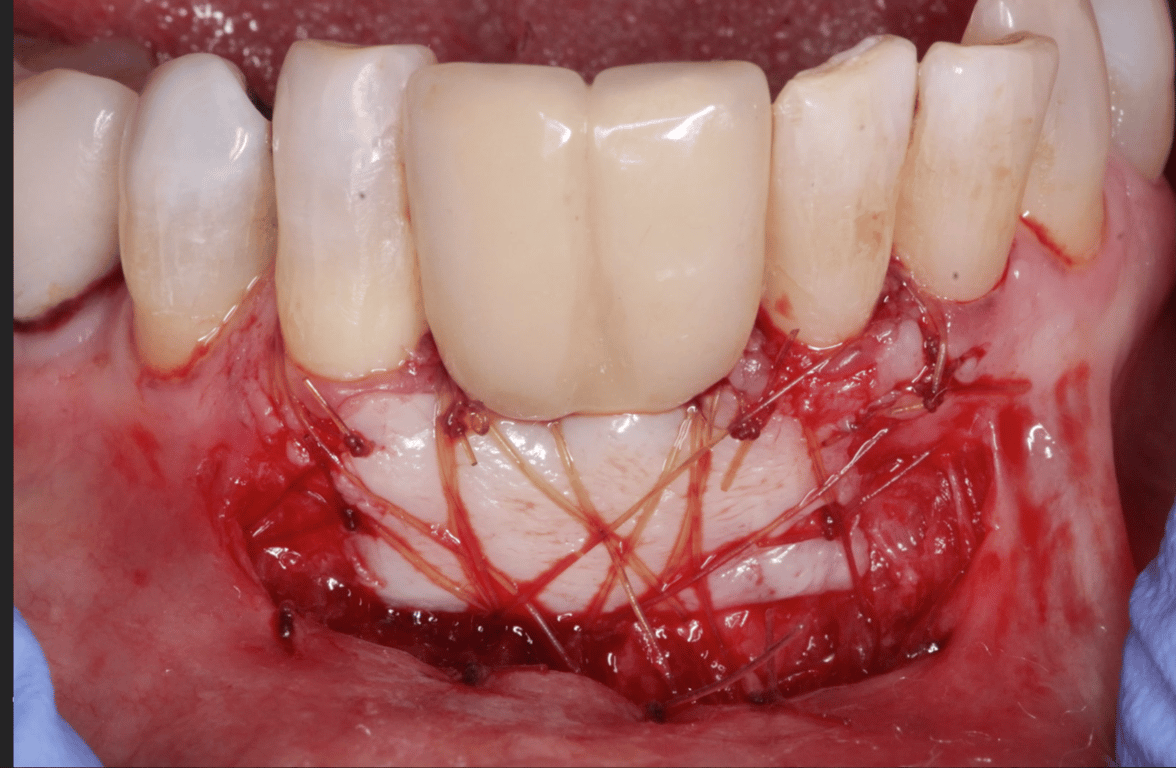
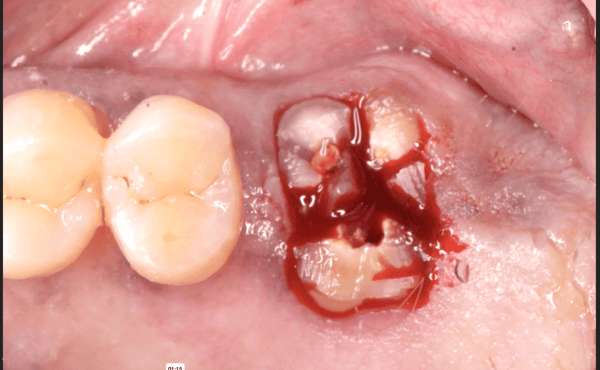
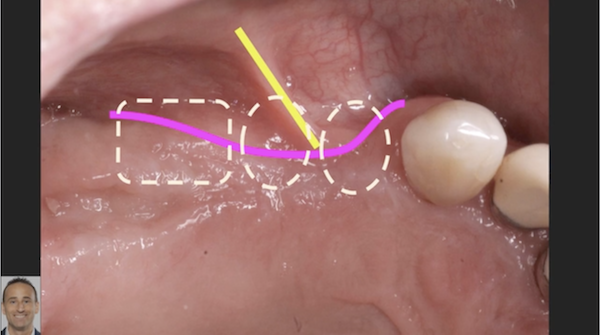
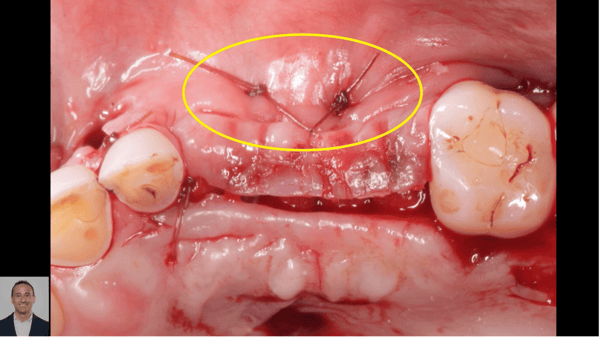
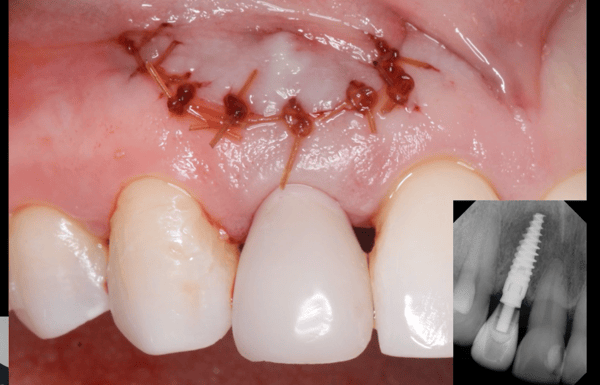
I recently had a failure of an Alloderm graft placed via a vertical incision medial to previous extraction site and graft # 10 (in order to keep the incision line off my prior bone graft site and prevent multiple incisions thru the interdental papillae). I felt that I had sufficient relaxation of the pocket to prevent compression.

The graft was folded into a “pillow” and trimmed to fit, reconstituted according to protocol and antibiotics were prescribed. The patient’s flipper did not touch the incision or graft site. It looked great for 8 days and then the patient began to notice erythema and swelling. Eventually she developed purulent exudate from the sulcus distal to #9 and the graft finally extruded thru the facial. I wonder what could have been done to prevent this? Should I have used palatal connective tissue?


Featured Courses
>>More Online Implant Courses

Cone Beam Technology: Placing Dental Implants with Confidence
In this webinar, Dr. Myers will discuss the clinical and diagnostic benefits of incorporating 3-D into the dental practice and 3-D's compatibility with guided surgery applications, as well as the communication and marketing benefits...
>>Learn More and Register Now!

16 Responses to “ Alloderm Graft Failure: What Could Have Been Done? ”

  • JB July 3rd, 2007

    What type of graft material did you use?

    The reason I ask is that sometimes the graft material will cause the membrane to fail to osteoclastic activity.

  • Larry S. July 3rd, 2007

    I had placed an autogenous block graft (Ramus donor site) ~ 4 months prior. The reason I wanted to use Alloderm rather than palatal tissue was due to multiple surgeries on this patient.

  • periodoc July 3rd, 2007

    There may be a specific protocol for folding Alloderm. I think that for cosmetic procedures such as for fuller lips, the Alloderm is folded into a tube and them implanted. Pat Allen has mentioned some instances of complications with Alloderm due to improper folding. I’ve had some issues with Alloderm becoming infected and exfoliating. The Alloderm GBR, which is thinner that the standard Alloderm, may vascularize faster and perhaps avoid this complication.

  • GC July 6th, 2007

    dear colleague,
    May I suggest that one possible reason for this type of failure could be the lack of sufficient blood supply for rapid vascularisation of this allograft; I suggest this because of the presence of the recent cortical bone graft underneath that may have not facilitated the healing process owing to the lamellar nature of this D1 bone vs spongious maxillary.
    the technique that you described seemed very efficient and reasons for infection might be searched for elsewhere.

  • Dr. F. Lugo July 13th, 2007

    I have used Alloderm and Puros Dermis ( which is stored at room temperature, not refrigerated ) to increase soft tissue thickness or vestibular depth. I leave the periosteum over the site, also make sure that the graft is in full contact with the structures underneath ( without significant voids to prevent larger than necessary blood clots which may contribute to failure).

    Periosteal resorbable sutures do the trick to tuck-in the graft, but most important to stabilize it during the healing process.

    Then close the partial thickness flap to achieve full wound closure without flap tension, which in many cases is a difficult task, but you can stabilize the flap with periosteal sutures apical to the graft and sling them around proximal teeth or to the palatal area. For the flap, I like to use Vycril or Goretex sutures because you can leave them longer and the tissue tolerates the better than silk. All sutures are intended to stabilize the tissues in place gently, without
    unecessary pressure.

    And as an old periodontist habit, I place Coepak or other surgical dressing over the surgical site ( for a week ) to assist and contribute in tucking-in the external flap component over the grafted material.

    On palatal connective tissue grafts, they do the job as long as you have enough thickness on your donor site or you will have to increase the size of your donor site. Most common complication with this sites is discomfort and a long healing time.

    I find that probably over 65 % of the patients prefer to avoid the palatal surgery when explained both options of tissue procurement.

    We most keep in mind that we all will have clinical failures regardless of surgical management or technique, to deal with them is part of the fun.

  • alvaro ordonez October 16th, 2007

    I have used alloderm, dermis and connective tissue graft.
    In the past I had a lot of complications with alloderm, we can probably blame it on my technique and or learning curve but not necesarily.
    With dermis to this day I have not had any complications, it seems to have a better clinical behavior, but it could be that I have more experience and training in the use of dermal grafts than before when I was using alloderm (so I wont blame it completely on the alloderm).
    I cant explain why the complications, I have ask the big experts but the answers have come during sponsored presentations and during those I am not very trusty of what I hear.
    So this is my personal opinion based on many many cases with, alloderm, dermis and connective tissue.
    If you use a dermal graft, no matter which one, you better have PRP and fibrin and you soak it on it, following the protocol of Pat Allen or even Pikos, which is about 2 minutes on each of them (PRP and fibrin). You also need to ideally make sure you have blood supply, so it is better to leave the periosteum attached (in the case you mentioned in your question) so you can place the dermal graft in between so you have blood supply below and on top of the dermal graft you are placing. For this purpose use a sharp knife and carefully disect the area; Salvin dental has a set of microblades that can be bent up to 30 degrees and work great for that (I dont have anything to do with salvin, if there is another place that sell them look for it.)
    The dermal graft should be sutured since you dont want it to move, movement of the dermal graft is bad news. And you dont want it exposed.
    Ideally use 6.0 or 7.0 suture (poly will make it)
    My suggestion is that anyone takes Dr Pikos course, it is the best course I ever took in my whole life, it is worth every penny; also Pat Allen’s course is excellent, but his technique is a little more advanced so first Pikos then allen’s, you wont regret even if you are an expert, so many tricks and recomendations based on evidence and clnical experience from very given instructors.

    about connective tissue, dont be worry of doing a second surgical site, it is worth it! nothing works like connective tissue, of course more clinical time and more pain, but if you dont have PRP, or if you are working in the proximity of implants its better to go straight to the palate and harvest some connective tissue, if the patient has it! as somebody said, some times it is too thin and hard to harvest.
    I hope this help you.
    Dr Ordonez

  • Dr. Bill Woods February 8th, 2008

    Great advise from The last 2 Doctors!!This is what is so great about this site. I was wondering, was te alloderm placed directly over the block, and did you place it under the periosteum or over it like recommended? Blood supply is everything to me. I remember 20 years ago when I would take teeth out and just try to apply pressure, stop the oozing, pack and send home. Now, even for the extractions, I WANT blood. Especially since I graft almost every site now. I want the socket to bleed, and if not, I will perf the socket walls with a small round bur until I get bleeding. Soft tissue is the same - it needs blood supply and the more the better. And I agree with the idea about the lamellar bone of the block. One question I might ask everyone here is, would perfing the new block graft help bring about RAP in this situation and would it be beneficial to the allograft here? Or would it be detrimental? Its just a thought I never had before. Bill

  • Dr. Brettin June 2nd, 2008

    I have not used Alloderm yet, but have a few patients I would like to try on. I noticed on the website that the product is contraindicated for use in any patient with a sensitivity to specific antibiotics listed on the package. Does anyone know what these are? One of my patients is sensitive to Penicillin and Amoxicillin, is this a concern for me and the patient?

    Hopefully someone can let me know,

    Dr. Brettin

  • Toni Price March 30th, 2009

    Hi Do you have any info on alloderm use for facialcheek implants. This is in a pt. that had melanom on the face in cheek area where a 6 inch resection was done. Toni Price R.N

  • Toni Price March 30th, 2009

    Hi Do you have any info on alloderm use for facialcheek implants. This is in a pt. that had melanoma on the face in cheek area where a 6 inch resection was done. Toni Price R.N

  • John July 31st, 2009

    What is the best treatment for a failed alloderm graft used as a membrane in conjunction with treatment of peri-implantitis with bone graft.

  • Exactly what happened and how does the area appear?

  • Jonn August 2nd, 2009

    Implants replacing 28,29,30 with the middle implant failing with inflamatory tissue elevated 3-4 mm from lingual and distal.Previous treatment with diod laser was unsuccessful. Removed crowns and abutments, reflected flap and debrided area, with laser, placed bone and covered with alloderm gbr suturing under buccal and lingual tissue. Tried to stabilize on lingual with tacs due to no keratinized tissue but was unable to secure so sutrued with ptfe sutures which were pulled loose on lingual when she returned 6 days later. pat has not lost graft as of yet but it is not bound down except on gingival margins. Suggestions?

  • Jonn, What was the condition of the implanted sites prior to the inital surgery? Did you graft the site at the time of the inital surgery? And is, with what? This is an interesting situation.

  • John August 3rd, 2009

    no attached gingivia on lingual #29 implant. Graftrd at time of surgery with dfb cortical bone mixed with calciun sulfate. sutures were placed between the implants to keep alloderm in contact with the underlying tissue.

  • Jon, What was the site like prior to implant surgery? Did it have recent extractions of infected teeth, extract endo tx teeth etc? Does the patient have any bad habits ie. tobacco use, alcohol use ets and what is their age and overall general systemic health?


Leave a Comment

Comment Guidelines: This is a forum for dentists for intelligent discussion. No insults. No outside links. No promotional comments. Though we require an email to route questionable comments to our editors, we will NEVER publish your email. Consumers & Patients: Please do NOT post dental questions here. Instead Visit ChooseDentalImplants.com to get Expert Advice for Implants.


Note: At times your comment may not appear on the website immediately, because it has been sent to our editors for approval. Once approved, we will publish the comment. There is NO need to resubmit your comment, if it does not appear on the website immediately.