Best Block Graft Technique?
Print This PostDr. Mongkuk asks:
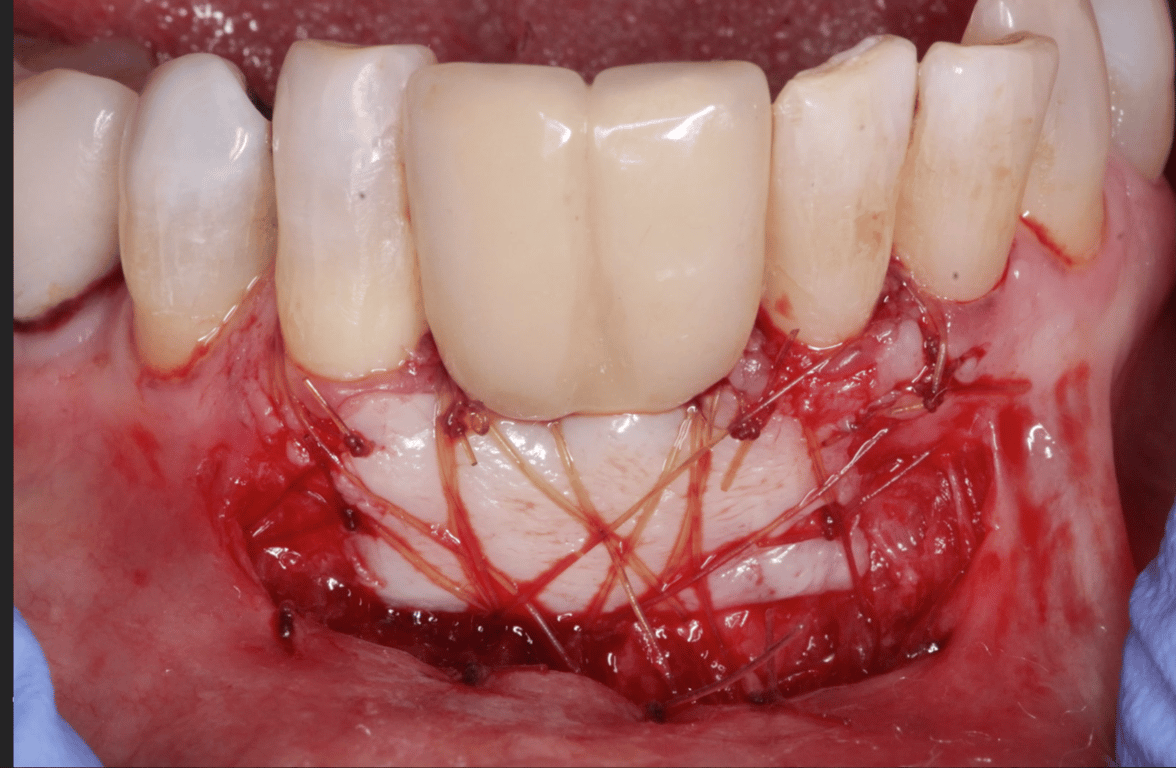
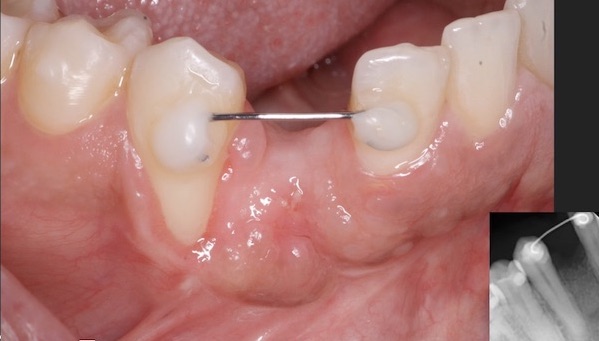
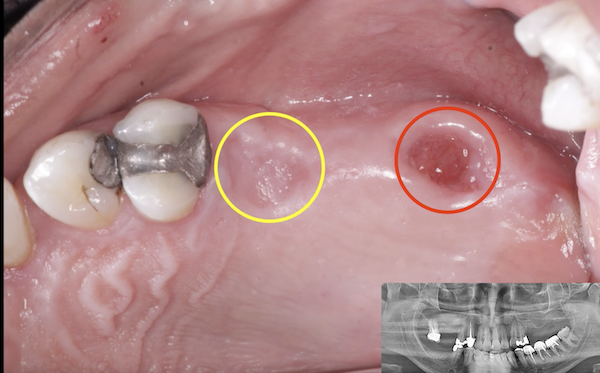
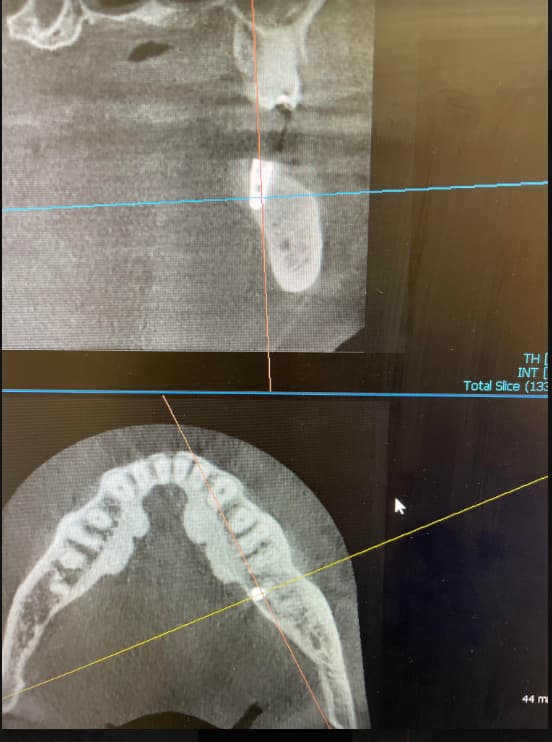
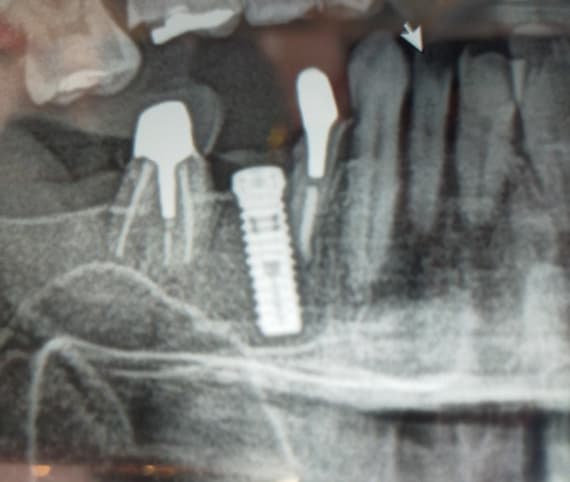
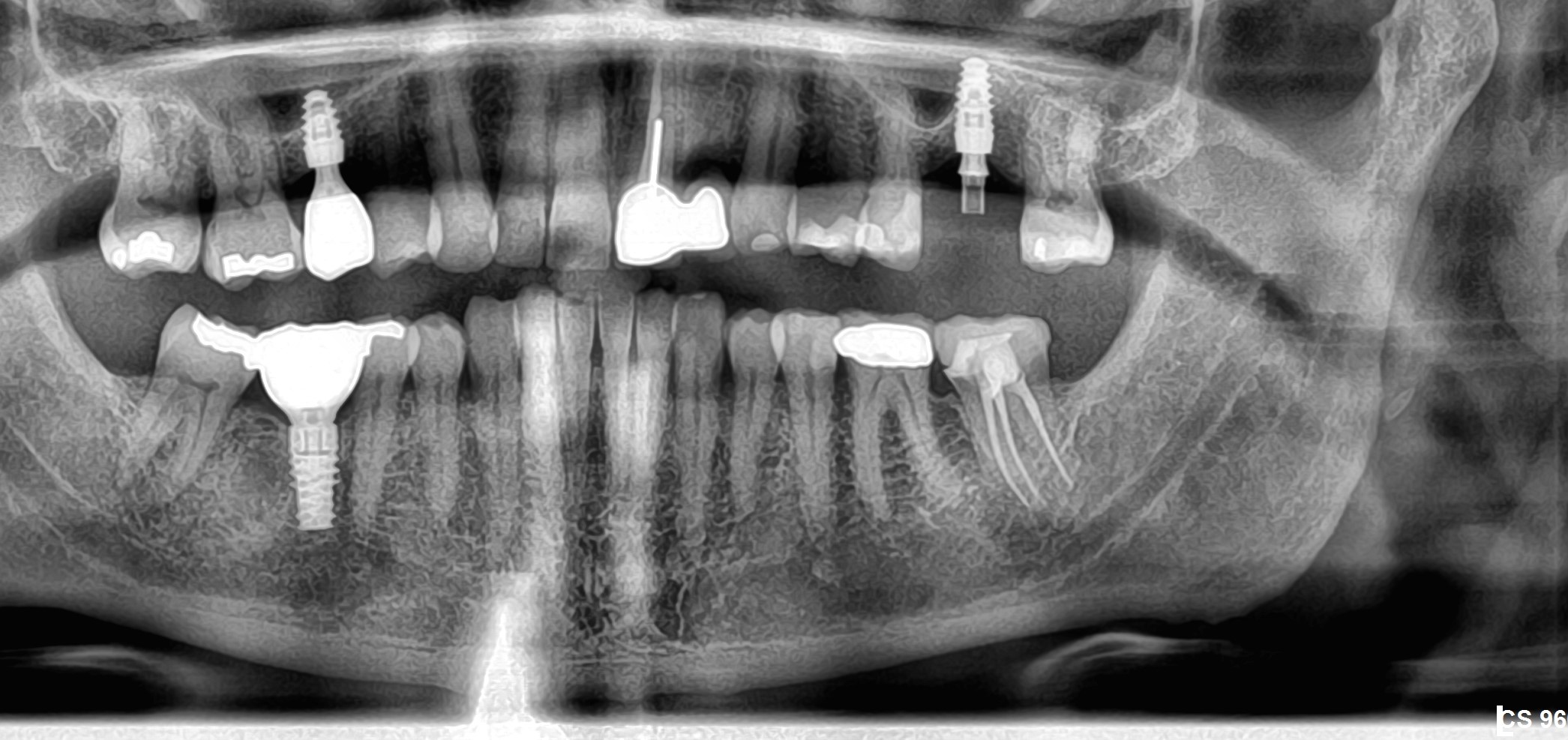
I am treatment planning a dental implant case in which I will be replacing a mandibular second premolar, first molar and second molar. I think I need to do a block graft.
How can I best avoid traumatizing the mental nerve? My flap will be extending to the mental nerve area. What is the best technique for doing this kind of graft?
Free Daily Email Alert Click Here>>
Get OsseoNews.com Comments delivered daily! Click Here to subscribe.
Wed August 20 2008
FREE Weekly Email
Keep current on the latest dental implant discussions! It's Free!
>>Click Here to Subscribe to OsseoNews.com Now!
-
Editor Picks
-
Popular Posts
-
Hot Topics
- Implant Systems: Commercially Pure Titanium vs. Alloy?
- Type of Anesthesia for Dental Implant Surgery?
- Implants Too Close: Can I Use Orthodontics To Create Space?
- Large Defect in the Labial Cortical Plate
- Abutment Screw Gets Stuck: How to Prevent This?
- Crown 1mm Short of the Margin: Recommendations?
- Suture Lost Exposing the Implant: What to Do?
- Mini Implants in Anterior Mandible: Expectations of Longevity?
- Space Between Implant Fixture and Natural Teeth: How Much Is Enough?
- Bucco-Lingual Resorption Exposing the Threads on Implants: How to Manage?
- Options for Provisional Restoration?
- Loose Bio-Oss Particles: Can Implants Be Placed?
- Maxillary Overdentures: What Implant Support is Required?
- Mixing Metronidazole Solution in Grafting Material?
- Sinus Lift Complication after using Summer’s Osteotome Technique?
- Cone Beam vs. Conventional CT Scans: Radiation Levels?
- Sinus Tear: How Long to Wait for Regraft?
- Mini Implants for Long-Term Use?
- How to Avoid Hitting the Mental Foramen Nerve?
- Best Technique for Removing Osseointegrated Implants?
Implant Courses
>>More Implant Courses

25 Responses to “ Best Block Graft Technique? ”
The best way to avoid traumatizing the mental nerve is to have the surgery performed by an experinced oral surgeon.
That is not a very helpful comment to someone who is trying to LEARN. Trying to “protect” your profession does all harm. I don’t do all procedures myself. Hwever, I do like to KNOW how they are done.
Learning is an admirable trait. An inexperienced dentist practicing on a living patient is not. While the previous comment may sound harsh, it merely serves to illustrate the fact that there is a lot more to placing dental implants than drilling a hole in the bone. Work with a qualified specialist who may be happy to place the graft for you, then you can place the implants relatively routinely, assuming that you have the experience to do that.
Quote: ‘Trying to “protect” your profession does all harm.’
Well, maybe it might not do harm to the patient who otherwise might be undergoing a procedure that the dentist is not only doing for the 1st time, but no doubt also charging the patient for acting as a guinea pig!
In previous threads its been mentioned to treat the patient like you would a member of your family -would you be happy with a Dr. who did this to your family?
Nerve injury is a risk (usually avoidable if properly treatment planned and executed). Anyone, including experienced oral & maxillofacial surgeons, periodontists and general dentists can damage the inferior alveolar nerve or the mental nerve. BUT ONLY THE ORAL AND MAXILLOFACIAL SURGEON is Trained and Qualified to manage an injury to this nerve… that is very important to consider.
I admire you for wanting to learn how to treat more complex implant cases. Some of my closest friends are general dentists that perform complex implant surgery and bone grafting with great success. But they know their limits and know when to call me.
Hopefully you have a good relationship with your local OMFS. Swallow your pride and ask him/her to show you/teach you and “walk you through” on your patient.
Remember you need to do what is best for your patient not your wallet.
Good luck!
If your concern is how to prevent trauma to the mental nerve while reflecting a flap. Reflect the flap with the help of gauze and blunt end periosteal elevator. I do not know if you have ever seen a mental nerve?? It not easy to cut that nerve unless you use a sharp instrument while flap elevation. I hope this helps
Obtain proper hands-on training and get some “experienced” assistance in handling this “touchy” situation. Education is essential to successful implant therapy.
Briefly,you haven’t provided information relative to donor site or lateral vs vertical bone deficiency. Block onlay grafts in this area are usually taken from the posterior mandible. That can involve the IAN as well. A large relaxed flap is required to PASSIVELY cover the graft to avoid dehisance. Vertical grafts are more demanding of large relaxed flaps-buccal and lingual. Flap relaxation will expose the mental nerve and certainly that in itself can cause some paresthesia. Cutting the nerve fibers can occur while relaxing the periosteum. If you do this surgery and have complications, you must be prepared to defend your decision not to refer since you will be held to the same standards as a very experience and properly trained surgeon. You will have a difficult time finding a credible expert witness to defend you. This is about proper patient care and not about specialty territory defense.
From the information you provided, the best way to do this is NOT to do it yourself. Surgery should be learned in a controlled, monitored, and mentored fashion.
I teach my residents in block grafting in a 3 hour block of time, with myself being the first assistant, with patient sedated, with at least 2 assistances, having all kinds of handpieces/burs/chisels, retractors,and having all types of bone graft subsititutes. This is also done in an oral surgery department with all its resource to support.
I would not step out of the room until my residents have done at least 5 bone graft surgeries. These are residents who also have cut the mandible and worked with the nerve in orthognathic, trauma, and cancer surgery.
Could you provide your patient with that kind of experience?
This frist of all is about your learning or specialty competition; it is about the PATIENT comes first.
I meant to say in the above post that it was NOT about your learning or specialty competition, but it is first of all about your patient.
Blunt dissection, identify the nerve and foramen… then protect it. I don’t want to flame on you BUT you need training friend. You “think” you need a block graft and you want to perform it or are you just curious? That question is actually frightening.
I wish I could find the same compassion these dental professionals are displaying. My dental implant was improperly placed and I cannot find a sympathetic dental professional willing to help me. Pain daily with no end in sight.
To the above poster with pain after dental implant placment:
I recommend seeing an oral surgeon who are known in the area of managment of injuried nerves. Where are you located? There are only a few of these surgeons in the US.
I am not sure what type of graft you talking about that you want to place?.
The best way to avoid damage to mental nerve is by placing the graft and exposing the mental nerve with blunt elevator so you can see directly the location of the nerve, take appropriate x-rays before, during, and after treatment. If you not sure how to perform this type of surgery you better refer or perform with someone who knows.
I am sorry I meant by placing flap not graft.
To the dentist who asked the question at the very start. Never mind the past comments about “leaving it to an expert bla bla.” Those are all self-centered oral surgeons who think their poo smells like roses. Truth is you are just a qualified as them if you do a little research. Read some literature about the procedure and give it a try. Yes, at some points we all must “practice” on humans…thats why we work in dental practices folks. So, good luck!
nonsense.
block graft surgery is not what you read, research and perform.
there is
pretty big involvement.
person who is not even sure whether he/she needs(he/she thinks) block graft,is certainly not qualified to do surgery by him/her self FIRST TIME.
success rate of DFDB or PUROS block graft is questonable in questonable hands.
and to harvest chin block or ramus block first time definetely needs lot more skill and knowledge than just protection of mental nerve.
If you have seen cases done by oral surgeons that went smoothly in an easy way as you thought , this is not exactly the real thing , and you would feel how delicate it is if you try to start doing it under suprrvision of a qualified oral surgeon .
Doing a block graft near the mental nerve is not an easy thing for a GP dentist especilly you will need to perform a full discection sometimes to the nerve attachment into the lip and that is important to have a good view and access to fix the graft with a screw , for me , inspight I am a maxillofacial surgeon with 21 years experiance I still feel cosious while disecting the mental nerve and take very good care to protect it afterwards especially during retracting the lip and flap and while doing the drilling and fixation of the block graft, I wpould advice every dentist not be over confident and not to do complicated surgeries , because what you see easy job by the surgeons are not the same with GP dentists
I witnessed as surgical assintant my Professor, who is one btw a very big dog in MF surgery in Europe, who also invented some genious fixation plates in the 90s, severing a mental nerve and suturing it after plating of a trauma patient, in HOPE that the nerve innervation would be restored.
Having said this, I can’t follow the paranoia of some friends here.
A surgically gifted GP IS certainly able to perform a mandible block grafting, if he has learned the theory of the techniques.
I would also rather put my bid on GP rather than the surgeon, since a GP would do it more careful and less forceful minimizing any iatrogenic injury, assuming the focus of this GP is his work and he has the neccessary passion for it.
my 2 c
To all the specialysts out there, and from the person who does simple horizontal bone grafting and implant placement as a general dentist, why is that you (the specialysts) reluctant to share your knowledge when i call and ask a question — be it a periodontist, oral surgent or orthodontist. And, here you are saying - refer — to a dentist who wants to learn? I see the same trent all over again and again even with specialysts who i refer som ecases.
alan
GP dentist and Alan both have valid points. After having been talked to like I have less than sh– for brains by most Oral Surgeons and Perio’s I took some very fine courses in 3rd molar exts from Carl Koerner DDS, and Have completed Misch’s surgery and prosthetic programs. Ive probably taken out over 6000 teeth in my time and at least 1000 3rd molar impactions with far less trauma and complications than I saw while I was making referrals to upscale snooty oral surgeons in the “upper ranks of the society”. I have very few kids looking like they were beaten up with a baseball bat!!!! My point is that if you’re smart enough to go through Dental School you’re still smart enough to continue learning! Not even the Oral Surgeons or Perio’s have a Monopoly on that!! Look for the training you can find it!! I’m not trying to promote incompetence or wrecklessness either!!! And we all have to use patients a Guinea Pigs from time to time but hopefully with some educated and informed methods….. Why do you think they call it “Practicing Dentistry'’
Sir, you must be one of those people who are frustrated with for example,repairing the Schneiderian Membrane.I bet, no specialist will envy you.
i suggest that you start out with a relatively small block from the ramus as a first block. Plan carefully and do the planning with someone who has performed blocks before. select a case where you are certain that your graft will not have the IA impregnated into the block on removal; something on the small side and consider additional imaging. find a patient willing to have the surgery done with your mentor over your shoulder, guiding you as you go. make sure you have the correct surgical equipment whether you’re using burs and saws or a piezo unit. palpate the mental, and use gauze for blunt dissection near the foramen. make sure that you identify the nerve visually so that you can stay away from it during the rest of the surgery. also, know your vessel anatomy and be particularly careful with the buccal artery, that can be injured if your incision is too superior when you reflect near the ramus. stay sulcular and to the buccal. the lingual nerve is generally not atop the mid-crestal bone, but it can be so stay on the buccal during your distal release and try to stay if keratinized if possible. ensure full thickness and keep the periosteal on bone during reflection near the ramus. prepare the recipient site first so you know how much block you will need and get a block a little larger than needed so that you can fit it to the recipient site. generally, it’s harder to get a corticocancellous block on the ramus without getting close to the IA, probably easier from the chin. white periodontists and GP’s can easily do these, i’d probably have an omfs friend as the mentor in case anything goes wrong because they are best trained to manage these complications. lots of dental surgeries are mechanical in nature–it’s that one time when you get in over your head. i think as long as you keep referring to the mentor they will help you with your block.
Don’t be afraid to ask for help from your local oral surgeon or periodontist who has experience. They will be happy to do the surgery on your patient while you assist. This will be best for you and your patient. I have done complex bone augmentation for referring a gp who likes to place implants but does not feel comfortable with more complex bone augmentation. Find a good CE course which features cadaver surgery. There is not substitute for hands on experience, watching is no substitute for doing. Remember as specialists we are there as a resource for you.
Someone asked why a specialist is not willing to share tips, techniques etc. Well if the surgeon is busy that day they may be a little perturbed when you call and interupt their day to answer questions. OK then ask to meet over lunch or dinner. Don’t be cheap insist on paying. When you refer a patient don’t just send them no pays, druggies, flakes, difficult pesonalities, patients that need something done emergently but they have used all their insurance benefits, losers, your complications, members of your staff who want a discount because you are such a “good” referer, are pregnant and lost the baby last time they had a tooth pulled, an extraction you can’t finish, after you’ve taken out the “easy” teeth, you can’t get them in your usual oral surgeons office because they too have a life and are spending time with their family, at 4:45 on Friday, phantom pain. If you just didn’t refer patients like this on a regular basis then I would be happy to talk to you. But, the problem is a majority of the doctors who ask questions about grafting or implants are ones that refer patients to me like the ones above. I did’t make up those patients they were all refered to me by local dentists. So go up to a mirror and look at the reflection and what do you see. A person who has integrity and class or a loser. It’s not too late to change. My license allows me to do rhinoplasties and facelifts. Do I do them? No. Why? Because I know other people who can do them better. That does not mean I’m less of a doctor than them it just means I have a conscious.
Leave a Comment
Note: Please refrain from ad hominem attacks, and promotional comments. Outside links are not permitted in comments. Though we require an email to route questionable comments to our editors, we will NEVER publish your email or use it for any other purpose. Thank you for your understanding.
Note: At times your comment may not appear on the website immediately, because it has been sent to our editors for approval. Once approved, we will publish the comment. There is NO need to resubmit your comment, if it does not appear on the website immediately.