posted in Restoration of Dental Implants, Crowns and Bridges, advice
« Bone Morphogenic Protein: Is this Required for New Implant Cases? | Alternative to Bone Grafts for Implants? »
Print This PostDr. P. asks:
I do a lot of ceramic inlays and onlays. I find this easier than doing it directly. I am considering purchasing a CEREC unit and milling machine for my office. While talking with my dental supply representative, he mentioned that one of the fastest growing uses for CEREC is in-office milling of temporary and permanent crowns for implant abutments. I am assuming that you have to use a ceramic abutment in order to be able to cement a ceramic crown on the implant. I am just looking at single units, since that is most of what I do. Can you use the CEREC to make a 3-unit bridge to cement over implants? I might try that in the future. Before I make this investment – I am a solo practitioner – what are you doing out there in the high-tech dental community?
24 Responses to “ CEREC to Make 3-Unit Bridge to Cement over Implants? ”
As far as I know we can use the cerec 3 system to do crowns over implants and they provide built in templates for the strumann fixtures in the software. For any other implant system u simply take the optical impression and deal with the case like any other prosthodontic case
I wonder about using this system for posterior teeth or for restoring a single tooth implant in the premolar region.
My concern is the pressure in the posterior area. Wouldn’t PFM be better?
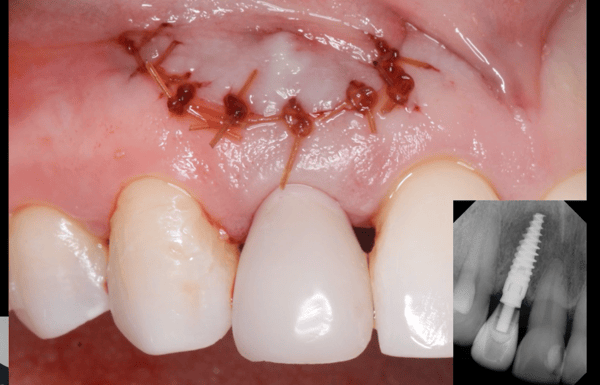
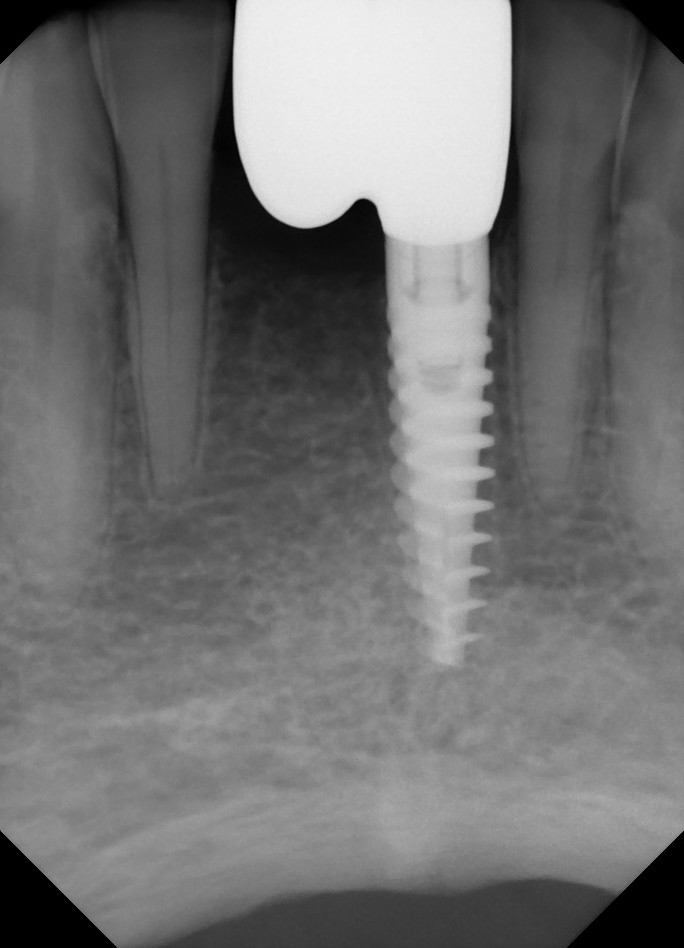
I restore ALL my single tooth implants with CEREC, mostly eMax and occasionally empress cad in the anterior only. I have had zero failures so far.
Take a look at the D4D system, they have recently introduced an IMPLANT option on the choices and is far ahead of Cerec in development. Cerec requires powder, D4D NO POWDER!! We use Emax on all our implant cases and make implant temporaries out of Ceramic for better tissue healing. Can’t say enough about the D4D, looked at Cerec for 10 years waiting for improvements that still haven’t happened, D4D listens and if you look you will be pleasantly surprised. They are the BEST company I have had any dealings with and I receive NOTHING for saying this! Conatct me if you need any info! Cliff
I restore all my single implant crowns with Cerec E. Max Cad Low transulency. I have been doing this for 15 months, no fractures.
You can cement over a titanium abutment easily. Prior to placement, sand blast the crown supporting surface of the abutment. Etch and silanate the internal surface of the crown, cement with composite cemtent such as Multilink or another of your choice.
When comparing. Although PFM’s have a higher compresive strength than E. Max Cad, the latter has no veneering porcelain so there is no veneering porcelain to break off as with PFM’s and Zirconium veneer crowns.
Presently, Cerec 3-D does not have the ability to make bridges out of Cerec material. The In-lav version may have that ability, but I am not familiar with that product.
To really check out Cerec, go to CerecDoctors.com. They are a pay site, but have enough free stuff to give you a good idea about Cerec. I have had my unit 6 years, and have just ordered the new BlueCam acquisition unit. I also will soon be doing eMax, which is a compelling reason to go CadCam. e4d vs cerec? I think they both get the job done. However, unbiased information is hard to get, as I don’t know anyone who has owned both, nor anyone who had one then switched. Like asking the owner of a new BMW which car is best. The BlueCam software will do 3 unit bridges, but right now, the only material available is for temporaries only. There is a way to use it to make surgical guides for implants shown on CerecDoctors.com. The real deal maker/breaker is the $. Either it works or not. Figure how many units times your current labs cost per unit equals the payment. For estimating purposes, figure $20 per block. If you want to go eMax, you will also need to spend another $5-10K for the oven and misc. materials. Good luck.
Before you make any sizeable investment you must ask yourself a very important question. What is the return on my investment? You must also ask yourself what you will do a year from now with an outdated piece of expensive equipment. Before you buy, go to someones office that has a machine and see if you would be proud of what they are producing with the machine
Don’t mess around and just have the lab fabricate you a strong/stable 3-unit bridge with metal or zirconia substructure. In-office milling units don’t provide the strength frequently required to restore implants, unless you keep them overly out of occlusion.
I think you should take Dr. K’s advise. It is the least expensive best way to serve your patients well.
Stick with a proven lab that has the expertise and the cad cam technology to give you the materials and advise you need. I am a dentist, NOT a lab technician, so I leave that to my Lab. Focus on what is best for your patients.
I have owned the D4D system in the past. The previous comment by Dr. Cliff is not the experience I have had. I have owned both the D4D and the Cerec. The Cerec has been much more predictable especially with implants. The D4D states that they can do implants, however, I have had serious trouble with them. This may have recently been improved. I have been able to be predictable with the Cerec on all the restorations. I feel the D4D has a long way to go before it can have the same predictability. It will get there eventually, but its not there yet. This is just my experience.
I have a cerec 3d and it will do an outstanding restoration.I use Thommen system .We found doing correlation off of a temp crown on abutment works betterthan data base.We have had no failures.My cerec crowns are better than lab produced!
I have been pushing the envelope with Cerec over implants. I spend a lot of time explaining to the patient that this is a new technology and no one really knows how it really compares to traditional metal or zirconium oxide supported restorations. I tell them that the risk is zero since I will replace the restoration for free should it fail in the first five years (I want to make sure I see these failures over a long period of time and I really don’t care for the fee we pay to replace it.
Using nicely shouldered abutments exclusively on titanium abutments and using the lower strength empress cad, cementing with temporary cement…. all te possible no no’s and haven’t had a single failure in the past 3 years. Those blocks with adequate thickness when glazed and highly polished defy the published strength tags.
As Sameh stated as long as a shoulder is present I believe the empress block,is at the least equal to any lab crown.The only limiting factor is improper abutment,ie too small.I have placed numerous empress block cerec’s in the anterior over metal abutments.The low light transmission prevents metal color showing through crown.I believe the zirconium is inferior due to fracturing compared to cerac crown on implants.If you don’t have a cerac 3D,one cannot realize the superior esthetics possible with the cerac technology.
Dr. A’s comment about his lack of success with the earlier D4D software regarding implants is true, but it has been corrected with this Update as well as numerous other improvements. Each upgrade has been a serious improvement, changing with our input and their experience. I’m confident, as you are that they will get there, thankfully with us in tow! Others comments about cost are absolutely the truth and if your lab costs don’t cover this you shouldn’t give it a second thought. Scanners will be the norm soon, milling CNC units probably not. For an Only-White dental practice, this is the Ultimate toy, making all your restorations in porcelain without sending it out.
Sorry, but the D4D was comparable to the CEREC 3D, better in some ways, worse in others. However, the new CEREC AC is head and shoulders better.
No powder? Wow, it takes all of 10 seconds to powder and 5 seconds to clean but how much memory does the D4D use with its laser camera? That costs a lot of speed. The CEREC MCXL mills significantly faster than the D4D and the AC is much faster AND more accurate. Look at the CEREC AC. They don’t compare.
Your right they don’t compare! The layering of powder means your imaging powder not margins and you still have the patient breathing in something that should remain in a fume hood and certainly not in any surgical site. The milling is much quicker with the CEREC and more like a temporary, not the detailed anatomy you get with the D4D. So much for time! The powder is a potential carcinogen and comes with that warning on the MSDS. Not to be inhaled! Difficult when you have to spray the teeth, or for the AC the whole mouth. Powdering teeth is a dead technology and has been one of the limiting factors with Cerec. Never mind the milling unit is like a used Hyundai in comparison to the 200+lbs of the D4D, but then I suspect rb is a salesman not a scientist!
Hello,
I am french dentist.
I’ve bought Kodak 9000 3D, there is 6 month ago.I use it for the implants. Very good!
Now I would like to buy the Cerec. Today the answer I have is that we can’t do 3-unit Bridge, only temporary bridge. They say that soon we will be able to do definitive bridge (with the actually machine: the problem is not the machine, but the ceramic bloc.
In France we don’t have 4D4 : I looked on internet, but they don’t do definitive bridge…
Just upgraded to CEREC AC and MCXL unit. The images captured by the AC camera are clean, and even in fast mode, the crowns come out very smooth, in less than half the time. This is a major improvement from CEREC 3D, IMHO.
Interestingly, Dr. Leachman works for Apple computer in Canada, could there be some distaste for CEREC because it uses microsoft os? You may be a dentist/scientist but are you also a salesman of sorts? Besides, why bash Hyundai’s? Have you ever driven one? Maybe you haven’t driven a CEREC either, or have you? I’ll objectively as possible give my input…
I have been using CEREC for 7 years and have made thousands of restorations with it- it works very well and I have had very few failures…most of the few were due to operator error in the first year. It cannot be used for everything. It is not perfect, it is expensive, it was the only game in town until fairy recently. It is fast, reliable and is supported well. I know one of the engineers who worked developing E4D and it is not a perfect system either. Why don’t you mention some of your frustrations/challenges with it? Anytime someone comes with derogatory comments first…think about why. I am pleased that Sirona has competition so we all win in the long term( especially lower prices would be nice). It would be great to have a completely unbiased viewpoint but no one is going to give it because we all have some bias.
Titanium dioxide powder is the white writing on m&m candy, it is a coating lightly sprayed, it is easy to do and master without being a big deal. It is not plastered on. Concerns over powder covering the margins? No milling machine can make a flush joint as there is always a small space between the margin and the restoration. Does E4D really have a more “closed” margin, maybe or maybe not. Cement fills in this minute clinically insignificant space.
Do your homework, ask users of both systems, check with relatively unbiased sources where possible…
So far, Cerec does not have the ability to make 3 unit bridges over implants, but I am sure this will change in the near future.
I am practising in a rural area and I was considering investing in CEREC or similar technology to avoid sending to a lab very far away from my office.
I would like to know:
1) if one can make single unit crowns over implants with CEREC;
2) if the single all porcelain crowns are as good as the metal based ones in terms of fracturing,
3) if a used CEREC is a worthwhile investment or should one buy new from the beginning
4) if the older systems (which are price attractive)are really so bad that they should not be bought
5) if the older systems upgraded to latest software are any good
As you can see I am really lost.
Can any non-sales person can help please?
Thank you
Dentaldox
I have been a CEREC dentist since 10/04 and hardly ever use a lab anymore for C&B except for the occasional bridge. And now, with the AC unit and CEREC Connect we can use digital impressions and send the case to the lab over the internet! The results are fantastic! On implants, I use the E-Max Cad blocks for single units and they are reportedly stronger than PFM crowns! Because this is a uniblock restoration there is no layering of porcelain which is the biggest source of failure of porcelain to Zirconium or porcelain to metal restorations. There is a learning curve, but well worth the effort. The restorations look great, fit great, and you will have complete control….no lab technician involved if you mill your own blocks. I am glad to be practicing dentistry today in this wonderful world of technology.
Patterson Dental does a great job on its CEREC support and they offer 100% financing. I am a practicing dentist and have placed over 1,500 CEREC restoratins including cosmetic makeovers….I look forward to going to work when I know I will do a CEREC unit or more that day.
Stay away from CEREC. Unless you have alot of free time and like to waste it creating poor quality restorations. Why do you think there are so many used Cerecs going for less than $30K on E-Bay? A $120K machine? Don’t waste your time trying to become a second rate lab tech.
Leave a Comment
Comment Guidelines: This is a forum for dentists for intelligent discussion. No insults. No outside links. No promotional comments. Though we require an email to route questionable comments to our editors, we will NEVER publish your email. Consumers & Patients: Please do NOT post dental questions here. Instead Visit ChooseDentalImplants.com to get Expert Advice for Implants.
Note: At times your comment may not appear on the website immediately, because it has been sent to our editors for approval. Once approved, we will publish the comment. There is NO need to resubmit your comment, if it does not appear on the website immediately.