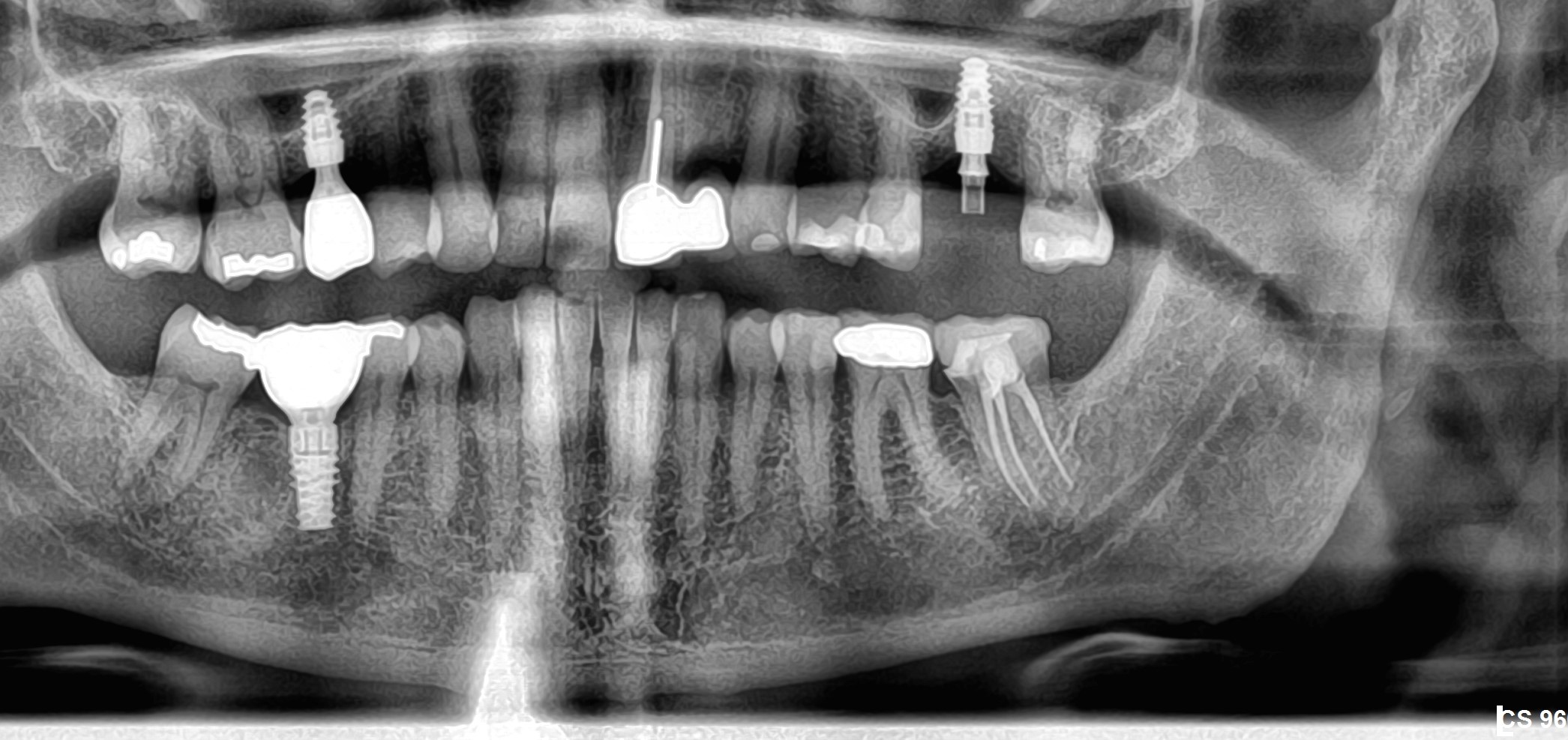
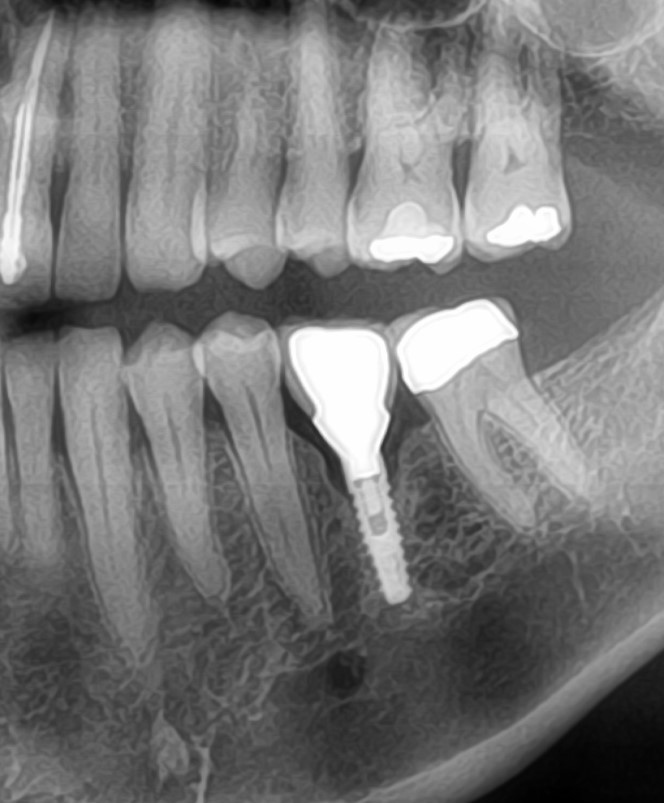
Implant Crown Materials: Any Difference in Force Transmitted to Implant Fixture?
Dr. S. asks:
We have many materials available to either form crowns or to cover a metal understructure (coping). Is there any difference in terms of force transmitted to the implant fixture? If the crowns are made of Targis/Vectris, for instance, since this is a softer material [Ed. Lower modulus of elasticity] than porcelain fused to metal, will this absorb some of the forces that would normally be directly transmitted to the implant fixture. We used to use porcelain teeth for dentures but most have now switched to acrylic because this results in less force transmission to the maxilla and mandible, reducing bone resoription in the long term. Should we consider similar paradigms for restoring implants with crowns and bridges?
3 Comments on Implant Crown Materials: Any Difference in Force Transmitted to Implant Fixture?
New comments are currently closed for this post.
gandhi
4/8/2008
i prefer acrylic only for full mouth restoration or for multiple ones rather than PFM for cementable bridges from my experience of last 20 years for implant restoration.Acrylic has been kind in load compared to PFM.Acrylic has proved poor in strength.Still it is preferred and can be replaced as and when required.For hybrid one/ screw type one PFM is good.
James Earthman, PhD
4/8/2008
The problem with acrylic is that its wear resistance is relatively low. We found using in-vitro and in-vivo percussion measurements that the shock absorption (damping capacity) of both Belleglass and Gradia composite materials give rise to damping that approaches that for acrylic [1] while providing much better wear resistance. Based on an earlier in-vitro study using both percussion and load cell measurements [2], the increase in damping capacity associated with switching from either cast gold or PFM to one of these composites should correspond to about a 50% reduction in transmitted force.
1. A. Barzin, C. G. Sheets, and J. C. Earthman, “Mechanical Biocompatibility of Dental Implant Materials,†Proceedings of the 4th Pacific Rim International Conference on Advanced Materials and Processing, (PRICM4) S. Hanada, Z. Zhong, S. W. Nam, and R. N. Wright, eds., The Japan Institute of Metals, 2949-2952 (2001).
2. C. G. Sheets and J. C. Earthman, "Tooth Intrusion in Implant-Assisted Prostheses," Journal of Prosthetic Dentistry, 77, 39-45 (1997).
Alejandro Berg
4/8/2008
While doing my Thesis in Biomechanical aspects in implant restoration I had to research a lot over this and the final result was that there is no significant difference. In europe today the tendency is to use full zirconia abutments and crowns and there is hardly anything harder and stiffer than that.
The use of resisns has been the branemark way for 45 years in admodum systems, I use it to, but for single units or bridges I use zirconia or pfm. In the end the thing that will set you appart and get you success is the correct occlusion but most of all and most important will be the disocclussion.
best of luck