Dr. Reno, a dentist, asks:
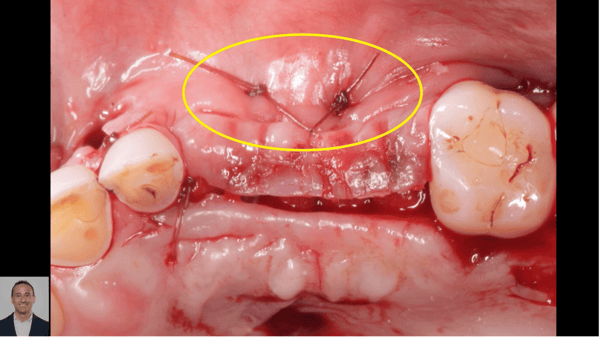
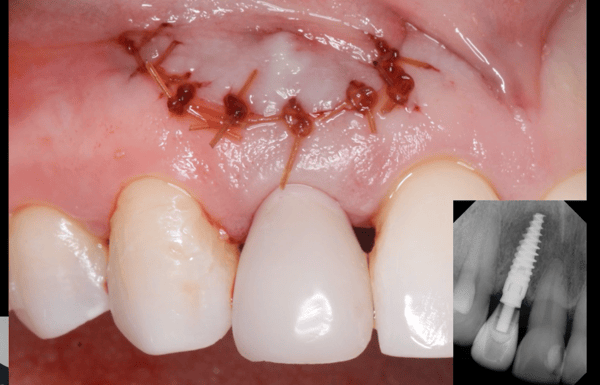
To replace a maxillary canine, I create a progressive anterior disclussion involving the maxillary lateral incisor and first premolar prior to the fabrication of the crown for the canine. 

This enables the technician to build the maxillary canine crown into a pre-determined progressive anterior disclussion.  If I cannot use the lateral incisor, I create a group function using the first and second premolars before the technician fabricates the maxillary canine crown.

Recently several colleagues have told me that they are having maxillary canine crowns made for dental implants that reproduce canine guidance without a progressive anterior disclussion or group function.  I wonder if in the long run this will work because of all the lateral forces applied to the crowns in right and left lateral excursions.  I a wondering what the rest of you doing for cases like this? I would appreciate any comments. Thanks.
Featured Courses
>>More Online Implant Courses

Cone Beam Technology: Placing Dental Implants with Confidence
In this webinar, Dr. Myers will discuss the clinical and diagnostic benefits of incorporating 3-D into the dental practice and 3-D's compatibility with guided surgery applications, as well as the communication and marketing benefits...
>>Learn More and Register Now!

8 Responses to “ Maxillary Canine Implant ”

  • Wayne Simmons August 15th, 2006

    In response to the situation stated above: Cuspid rise occlusion provides an occlusal strategy which requires the least amount of occlusal adjustment, both short term and long term. even though the proprioception of the implant supported cuspid is unlike a natural root, it still provides for the least oblique functional/para-functional forces on the lingual incline of the cusp. When group function is attempted, it is next to impossible to keep the working side in tune. We know that the periodontal ligaments allow some movement of the root(s) in all directions, while the implant movement is clinically immeasureable. The stimulus for bruxing is thereby introduced if posterior dentition is not discluded early enough. Many TMD patients can be immediately improved by introducing cuspid rise and eliminating posterior contacts in excursions. The single maxillary cuspid implant restoration is a comlex restoration. One is always concerned about migration of the cuspid out of the arch when not splinted. In my experience, the cuspid rise occlusion with an implant provides a similar benefit as does cuspid rise on a natural root.

    In addition, the muscular tone alone can alter a very finely adjusted group function so that it is no longer in correct alignment.

    Just some clinical thoughts.

    Wayne Simmons

  • Mike Johnson August 15th, 2006

    The only reason we kept lateral forces off implants was because of screw loosening or fracture. Our implant/abutment interfaces are much better now, and screw loosening is (thankfully)a thing of the past. Therefore, cuspid rise can be created with minimal risk of component failure. From an implant failure standpoint, past conventional wisdom followed the theory that only axial loads are acceptable. However, if you are an ostecyte under a thread, you are in shear with an axial load. If you are above the thread, you are in tension. Neither of these forces are optimal for bone loading, yet this is what faces an innocent osteocyte with conventional axial loads. Therefore, with an off axis load, the cells are still non optimally loaded, similar to an axial load and should not cause deintegration. The main benefit of axial loading is lessening of the stress on the screw joint and this is essentially a non issue if the correct implant is used (i.e. an internal connection or external hex with a gold screw torqued to 35ncm).

  • Bob Schneider August 16th, 2006

    In response to the above question. With earlier designs implants placed in the canine area were a relative contraindication due to loose and fractured screws. With todays internal connections this problem has virtually disappeared. A key to understanding occlusion is the pre-treatment mounted diagnostic casts, at the proper VDO and occlusal and relationship to determine if canine guidance, group function or progressive group function is indicated for that particular patient. As always pre-planning is a major key to success.

  • Anonymous August 16th, 2006

    I do many implants as an all on 4 technique this creates a force that is oblique to the long access of the implant these off center forces if controlled well seem not to fail implants. The work of Palo Malo would be good to review

  • george lukehaas d.m.d. August 16th, 2006

    I think it cuspid should be restored like it was meant to be if it is a single implant, screw retained and not cemented. the use of tekscan is also very helpful.
    Dr. Avishai Sadan has an article published on this.

  • Anonymous August 18th, 2006

    My concern would be more for the potential for excessive lateral forces when guiding the mandible producing bone loss on the labial.

  • Anonymous August 19th, 2006

    I do agree with the above anthor’s opinion.The tekscan is realy a nice choice,but many dentist have not it.My method is by occlusion paper to determine the delayed occlusion clearance.

  • DR. Zev Kaufman September 8th, 2006

    Stop re-inventing the wheel! Look at studies done in the late 1950th, early 1960th (D’amico et al.) they have clearly demonstrated a precipitous reduction in the electrical activity of the temporalis and masseter muscles when canine guidance was involved. It is still the best way to reduce parafunction and disclude the posterior dentition.
    As to the external/internal debate, let’s put that to rest as well… it is not the internal or external aspect that makes the difference, it is the LENGTH of the connection that does. Nobody reported screw loosenings on a spline implant. All the screw loosenings are reported on a SHORT external hex. Let’s stop blaming the old-faithful external Hex for operator’s error in improper implant selection for a specific situation.


Leave a Comment

Comment Guidelines: This is a forum for dentists for intelligent discussion. No insults. No outside links. No promotional comments. Though we require an email to route questionable comments to our editors, we will NEVER publish your email. Consumers & Patients: Please do NOT post dental questions here. Instead Visit ChooseDentalImplants.com to get Expert Advice for Implants.


Note: At times your comment may not appear on the website immediately, because it has been sent to our editors for approval. Once approved, we will publish the comment. There is NO need to resubmit your comment, if it does not appear on the website immediately.