Dr. F. asks:
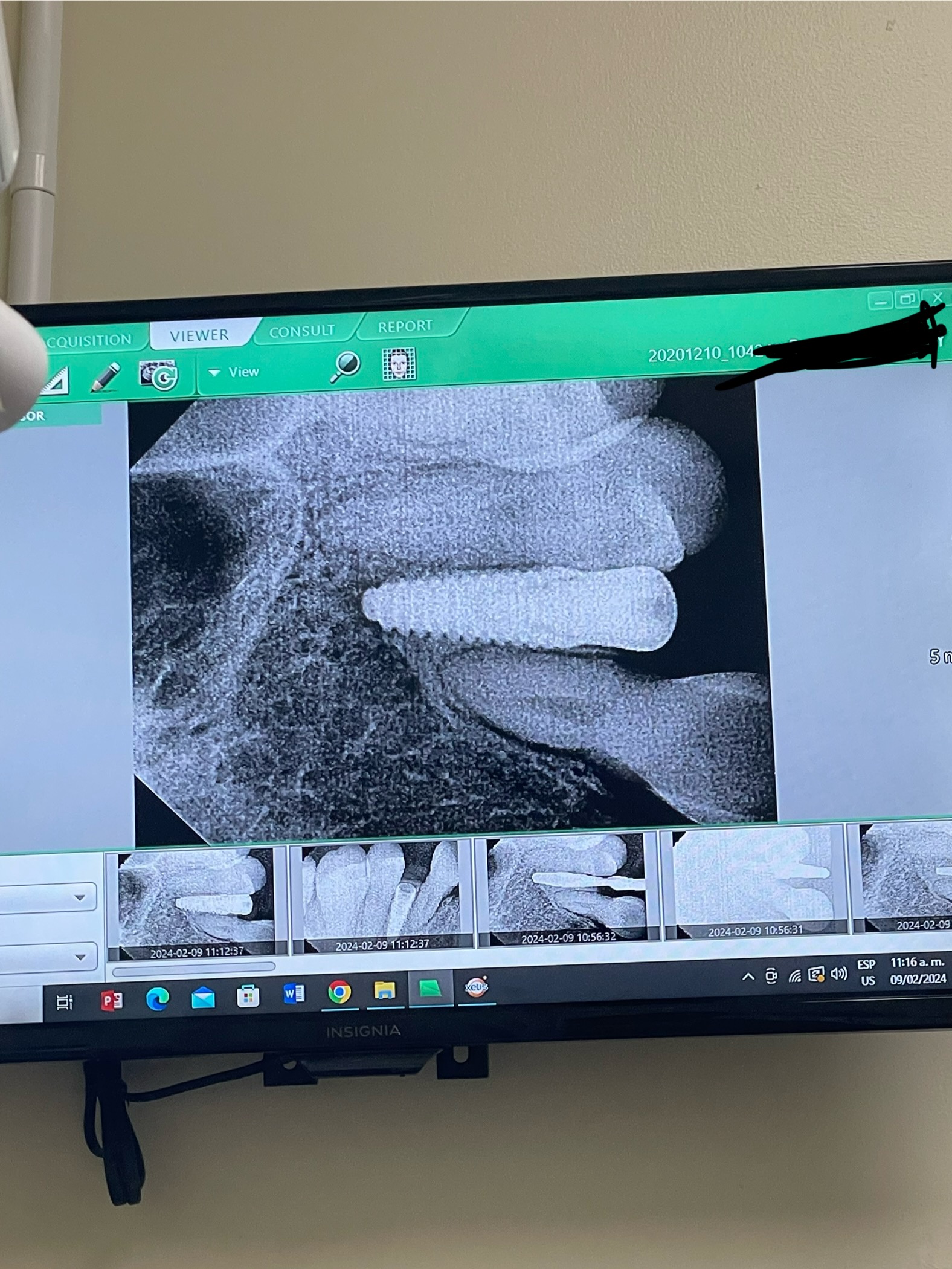
I have patient with lower Kennedy’s class II removable partial denture opposing natural dentition. His mandibular ridge is severely resorbed and is like a knife edge. He has no vestibule on the lingual. His floor of the mouth and crest of alveolar ridge are at same level. The inferior alveolar nerve is almost at the level of the alveolar ridge.

He presented in my office for implant retained removable partial dentures denture and upon evaluation found out he is not a good candidate for conventional implants. Now we are considering mini implants. I have seen cases where mini implants have been used to retained lower overdenture and are placed mandibular anterior area. Could I place mini implants in the posterior area to support and retain a removable partial denture with a saddle area on the one side? Is he a good candidate for mini implant retained removable partial denture? Are there any other options?
Featured Courses
>>More Online Implant Courses

Cone Beam Technology: Placing Dental Implants with Confidence
In this webinar, Dr. Myers will discuss the clinical and diagnostic benefits of incorporating 3-D into the dental practice and 3-D's compatibility with guided surgery applications, as well as the communication and marketing benefits...
>>Learn More and Register Now!

25 Responses to “ Mini Implants in Posterior Area to Support Removable Partial Denture? ”

  • Gum Guy March 10th, 2009

    Dr. F,
    How do you know the patient is not a conventional implant candidate? Did you perform a 3-D analysis or are you going by a pan? I could give you a better answer once I know this.

  • Alejandro Berg March 10th, 2009

    you will need a cone beam ct and lots of experience, but most likely no. maybe admodum is a good choice for him.

  • Lester March 10th, 2009

    Dr F

    Converting a Kennedy class II to a Kennedy class 111 by using a short implant in the posterior region seems to works well. However I wouldnt feel comfortable using the implant for retention, support only.

  • ED March 10th, 2009

    if the IAN is near the crest of the ridge you have a deficiency in bone height. Mini implants can be considered when width is compromised but still you need height. There are several alternatives. However its important to establish the patients goals. Why does he want implants. Is it for better retention? To eliminate the unsightly clasps of an RPD?

    Also its important to consider which teeth are present. If he only has #22-27 present then perhaps you can place implants in position of #21 and 28 with a partial overdenture.
    Give us more details or a pic of the panorex.

  • PK March 10th, 2009

    How do you plan on managing the IAN on the crest of the ridge? Are you planning on just placing the mini implants through the IAN?

    I want to know exactly the reasoning for picking the mini implants in your case. Are you a dentist, patient, lawyer?

  • TW March 10th, 2009

    PK’s comments are not very productive or beneficial in helping you with your case. Perhaps he had a bad day. The mini’s still follow the same protocol as root form implants and you need sufficient bone height and width for placement. Christensen is a big advocate of the MDI’s and they are gaining popularity and use but they are not a shortcut for proper diagnosis and treatment planning. You can injure a vital structure with the mini’s just as you can with the conventional root form implants. The lingual artery and the IAN are important structures to be considered. The amount of solid bone is a major factory in implant selection. Without sufficient bone with an adequate blood supply no implant will be successful If you can post some pictures of the case and especially the pan that would be helpful in discussing your case.

  • R. Hughes March 11th, 2009

    Typically you can have marrow and air spaces the posterior mandible. This would precude the use of a mini implant and in some cases a rootform implant. One would have to use a blade. Very few, now know how to place a blade. You cannot use a blade freestanding, it has to be splinted. So, with this circular logic a root form of proper length and wisth would or should work. Since the trabecular pattern in this part of the mandible is not as dense, a mini is a very poor choice. Learn to use real implants.

  • sergio March 11th, 2009

    In general, use of minis with partials have, I found, a higher failure rate. I think it has a lot to do with a direction(s) for removing and inserting on patient’s part. Since you have to pull it in multiple directions to remove it with partial vs one simple move in unilateral direction with full denture, mini’s don’t last long even on mandible. It’s been my experiences and I don’t recommend the use of minis with partials to my patients too much any more. You will have to decide yourself but talk to others who have done it on partials so that you know what could/might happen.

  • Ken Clifford, DDS March 11th, 2009

    I agree with Sergio. Minis with lower partials work, I have done a few with greater than three year success, but the failure rate is much higher than with mini implant stabilized full dentures. Tough call without more info. As usual, I highly recommend a 3D scan. Sometimes the IAN is right at the surface, but with a scan you can see how to set your mini to the side of the IAN and still be fine if there is enough bone width. You don’t know if you have a narrow mandible without the scan.

  • vancouver March 11th, 2009

    ED - wouldn’t singles at 21 and 28 with overdentures create excessive torquing on implants with chronic bite force on posterior overdenture???

    I would suspect rocking of prosthesis with either implant failure or patient dissatisfactoin

    someone made a good point - find out what it is the patient really wants, should help guide you; you’ll truly find the answers in the questions you ask

    final extreme suggestion but worked for me well; if lower anteriors stable or heavily restored and no vertical bone height for posterior implants without excessive pre-implant surgery (which should be part of your consult!! after a CT scan!!)…

    place implants at 4’s ; then create full lower bridge combo with tooth and implants (only if remainig teeth strong) with cantilever to 6’s… this way we still respect forces

  • ED March 12th, 2009

    Vancouver:

    You make an interesting point. Why do you think the forces are less favorable in the scenario I painted (with Implants in the position of 21 and 28 and a partial Overdenture) vs a 2 implant complete Overdenture?

    Additionally I think cantilevering pontics distally can be a good alternative under the right circumstances.

  • R. Hughes March 13th, 2009

    Try it, your the doctor. You will figure it out, once it turns into crap.

  • ED March 13th, 2009

    R. Hughes - Thank you for that very insightful and helpful comment.
    You seem to be an accomplished implantologist. Perhaps in the future you’d find sharing your knowledge to be a rewarding and satisfying experience. We all benefit from sharing ideas and information.

  • Sergio March 14th, 2009

    R.Hughes-
    It seems to me that you are very versed of implants and very against mini implants verytime you make a comment about them. There are different ways to skin a chicken. Mini option could seem inappropriate talking about physics but I ve seen plenty of cases that’s worked out well. ( I place both minis and conventional implants, by the way ) When implant concept was introduced initially, those who spoke about it were treated as mad dentists ( you probably know, you mentioned you were trained by the pioneers in the field on other topic once ). They used to belive using high torque, high speed handpiece to remove bone to remove 3rd miolars was bad idea decades ago( in some euopean institutions, they still use chisel to get the job done ), but nowadays the technique has become common way of doing it. Being open minded is important in our field. Im not suggesting to take ‘one fits all’ approach and start using mini on everything although there are some who do that. But, you never know in a decade or two, there might be some new standard way of doing implant and that could be quite different from now when some of the experts belive our current techniques are very best we can come up with given the info.

  • R. Hughes March 15th, 2009

    Sergio, Good points to consider. The test of time will be the judge. I respect your opinions, as you do mine. We all enter this field with different backgrounds and we have to live with our patients and the consequences of our treatment. You are correct, concepts are changing and revisited. By the way some US surgeons use the chissel and mallet.

  • Gerald Rudick March 15th, 2009

    Dr. F.

    It is very difficult to give advise without the benefit of radiographs, and in this case a CT scan.

    You say the ridge is knife edged, and that the inferior alveolar nerve is almost at the crest of the ridge.

    This is a very dangerous situation to try to place any type of posterior implant.

    If the remaining teeth in the mandible are in poor condition, periodontal disease,etc……then extract them all….and place minis or conventional root form implants into the anterior area between the mental foramena….very safe, and your patient will have an implant supported prosthesis.

    If the remaining teeth are sound and worthwhile keeping, then why not splint them together and build a precision attached lower partial denture.

    Always stay on the safe side.

    Gerald Rudick dds Montreal, Canada

  • Ken Clifford, DDS March 15th, 2009

    I am now using CBCT and computer generated stents to place mini implants in the posterior region, even with the nerve in close proximity to the implant. I-dent or Simplant software enables full visualization of the area. In my mind, the combination of CBCT, virtual placement software, and mini implants allows many cases to be completed without flaps and/or augmentation. Viewing mini implants as “inferior” perhaps has kept us from using the latest technology for implant placement. I highly recommend an open mind and a constant search for innovation to keep our profession from stagnation.

  • R. Hughes March 16th, 2009

    For Dr. Rudick, You can either perform a lateral nerve repo and graft, then reenter the area or unilateral subperiosteal implants.

  • Dr.Charalampakis, DDS Heraklion Crete Greece March 17th, 2009

    I agree with Dr.Clifford. I work with conventional implants and the last 3 years I have the Simplant Software guiding me to the most difficult cases.
    I ‘ve found the combination of CBCT/Simplant very promising. But I always keep in mind to stay in safe distance from IAN. Two hours ago, I placed a mini 2.1×15 to the side of the IAN

  • dr ACatic March 18th, 2009

    Why does nobody suggest a bone graft? It seems to me that the GBR is the only option here. After that, no discussion on minis, or anything unconventional.

  • Natwarlal Tibrewal July 21st, 2009

    well,you can not just use the implants to gain support,though retention is ok.Have you thought of telescopic crowns,wonderful supoort.

  • J.Jo August 10th, 2009

    I still find it amusing that people like dr ACtic still refer to minis as being “unconventional”. I fear that the manufacturers of implants have done themselves no favours by labelling wide bodied implants as “conventional” thus making anything else “unconventional” with all the conotations that come with it.
    I suspect many of you have never looked in to the actual protocol for placing minis as then you may actually learn that, like wider implants, they only fail when used incorrectly or not cared for properly. It worries me that a large number of patients will never be offered the most appropriate treatment as so many of our profession refuses to become educated on new techniques. The fact is, minis do work, thousands of dentists world wide are placing them, and thousands of patients are delighted with them.
    I suspect the same group of dentists resistant to minis are also holding on to their albums in case this CD fad doesn’t last..

  • M.Scott August 29th, 2009

    It seems that over the past few years, with the advent of the mini implant, many specialists have begun brow-beating their g.p. colleagues for using mini implants. could it be because it has cut into their income? If so, does that justify their intimidation tactics? i fully respect the more experienced periodontists and oral surgeons who can perform a repositioning of the IAN or sinus lifts. after reading many osseous news discussions over the past few years, i am convinced that specialists are far better at implant placement than g.p.’s….however, everyone knows about what happens when a someone only has a hammer to work with….they can only pound nails to make a living. it is about time that specialists learn to communicate better with g.p.’s and the reverse also. many mini-implant cases could use the greater experience of a specialist…but specialists usually prefer larger implants..even when a mini would be a better choice. i gladly give up difficult cases to my specialist friends but i don’t appreciate it when specialists whom i don’t refer to lie in wait to announce to one of my patients that mini’s aren’t appropriate when they really are the best choice. Let’s try harder to be a team….medical doctors have been working together for centuries…dentists still prefer to be loners and only work in groups so they can take uninterrupted vacations, or so it seems. our profession definitely needs to learn to work together with each other for the betterment of our patients instead of false pride or intimidation based on the almighty dollar.

  • Paresh Patel August 31st, 2009

    With a knife edge ridge you have a few options of augmenting the bone with a block bone graft or if there is sufficient height (10mm) then you can place a mini for partial denture retention. There is always the option of a sub. From your post it sounds like there is no height of bone left and even a block bone graft might require IAN repositioning. I have placed minis for retention of partial dentures in the posterior mandible with good success but would think your case may not be the one to choose for your first.
    I guess in the end it all depends on what is best for your patient….can they undergo an extensive surgical procedure such as a bone graft, IAN repositioning? Not only in terms of healing and health but the financial considerations as well. It sounds from your post that there may be financial restraints of other more invasive and expensive options. Best of luck with the case. Paresh Patel

  • Peter Fairbairn September 1st, 2009

    J.jo the CD fad did not last we are all on to MP3 and I-pod….


Leave a Comment

Comment Guidelines: This is a forum for dentists for intelligent discussion. No insults. No outside links. No promotional comments. Though we require an email to route questionable comments to our editors, we will NEVER publish your email. Consumers & Patients: Please do NOT post dental questions here. Instead Visit ChooseDentalImplants.com to get Expert Advice for Implants.


Note: At times your comment may not appear on the website immediately, because it has been sent to our editors for approval. Once approved, we will publish the comment. There is NO need to resubmit your comment, if it does not appear on the website immediately.