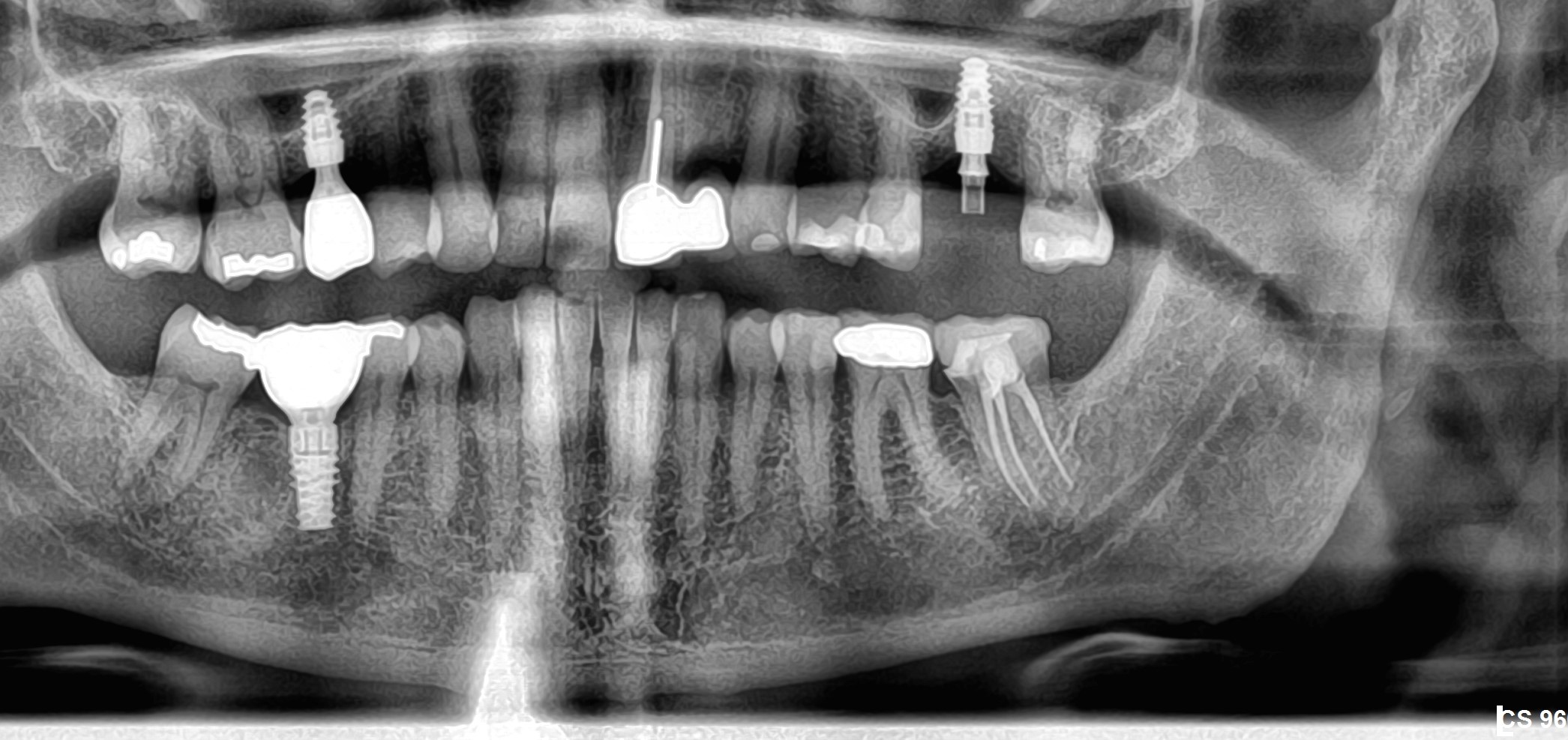
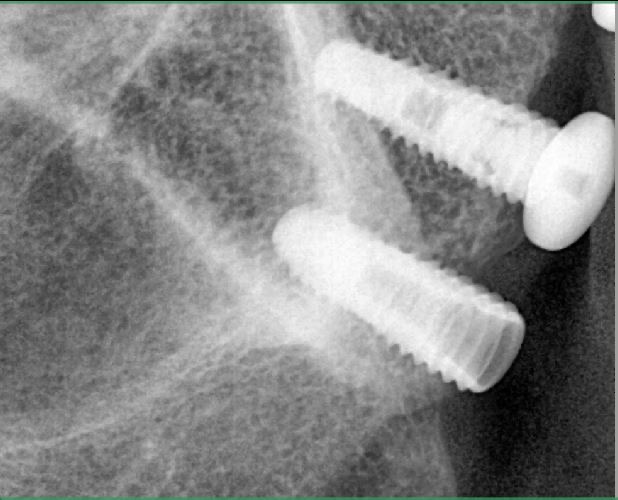
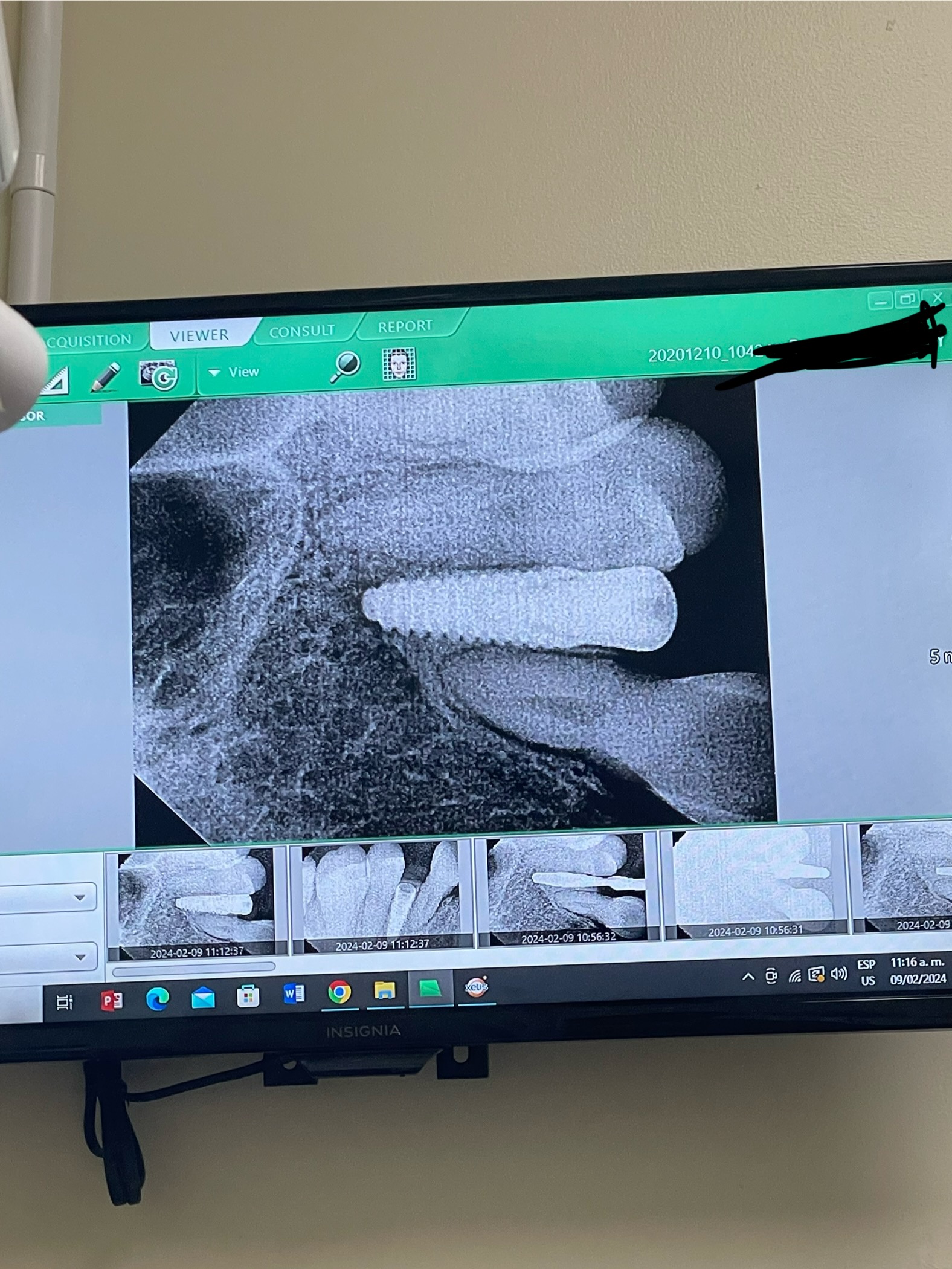
Dr. Lee asks:

I have a patient who is an oral cancer survivor.  Five years after radiation treatment he has zero saliva and severe and extensive root caries. All teeth are hopeless and he will need full mouth extraction.

The patient wants dental implants. He will be starting hyperbaric oxygen treatment.  What are his risks if we attempt dental implant placement at this time? I could not find literature
that presented controlled studies with or without hyperbaric oxygen and
success rates following implant placement.

My question is should we wait until hyperbaric oxygen treatments are
complete to place dental implants? Can we place implants during treatment? How
do I treatment plan this case?
Featured Sponsor

Free Daily Email Alert Click Here>>

Get OsseoNews.com Comments delivered daily! Click Here to subscribe.

13 Responses to “ Oral Cancer and Dental Implants ”

  • 3rd Molar Slayer October 24th, 2006

    This is how you treatment plan this case…

    REFER THE PATIENT TO AN ORAL AND MAXILLOFACIAL SURGEON. Work with the OMFS to plan how to proceed. This is a case where you need to stick to the restorative aspects of the case and let the surgeon do the surgery.

    This is not a case for people who cannot manage the complications associated with the risks from previous radiation therapy, namely Osteoradionecrosis (ORN).

    DO NOT go to a periodontist. This is not an implant case for a periodontist because they are not qualified to deal with the complications should the patient develop ORN.

    When a patient reports a history of radiation therapy it is important to know the Radiation Dosages Received, The location and ports of radiation therapy. The complications from Radiation Therapy INCREASE OVER TIME… THEY GET WORSE! The tissues become HYPOXIC, HYPOCELLULAR, and HYPOVASCULAR, increasingly so over time.

    The most common cause of ORN is the General Dentist that performs an extraction on a patient that “had radiation treatment a long time ago.”

    HBO Therapy is still somewhat controversial in some academic circles, but I bet everyone reading this post would want to have it if they were in the patient’s shoes, facing extractions/implants and the risk of ORN and MANDIBLE RESECTION!

    Your patient will require 20 pre-op dives prior to his extraction, and then 10 post-op dives following the extractions.

    Just the mere fact that you are asking if you can start placing the implants before the patient completes his HBO therapy tells me that you should stay clear from this patient.

    Bottom line… Do what is best for the patient. This means help them receive the best care possible, and in this case YOU STICK TO BEING THE RESTORATIVE DENTIST and let someone else assume the risks of Surgery.

    I know many General Dentists who are capable of treating these cases, and sometimes they do… BUT THEY ARE ADDITIONALLY QUALIFIED, because 1) They have Significant Hospital and Oncology Training Backgrounds 2) They work very closely with OMFS, Radiation Oncology, the Oncologists, and the Hyperbaric Oxygen Team.
    3) They have proper informed consent paperwork as well.
    4) They have hospital privileges as well. They take these “full-mouth extractions” to the Hospital OR (not because they aren’t capable of doing it in their office) but to help the patient understand the gravity of the situation and the risks they are taking.

    And when all is said and done, they still are held accountable for the risks they may encounter. And if they have a problem it still falls on the OMFS’ shoulders.

    Please don’t take what I am saying as mean and arrogant. I only mean my post to be FACTUAL AND INFORMATIVE given the circumstances presented.

    GOOD LUCK. I hope what I wrote helps!

  • Micki Gelb DDS October 24th, 2006

    Respected Dr.Lee
    The Fact that you are asking for help is making you on outstanding professional.
    The fact that your patient survived the 5 years makes him a survivor. Your objective of extracting teeth and immediately replacing them with implants needs to be discussed. Modern capabilities of implants are still require to be very selective when it comes to patients cases.
    Your advantage is being a General Dentist. That means you are trained to see and evaluate issues much wider and bigger than a specialist does specially OMFS, as “3rd Molar slayer” had proven to you in his comments .
    To help you out with a strong arm and common sense , your main objective with this patient is:
    1-SURVIVE the CANCER. During that period you maintain his Oral & Dental Health until he goes through hyperbaric oxygen treatment
    2- prepare the patients Oral Cavity for the future rehabilitation by recovering his Cranio-Mandibular alignment and Neuro-Muscular function to establish on improved Intraoral space dimension; the result will be reflected in on increased level of oxygen Body saturation (replacing the need for barometric oxygen therapy)
    3-gradualy replace teeth with appropriate implants in sections.
    4-control your rehabilitation by keeping the improved Dental Bite under appropriate control. Less changes, more control.
    P.S. I have done complete rehabilitation for a few cancer survivor patients which are still alive after 15 years.
    Mine objective was to keep them alive for themselves and family and not to deal with Hospital Emergencies or Osteoradionecrosis (ORN).
    The choice is yours.
    Good Luck.
    TeethFaceBody@aol.com
    Micki Gelb DDS

  • a colleague October 25th, 2006

    Dr Lee - Please read both posts carefully - decide who’s giving you the sort of bottom line clinical info/knowledge experience around this case, and who is actually beinng busy ‘blowing their own horn’ & smoke.
    then make your decision acordingly -

  • Alejandro Berg DDs PhD October 25th, 2006

    Dr Lee:
    Eventhough we have done work with HBO with 20/2/2 protocol. I dont recomend the implant technique at 5 years post radio…. we have succeded but this is not for the faint hearted.
    go for the removables for a year or two and after you hgave good healling then go for the implants.
    luck

  • 3rd Molar Slayer October 25th, 2006

    Dr. Lee,

    I have presented solid information for you to think about and what will be considered in a court of law. Even if you provide THE EXACT SAME TREATMENT As AN ORAL SURGEON, you are still more vulnerable and liable in a court of law. The prosecution would have a field-day with you, bringing expert witness after expert witness on to say that this case was beyond the scope of a general practitioner. But don’t take my word for it. I urge you to speak with other specialists and consult your lawyer…

    You play a very important role in this patient’s treatment and quality of life. But this does not mean that you have to place the implants yourself. You will have enough of a challenge in restoring the implants, helping maintain his oral cavity clean and free of disease, and monitoring this patient for any signs of Oral Cancer Recurrence etc… In this aspect you will be the patient’s first line of defense and greatest care advocate.

    At this point, I would also like to address the grossly arrogant statement which the good doctor claims that general dentists are “trained to see and evaluate issues much wider and bigger than a specialist does especially OMFS.” This couldn’t be further from the truth. 4-6 years of additional training in an INTENSE HOSPITAL SURGICAL RESIDENCY (which includes rotations at the RESIDENT LEVEL, not med student level: 4-6 months of General Anesthesia, 2 Months of Internal Medicine, 1 Month of Emergency Medicine, 1 Year of General Surgery/Plastic Surgery/Otolaryngology, and Trauma Surgery/ICU/Critical Care Medicine and in some programs the completion of the educational requirements to obtain an MD degree). Many OMFS complete fellowships in Cleft Lip/Palate, Facial Cosmetic Surgery, Trauma Surgery, Head and Neck Oncology and Microvascular Surgery as well. OMFS is a specialty that often times involves life and death decisions on a daily basis. The good doctor needs to retract his statement and learn to look “beyond the teeth and mouth.” There are issues far more important and greater than teeth and implants! People can live without teeth(and have for THOUSANDS OF YEARS), but they can DIE or SUFFER FROM SEVERE DEFORMITY from complications related to ORN of the mandible.

    Again, I ask you, who will manage the complications that will arise should your patient develop ORN? Some may say, “you can avoid the oral surgeon and send the patient to an ENT.” The problem with this is that most ENT’s do not manage ORN… The mandibular resection and reconstruction is most often performed by an OMFS. Reconstruction is performed by an OMFS with Microvascular Training or by a Plastic Surgeon with Microvascular Training.

    Enough about the OMFS credentials…

    Just remeber this:
    1) After Radiation Therapy, the tissues become HYPOXIC, HYPOCELLULAR, and HYPOVASCULAR. This GETS WORSE WITH TIME. IT NEVER GETS BETTER.

    2) Because of the above statement,the most common cause of ORN is the General Dentist performing an extraction on a patient with a previous history of Radiation Therapy to the Head/Neck. (read the literature and check the malpractice insurance claims).

    3)The surgery performed on the mandible to remove the teeth must be completed as atraumatically as possible to obtain Primary Closure. This may need to include EXTENSIVE ALVEOLOPLASTY. In this situation it is often advisable to perform the surgery under sedation or General Anesthesia in an Operating Room setting.

    4)BY ALL MEANS, PLACE ALL THE IMPLANTS YOU WANT. DO ALL THE BONE GRAFTS AND SINUS LIFTS IN THE WORLD. TAKE OUT ALL THE 3rd MOLARS IN THE WORLD. Some of the smartest and brightest and best doctors I know are General Dentists. I am a firm believer that General Dentists are the gate-keepers of the patient’s oral health and that they should be able to provide the majority of the care their patients require. There are plenty of patients to go around for us all. But do this on the right patient… a Low-Risk, Healthy patient. You have to know how to pick your battles. Treat your patients as if they are your own mother, father, wife, sister, brother or child then you will never go wrong.

    5) You are held to the same standard of care as the OMFS in this case. You will need legally sound informed consent forms. You will have to discuss the complications in detail with your patient and make them aware of what may occur. If this was your mother and you were not a dentist, who would you honestly want to attempt the extractions and implant placement?

    6) Make sure you look past the teeth/oral cavity and consider what is best and most important for this patient… If they can’t have the implants, remember they can have traditional dentures. And if all else fails, people have lived without teeth for THOUSANDS OF YEARS. It is easier to live without teeth than without your mandible.

    If you want some help in finding qualified surgeons in your area, I would be happy to assist in recommending a BOARD CERTIFIED OMFS in your area.

    Again, I wish you and your patient good luck in this endeavor.

    Thats enough “smoke blowing” for one evening.

  • Anonymous October 26th, 2006

    Lest there be any confusion

  • a colleague October 26th, 2006

    sorry , forgot to put my sig in the above post

  • 3rd Molar Slayer October 26th, 2006

    Couldn’t stop laughing when I read that increasing intraoral space dimmension would increase O2 saturation and therefore negate the need for HBO therapy… :)

  • koaycl @malaysia October 26th, 2006

    Thanks for the good advice 3rd molar slayer. You sound like a preacher and if you are not I think you will make a good one . I am impressed that we have good colleagues like you that will stick his head out and care for not only the patients but also for the doctors. Thanks again for the sound advice. I like that part on the mother and father.
    Keep up the good work and keep a look out for the profession.

  • Anonymous October 26th, 2006

    Remember that the destruction of the teeth was caused by the xerostomia secondary to the original radiation therapy. Where has this patient been for the last five years and what kind of patient management will it take even if everything else is successful. Most important is the total radiation (facial dose ). It is possible that portions of the maxilla and mandible were not exposed and a limited number of implants could be placed to support an overdenture. It may even be possible to retain a limited number of teeth avoiding implants and placing conventional overdentures. good luck

  • satish joshi October 26th, 2006

    I dont think 3rd molar slayer is trying to be arrogant or wants to pudown general dentists.
    His advice is honest and will save general dentists from unnecessary troubles arising from complications associated with ORN.
    Chances are there, that a very friendly patient may become your enimy if he or she smells MONEY. and you will have hard time defending you.

  • 3rd Molar Slayer October 26th, 2006

    Of course I wouldn’t put down General Dentists. I used to be one as well! (And I DID A HELL OF A LOT OF SURGERY and Hospital/Special Needs Dentistry). I believe that dentists are the gate-keepers to our patient’s oral health. I have a wonderful working relationship with dentists in all specialties. We work with eachother to treat the complex needs of our patients. This isn’t to say that there aren’t some “politics” between dental specialties, but this exists in medicine too and in any other professional field.

    The above discussion highlights the very important issue that Dentistry is not as simple as many people perceive it to be. Its this relaxed attitude and complaceny that gets us into trouble and causes people in the medical profession to look down upon us. Everytime we use local anesthetic, Rx an antibiotic or narcotic there are SIGNIFICANT RISKS involved. Thankfully 99.999999% of the time nothing happens. But statistics don’t matter when “lighting strikes you.” In order for a dentist to be a good doctor, they have to remember the basis of their field is grounded in basic science and medicine. They have to keep up to date with diseases, drugs, procedures, and CREDIBLE SCIENTIFIC LITERATURE. (even though dentists may not need to use this information on a daily basis). Lastly, dentists need to start acting more like “doctors”… spend more time on the medical history, monitoring BP’s and Vital Signs, and checking for interactions between the medications we are using.

    Like I said before, there is PLENTY OF WORK TO GO AROUND FOR ALL OF US. The most important thing one can do is recognize his/her limitations and know when to refer. Its that simple.

    Sorry for all the preaching…its a slow day in the office! Thanks to all of you who realized what I wrote was purely for the good of all of us, our patients and our profession.

  • k.r.david tharakan November 24th, 2006

    I am an Oral and Maxillofacial Surgeon and would do the following

    1)Get a complete oncology record of the patient including neck dissections +/- primary site management, which will include radiation and chemotherapy if recieved.

    2)A 5 year disese free interval is what many studies report on in Oral Oncology.So I will wait for a minimum of 5 years after HBO therapy, re evaluate the patient for inplants and any oncological concerns, and in the meantime put the patient on proper oral care with removable prosthesis till then.


Leave a Comment

Note: Please refrain from ad hominem attacks, and promotional comments. Outside links are not permitted in comments. Though we require an email to route questionable comments to our editors, we will NEVER publish your email or use it for any other purpose. Thank you for your understanding.

Note: At times your comment may not appear on the website immediately, because it has been sent to our editors for approval. Once approved, we will publish the comment. There is NO need to resubmit your comment, if it does not appear on the website immediately.

Sun July 20 2008

FREE Weekly Email

Keep current on the latest dental implant discussions! It's Free!

>>Click Here to Subscribe to OsseoNews.com Now!