Osteoporosis a Contraindication for Dental Implants?
Anon asks:
I have an elderly patient about 65 years old with osteoporosis. She is otherwise healthy. Any reason why I should not place dental implants in this patient? She has not had any dental problems in the past after extractions and seems to heal up just fine. Do I need to consult with her primary care provider?
18 Comments on Osteoporosis a Contraindication for Dental Implants?
New comments are currently closed for this post.
Alejandro Berg
10/16/2007
Allways cosult, but if she is healthy and not undergoing biophosphonate treatment you can place implants, just put enough to have a good force and torque distribution
good luck
Dr. Crystal Baxter
10/17/2007
I have treated osteoporotic patients with ossseointegrated implants since they were available in 1985 and published on the subject years ago. I have always let these women heal longer after extractions and during the implant healing phase. I also have not chosen to do immediate loading when it becomae available.
Ultimately these patients can benefit the most as the implants help load and retain the bone.
dr.vijay kumar
10/17/2007
Can any body explain the effect of biphophonates? Thanks with regards.
Dorian
10/19/2007
To Dr. V. Kkumar use these links to get all the information you need. aaoms.org/docs/position_papers/osteonecrosis.pdf
Dr. Mehdi Jafari
10/19/2007
Osteoporosis is characterized by diminished bone strength. For many years decreased bone mass (expressed in grams of mineral per volume) was felt to be the primary explanation for bone fragility. However, a large body of evidence now indicates skeletal fragility is not explained by diminished density alone. The process of bone remodeling is the primary determinant of bone size, shape, and quality. The strength of bone depends not only on its mass but also on the mechanical properties of materials composing it and on its 3-dimensional structure. Osteoporosis is also characterized as being either primary or secondary. Primary osteoporosis affects all ages and both sexes but is most commonly seen in postmenopausal women. A large number of medical illnesses and iatrogenic causes are associated with the development of secondary osteoporosis. In premenopausal and perimenopausal women, about 50% of osteoporosis cases are secondary and include estrogen deficiency, glucocorticoid use, hyperthyroidism, and anticonvulsant therapy. In postmenopausal women, secondary causes are less frequent and more commonly include hypercalciuria, hyperparathyroidism, and malabsorption. Bone quality relates to bone turnover rate, architecture, damage accumulation, and degree of matrix mineralization. Bone is continuously remodeled. Remodeling consists of the resorption of packets of old bone by osteoclasts followed by replacement with new bone by osteoblasts. In the younger individual, lower rates of bone remodeling result in increased repair of microdamage. In contrast, a higher rate of remodeling or bone turnover, as seen in postmenopausal females, is the primary source of structural fragility. Bone is composed of dense cortical bone and more porous trabecular bone. Owing to its dense nature, cortical bone becomes osteoporotic, much later in life than trabecular bone. As osteoporosis develops, horizontal bone trabeculae thin first. These horizontal trabeculae support the load-bearing vertical trabeculae and, when lost, increase vulnerability to stress. Resorption cavities associated with normal bone turnover also create a starting point for generation or propagation of fractures. High rates of remodeling are associated with high rates of fragility. Lower levels of mineralization also reduce bone strength. Reduced mineralization occurs when bone turnover is increased and the duration of the mineralization period during new bone formation is shortened. If mineralization is inadequate, bone becomes too flexible, bends too much during loading and cracks. Higher mineral content increases stiffness at the expense of flexibility. If the mineral content is excessive, bone becomes brittle and may also fracture. After reaching peak bone mass, bone continues to undergo bone remodeling but the mass remains relatively constant. At some time during early middle life, the tight coupling of bone resorption and bone formation is disrupted. There is a gradual age-related reduction in the amount of bone formed in resorption cavities and bone mass begins a very gradual decline. Accelerated bone loss occurring after declines in estrogen production accentuates the uncoupling of bone formation and resorption and increase bone turnover rates.
Robert J. Miller
11/3/2007
There seems to be a disconnect between true osteoporosis and the condition known as osteopenia. When we talk about osteoporosis, what we really mean is the clinical manifestation of a substantial decrease in bone density/mass to the point that there is a high probability of failure of osseointegration. These patients tend to be post-menopausal women, especially those with long standing edentulism. What we fail to realize is that virtually all of us become osteopenic as we age, manifested by a decrease in bone mass/density and changes in bone metabolism. The point at which osteopenia becomes osteoporosis is relative. Extraction/immediate implant placement in the significantly osteopenic patient is substantially different from placement in the same patient in a long standing edentulous area. A strategy of complete isolation from microtrauma during early healing, progressive loading, and reduced occlusal tables can significantly alter outcomes in these cases. Virtually all of the older female patients in my practice have been diagnosed as either osteopenic or osteoporotic. Most are on bisphosphonate therapy. But we have NEVER seen a case of osteochemonecrosis in any of these patients and employ the preceding protocol in all of these cases. However, we routinely get medical clearance in these cases. And we do this simply because in a malpractice suit, one of the first questions in the interogatories is "was this patient cleared for surgery by her physician?" We know that as bone density decreases, there is a statistical increase in failure rates. Having received medical clearance, a failure in this case is simply a function of the patients biology.
Dr Hattfield
11/3/2007
Dr Miller
Is there a weblink for the atlantic coast dental research clinic? Cant seem to find it. thanks
Robert J. Miller
11/4/2007
atlanticcoastdentalresearchclinic.org
Dr. Hattfield
11/4/2007
Thanks for the link, it confirmed what I thought. It is a dental continuing education company with a fancy name. Not sure why you call it a research clinic, when basically all it provides is continuing ed for dentist. I see alot of dentist's that are on the board of that organization that bill themselves as researchers when all they provide is continuing ed and do no research.
Dr. Mehdi Jafari
11/5/2007
Osteoporosis is a systemic skeletal disease characterized by low bone mass and microarchitectural deterioration of bone tissue, with a consequent increase in bone fragility and susceptibility to fracture. Bone strength is affected by two main factors: bone density and bone quality. The clinical manifestation of the systemic disease of osteoporosis is fracture. Using dual energy x-ray absorptiometry (DEXA), however, a patient's bone mass or BMD can be determined. A patient's BMD is compared with a ‘normal value’. The normal value is the mean BMD of sex-matched young adults at their peak bone mass. When compared with the normal value, a patient's BMD can be expressed in terms of the number of standard deviations (SD) from the normal value. A convenient way to express this is a T-score.The World Health Organization has established diagnostic guidelines: 1. Normal: BMD not more than 1 SD below the young adult means (T-score above –1). 2. Osteopenia (or low bone mass): BMD between 1 and 2.5 SD below young adult mean (T-score between –1 and –2.5). 3. Osteoporosis: BMD 2.5 SD or more below the young adult mean (T-score at or below –2.5). 4. Severe osteoporosis (or established osteoporosis): BMD 2.5 SD or more below the young adult mean in the presence of one or more fragility fractures. To accomplish its functions, bone undergoes continuous destruction and formation. In the adult skeleton, the two processes are in balance, maintaining a constant, homeostatically controlled amount of bone. Just as functions of osteoblasts and osteoclasts balance one another, a complex arrangement of intercellular signaling between them allows their maturation, relative number and activity to be regulated. Vital to this intercellular signaling system are the bone morphogenic proteins, BMP 2–9 – proteins that regulate osteoblast function and development – in the case of BMP2 and BMP7, by inducing the activation and expression of the runt-related transcription factor RUNX-2. Other important signaling factors include osteocalcin (which is regulated by RUNX-2, which has a pro-osteogenic effect on osteoblasts, and receptor activator of nuclear factor [kappa] ligand (RANK-L), which binds to and activates the RANK receptor on osteoclasts, leading to bone resorption. Any disruption therefore in the normal formation or function of either cell type, or imbalance in secreted signaling proteins, may have profound effects for the maintenance of bone density and thus result in osteopenia or osteoporosis.
Robert J. Miller
11/6/2007
Dr. Hatfield;
The Atlantic Coast Dental Research Clinic has been in existence since 1966 and been providing continuing education for dentists in the state of Florida in various disciplines for over 40 years. There are over 150 members of the program and the tuition for ALL doctors is $250 per year, HARDLY a company making a living selling CE credits. It is a modern 12 operatory surgical venue, attached to Palm Beach College, with state-of-the-art technology, easily equaling or surpassing most university settings. We are actively engaged in research in my department involving new graft materials and implant designs, with senior residents this year co-publishing with me on a variety of subjects. Don't know what your beef is with the program, but at least get your facts straight before you lambast something.
donna demers
1/29/2009
I have osteoprosis and can not take any of the medications or calcium due to only having one kidney. I also have Sjorgens Syndrom and I have alot of teeth problems which over 7/8's of my teeth are capped and my teeth hurt so bad that I want to have all of them pulled but my dentist said that they are good and he will not pull them. I am 53 and have about all i can take. Do you think if I got dentures that have a post I will have the same problems or if I get implants? Thank you so much for your time. Donna
Pr.Nouhad Rizk
5/1/2009
i have a little experience about osteoporosis and implnt osteointegration. But a have a good experience with a patient now he is 84 years old.
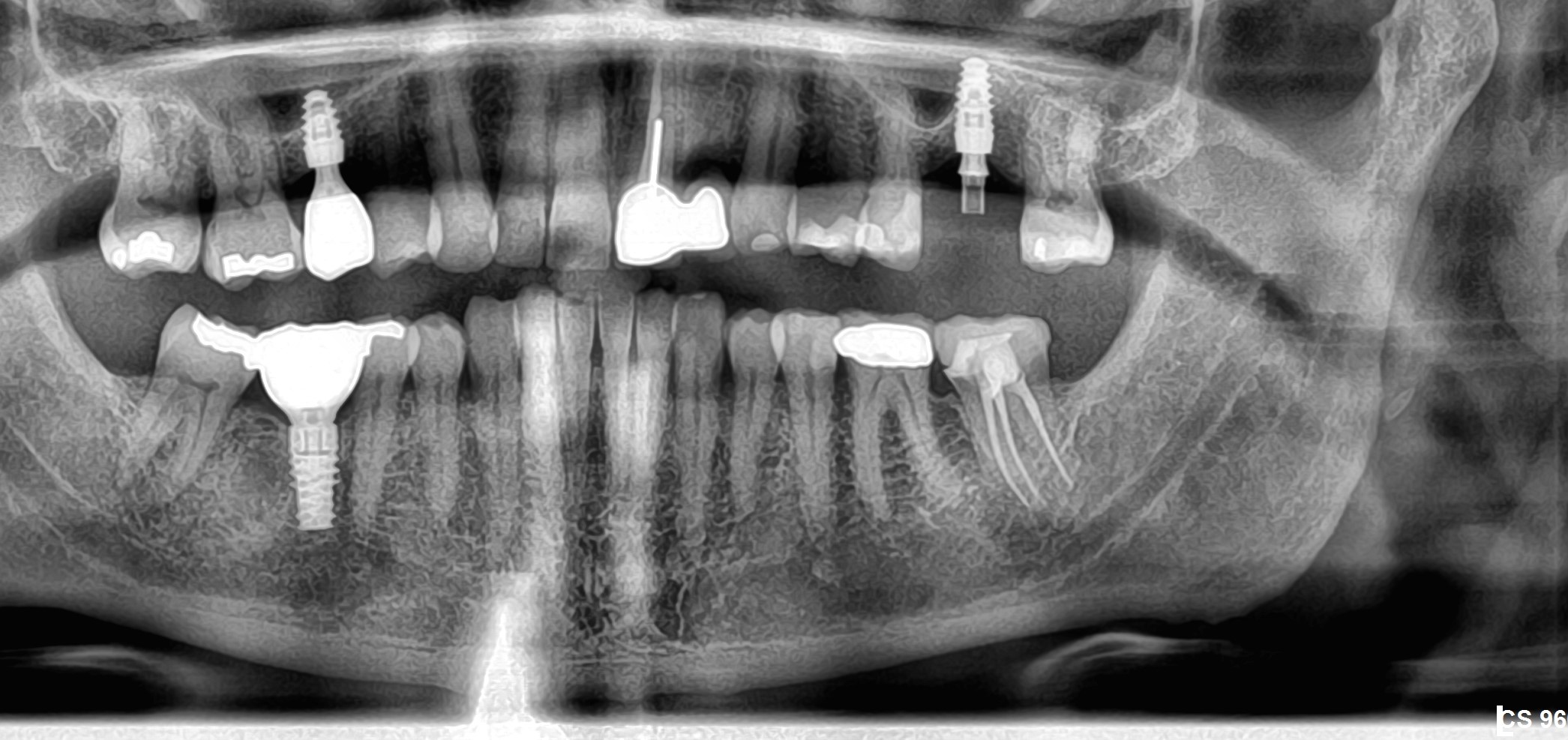
this patient receive 11 implants. 9 on the maxilla and 2 on the mandible since 1993. Our patient presents an osteoporosis in 1993. His social situation obliged us to treat his edentulous maxilla because of periodental desease with fixed prosthesis over 9 implants, and two cemented prosthesis over two implants on the mandibule.
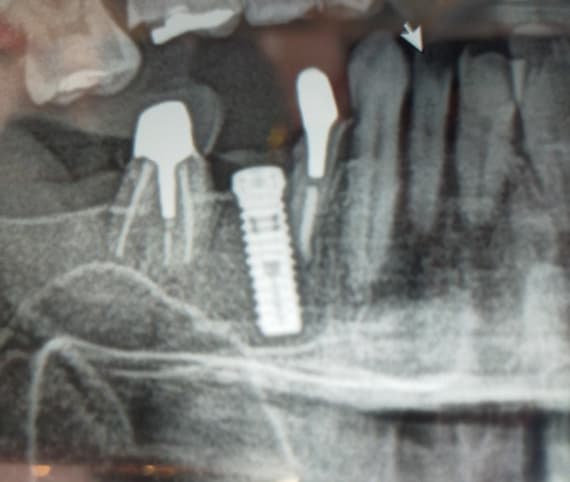
actually our bone level is very good, a loss of 2mm. And still he have the general osteoporosis. what i have is a recent panoramic. hope that my comitment can be benefic for any one. Thnak You
Deborah
11/9/2009
My husband has osteoporosis & very thin enamel on his teeth from drinking pop instead of milk from his infancy (his parents put pop in his bottle). His teeth are hurting & get many cavities. Could he get dental implants? I'm concerned that with all the caps he is getting, that since the roots have such thin enamel, that we will get all these caps, then have the teeth break off, so we will have to get implants later anyway.
dr jacob tj
4/10/2010
63 year old female patient with osteoporosis wants dental implantin mandibular posterior region bone density is between 200-300HU.NOT on any medicin only calcium &vitamin D can shego for DENTALimplant
Dr. Mehdi Jafari
4/12/2010
Yes sir she can, but you have to use the implants with highly sophisticated surface treatments rather than SLA or RBM.One single fixture should be placed for each single tooth to be replced and the prosthetic crowns of these implants should be attached to each other to dissipate and distribute the occlusal loading forces in a more balanced mode.To mention the last but not the least is that the fixtures used must be as wide as possibe and as long as possible and any protocol of immediate or early loading has to be avoided.
LAVEENA SOOD
8/8/2016
My mother who is 76 yrs old, has osteoporosis and no teeth. The lower jaw bone is non existant. So her artificial dentures keep moving and she finds it very discomforting. She is not able to chew and has to grind food in order to eat it. Is it possible to fix implants in her lower jawbone so that her dentures do not move and she can eat without any difficulty
AGA
7/27/2017
I believe there is a need to analyze the opposite side of the relation: Does implants cause higher probability of osteoporosis or temporary transient migrant osteoporosis?