Abutment Not Fully Seated: Leave as Is or Drill it Out?
Dr. R. asks:
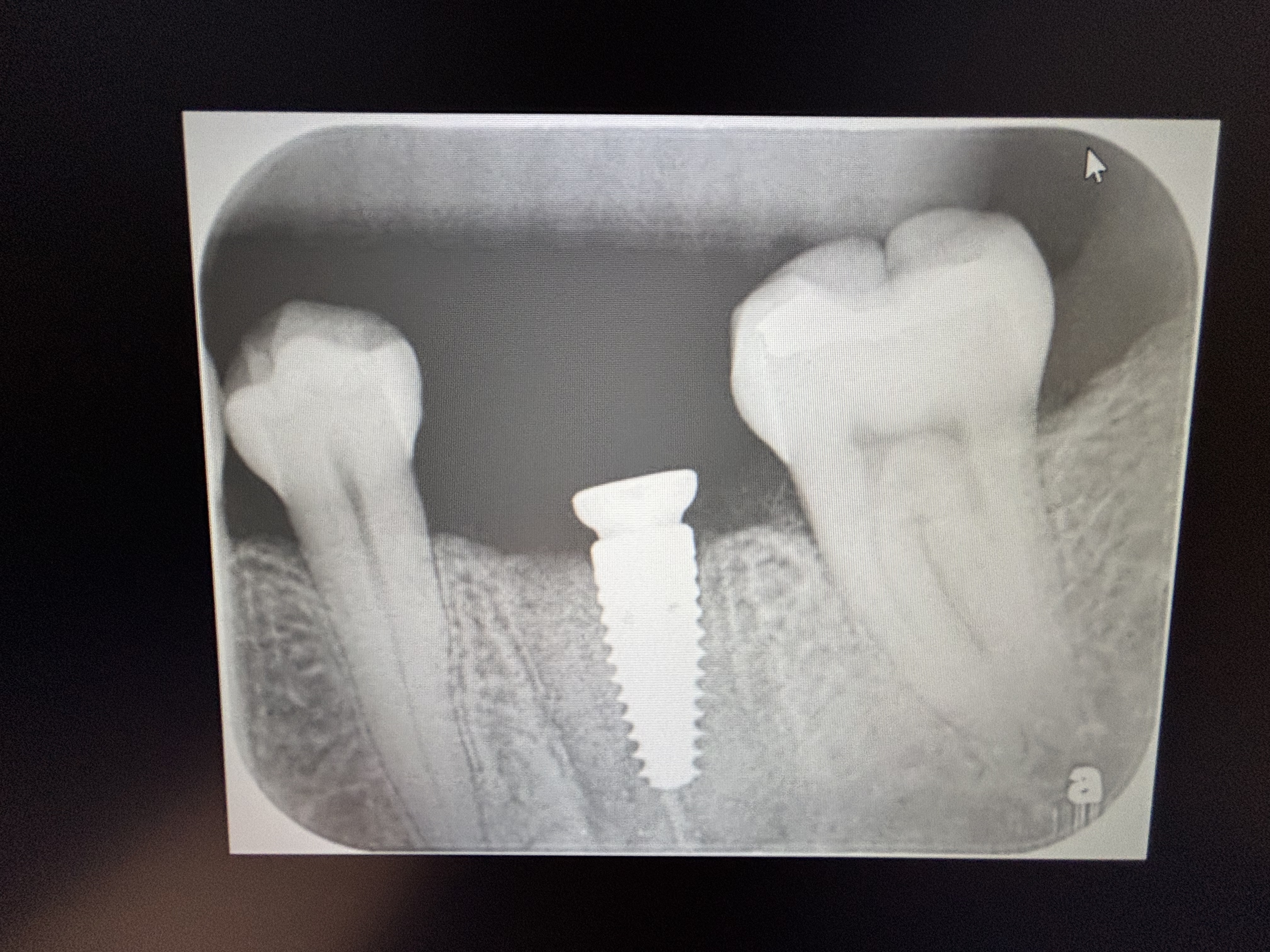
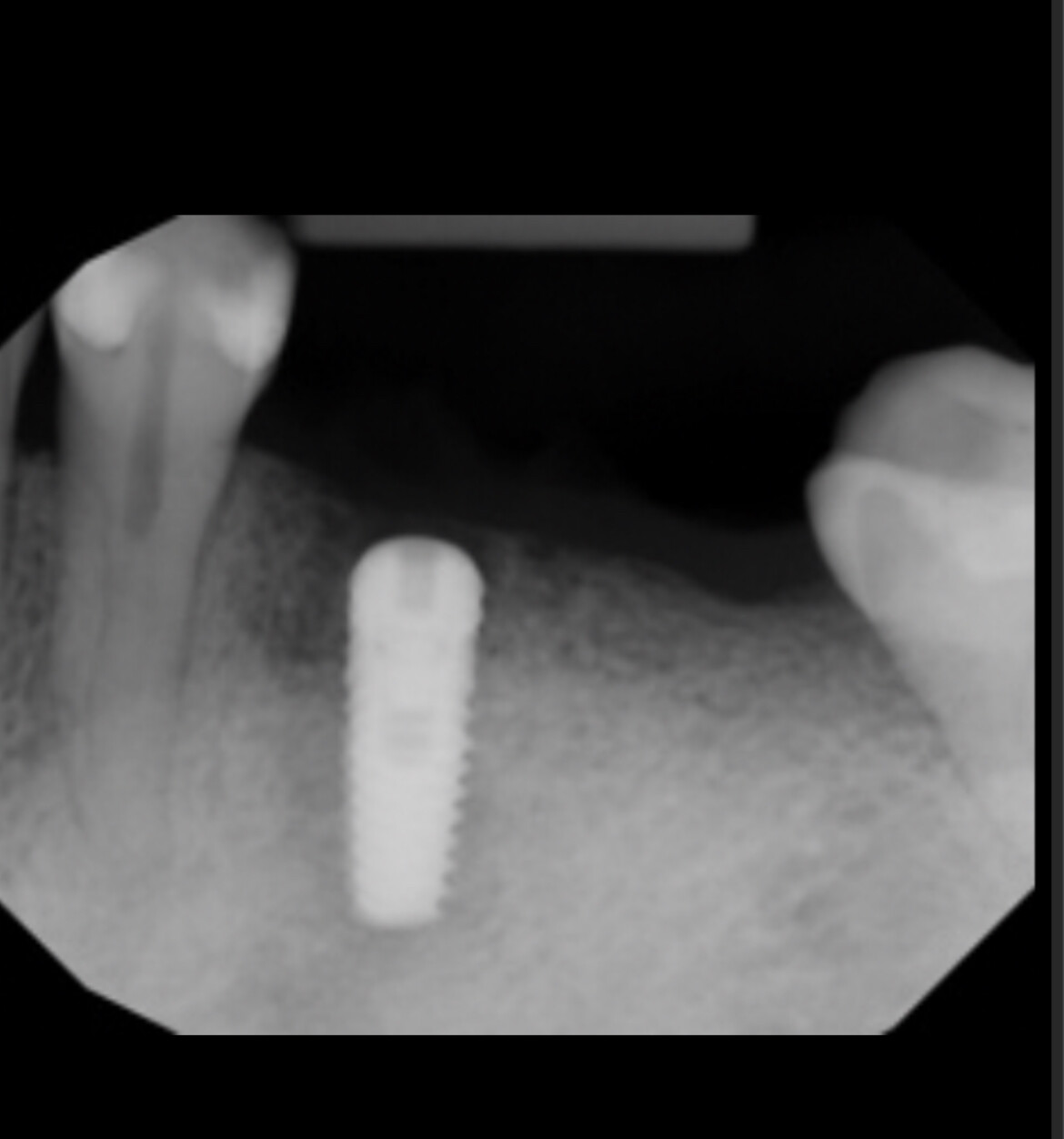
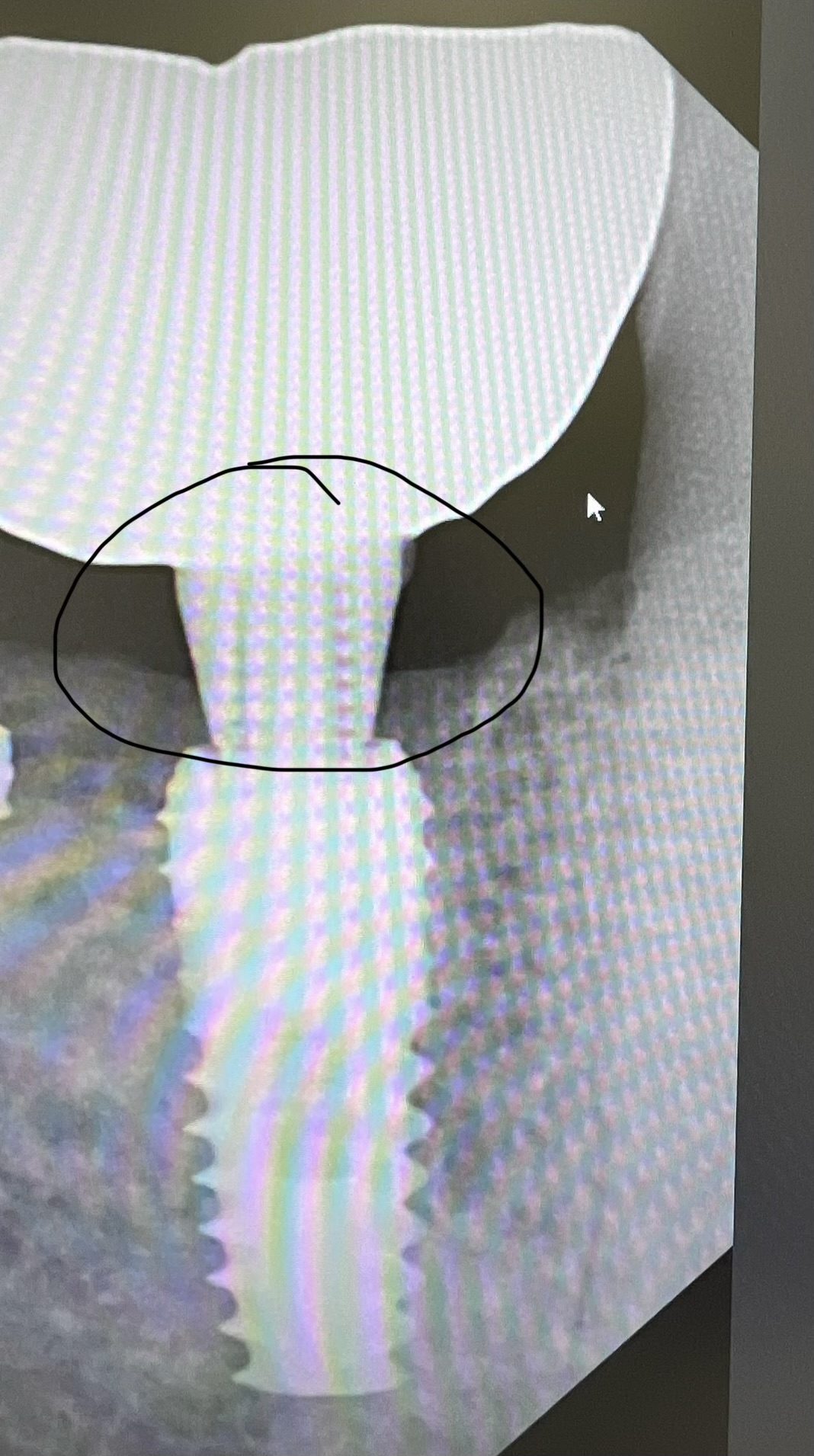
I placed a dental implant fixture and it osseointegrated completely and uneventfully. After uncovering the implant fixture at 4 months, I attempted to torque down the abutment with a titanium screw. I hand-tightened the abutment screw and then I torque it down to 35Ncm. I realized then that I had made 2 errors. A radiograph demonstrated that the abutment was not fully seated when I torque it to 35Ncm. Also I realized that I was only supposed to torque it to 20 Ncm. I have not been able to back out the abutment screw. Should I leave the abutment as is and restore it with a single crown? Should I attempt to drill out the abutment screw?
18 Comments on Abutment Not Fully Seated: Leave as Is or Drill it Out?
New comments are currently closed for this post.
Dr.Serge
12/2/2008
Remove your abutment, when it is not fully seated that means that there is a gap that will lead to a bacterial growth with all complications that will result, second the stress will be much more increased on the screw due to increased micromovement of the abutment...removing the abutment should not be a problem
doctorberg
12/2/2008
remove it, cut it if you must, if you dont you and your patient are on the way to a small hell.
DRMA
12/3/2008
Why is it interesting? If you place an implant without abutment, you can torque it under bone level. After uncovering, the bone will not let you to fit the final abutment on the implant platform. Worse is, if you don't realize that on a control x-ray. The bone will go down and you have got a fixation screw loss. (or fracture)
If you use an implant with fixture mount (implantdirect, zimmer...), it shows you if there is no place for the abutment. (which has grater diameter) First you think the FM makes you difficult to place the implant, than you realize, it helps...
Don Callan
12/3/2008
Remove it--it will harbor the periodontal pathogens and there is a good chance the screw will fracture anyway--it may go down the wrong way.
Dr. Powers
12/3/2008
As mentioned above, you have to take the abut off and reseat it properly. Always, Always take a check film prior to torquing to verify the abut is seated all the way. If the hex is not lined up right and you torque it down, you can damage the hex on the abut or worse the hex on the implant. You should be able to get the screw out by placing a hand driver in the screw and grabbing the driver w/ a hemostat to give you some leverage. If you strip out the hex of the screw you'll have to removed the abut the hard way with a hand piece and bur. Use lots of water, new burs, and a light touch so you do not cause excess heat on the implant. I would also use a brand new screw when replacing the abut the 2nd time. The old screw will now be stretched since being torqued already. One of two things keeps abuts from seating, hex not lined up, or bone in the way. If bone is in the way it will need to by removed by using a special mount and bur that your implant compy will have. Good luck
Dr.V
12/10/2008
Well thats a good question.You SHOULD take it off but it won't be easy.You can easily damage implant hex,internal threads or when you torqued you had already damaged the internal threads or hex and thats catastrophic.35Ncm is nearly enough to turn even osseointegrated implant.
Extremely careful removal of the abutment can solve the problem(if no damage had been occured).After that of course new screw and abutment should be used.Good luck
Fabe
12/11/2008
Reading those questions always scare the hell out of me.
I know this is a website were Docs can share info, but still...
Treat your patient like if you were the patient. If you would not want to be treated by yourself, refer out.
Yes, I know, another "refer out" non constructive type of answer.
coxsakie
12/14/2008
Keeping this in place means one thing---> periimplantitis!
Carol Sidofsky
5/15/2010
All 8 of your excellent comments were so appreciated, and relevant to me. Are any of you in the Denver area?
I'm a retired nurse, with 3i NanoTite abutment not fuly seated, and permanent crown just came loose (a couple of days ago) only after about a week of being "permanently glued" in!
I'd appreciate dentist recommendations (names) for second opinions of what to do next, in the Denver area, and asap.
I'm at 970-531-5000
Sincerely,
Carol Sidofsky
Carol Sidofsky
5/22/2010
Followup: Crown was not what was loose. It was actually firmly glued to the abutment. What was loose was the abutment screw, so just the other day, crown, abutment & screw all came out together, as one piece, in my hand!
The dentist tried to put in a new 3i abutment (slanted "platform") with screw, with a smaller diameter (4 mm instead of 5 mm), but when he tried to torque it, my pain was so intense, even with lots of injected anesthetic, that he couldn't fully seat the new abutment, so he took out the new abutment/screw.
Dentist has ordered a more oblong shaped (rather than round) new abutment with screw, from 3i, and will have me go back to oral surgeon to get more gum tissue removed (which gum tissue he thinks was preventing him from being easily able to torque down the abutment screw). Dentist wants oral surgeon to then put in the new oblong abutment with screw (even though this is usually the dentist's job, rather than the oral surgeon's job).
During dentist's attempt to put in a new abutment, he tapped the inside threads of the implant.
Supposedly there's no bone in the way, so if the inside threads are OK in the implant, then I'm still wondering whether it was only gum tissue blocking the torquing.
Ideas?
Carol Sidofsky
970-531-5000
elie DDS
5/22/2010
Hyperplasic gum tissus fill the open space created between implant and abutment. This vital tissus is very sensitif and hemorragic. Your oral surgeon should eliminated it and fix an 4mm healing abutment for 2 weeks.
So a new abutment can be torqued at 25N. A temporary cap, or temp. crown, should be fixed for 15 other days before the final impression.
Chek Xrays should be at every stage to control the perfect adaptation of these different components.
It happens. c'est la vie
Good Luck
Carol Sidofsky
5/22/2010
Dr. Elie,
Thank you for your helpful information.
What theoretical problem(s) could there be, if the oral surgeon were to remove that gum tissue and then immediately try to seat the "permanent" abutment, instead of him first putting in a "healing" abutment?
ALL your advice sounds logical and good. Where are you located? If you can, call me at 970-531-5000.
Sincerely,
Carol Sidofsky
elie
5/24/2010
Dear Carol thanks for your confidence. i work in france.A healing abutment, in this precise case,will lead to a better gum formation due to his conical flared shape. The final abutment can't be torqued to 25N while the site is anesthetised.
elie
5/24/2010
Dear Carol thanks for your confidence. i work in France.
A healing abutment, in this precise case,will lead to a better gum formation due to his conical flared shape. The final abutment can't be torqued to 25N while the site is anesthetised.
Carol Sidofsky
5/28/2010
Merci beaucoup, Dr. Elie!
I agree with you, that a healing abutment is what I need now, and I hope it can be seated fully. However, I'm not getting cooperation regarding this, from the dentist or oral surgeon, so I will try to get another independent opinion.
You wrote: "The final abutment can’t be torqued to 25N while the site is anesthetised." Please explain what this means.
Do you mean that a patient should be able to have the abutment correctly torqued, without the patient feeling any pain?
And if yes, does this mean that feeling pain during torquing, indicates that something is wrong, such as bone in the way, a piece of the old screw stuck inside the implant, warped threads inside the implant, or some other problem?
Carol Sidofsky
970-531-5000
Carol Sidofsky
5/29/2010
Update: Recently saw another dentist for a second opinion, who referred me to a periodontist to check integrity of implant (3i NanoTite Certain 5mmx13mm).
Periodontist (yesterday) found and surgically removed a lot of gum tissue. He used a lot of Carbacaine, as I don't tolerate epinephrine (causes heart to race), and his injection technique was gentle & excellent (I felt almost no pain, and he took a lot of time to completely anesthetize the area around tooth #9).
He then had a window of about 5 minutes (before the Carbacaine would begin to wear off) to remove the excess gum tissue & put in the abutment.
Inside threads in implant looked good, and so he was able to easily screw in a new healing abutment, (fully seating it) which he wants left in place for a month.
Thank you Dr. Elie again, for your good advice, and I appreciate the wonderful open-ness, honesty, and expertise of the dentists who help eachother to help patients, on this excellent site.
Carol Sidofsky
970-726-4440
elie warde dds
5/30/2010
Dear Carol, I am happy that my advise helped you and you seems now in good hands.
The abutment is always torqued over a
non-anesthetised area without causing any pain because the implant is osseointegrated and no soft tissus interference.
After 1 month your OS can torque the abutment at 25N if he will decide to fix a direct abutment. It's mandatory, just before the impression, to take a Xray to control the perfect seating of this abutment.
If your OS will decide to use an angulated abutment the Xray shall help him to control the seating of the impression coping transfer.
Control Xray is mandatory at every step to check the perfect adaptation of the different components to each other.
Hope it helps.
sincerely. Dr Elie
Carol Sidofsky
7/7/2010
After a month of have a well seated healing abutment, my new dentist tried to screw in final (angulated) abutment. But, it wouldn't seat. Xray showed same "gap" that previous dentist & previous oral surgeon had (but those 2 pooh pooh'd the gap as not being so bad.)
The healing abutment had no hex as part of it, so it easily seated (screwed into the implant). It's back in now, pending dentist's inquiries to 3i folks.
Has anyone had problems with the (larger) hex that is part of the 3i nanotite implant, preventing the abutment's (smaller) hex from "seating"?
Can that implant hex be defective?
How can a 3i nanotite implant "hex" be harmed?
Carol (former RN/nurse)
970-531-5000