Dental Implant Failure
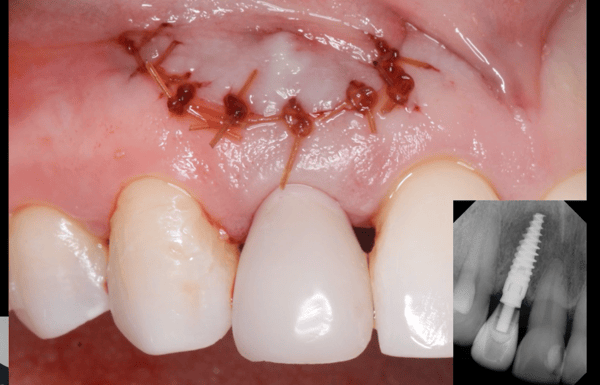
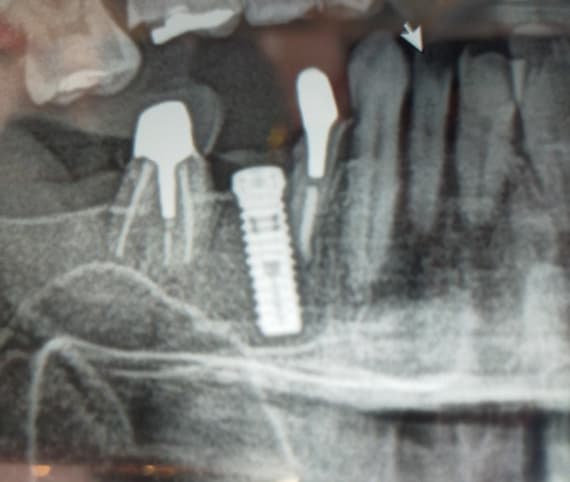
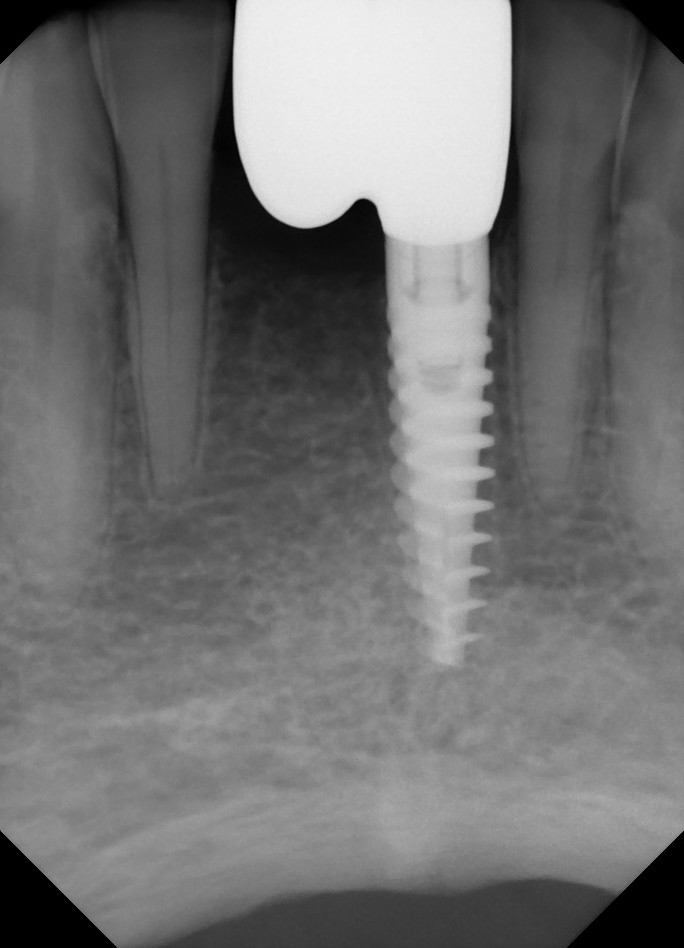
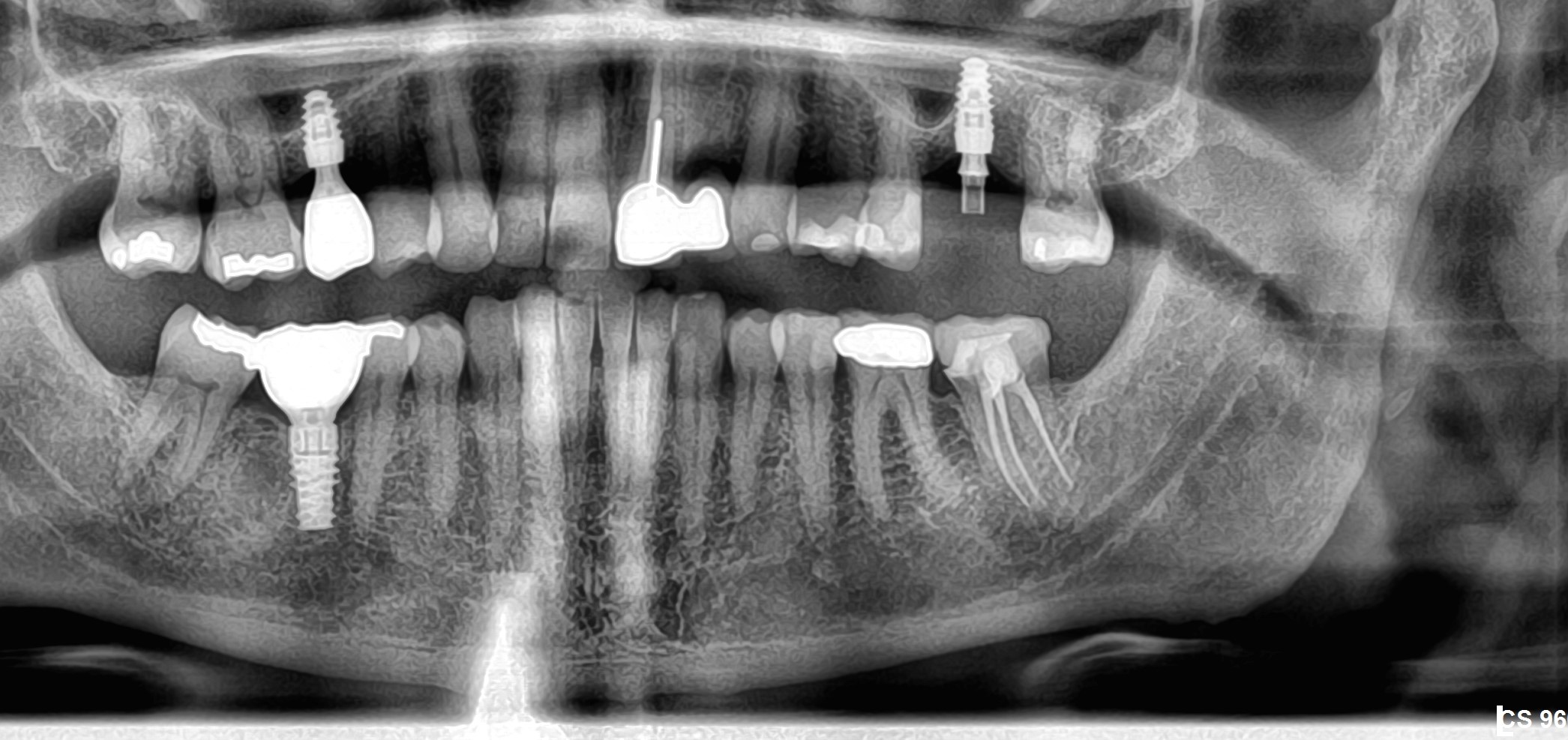
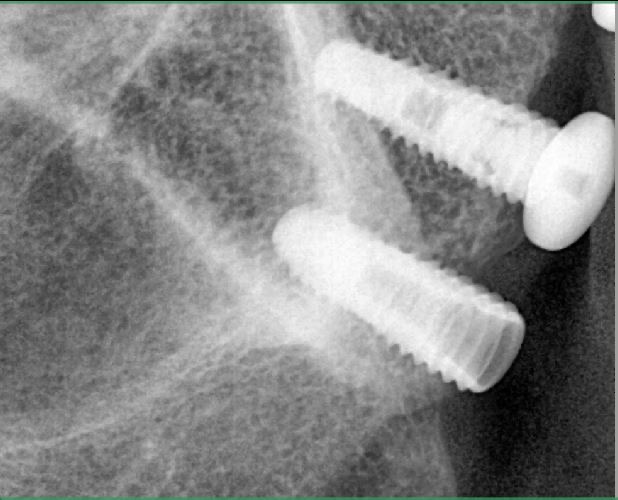
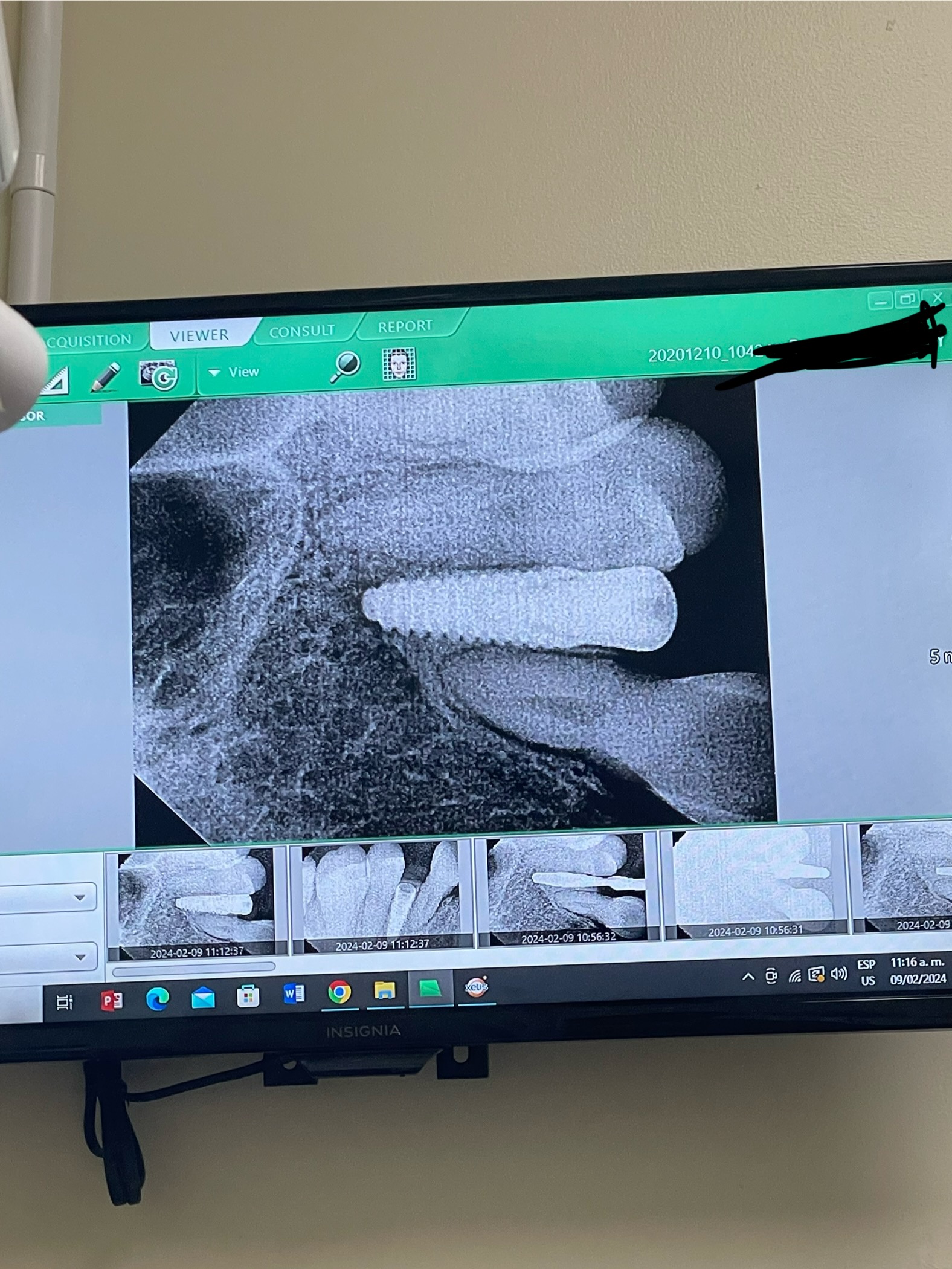
Placed a dental implant and it was type one bone, no pain for two weeks and then intense pain. The dental implant was surrounded by granulation tissue and no pus. The site was difficult to get numb and very inflamed. Thought it was an isolated case and then five more. Has anyone seen this?
91 Comments on Dental Implant Failure
New comments are currently closed for this post.
gerard
8/12/2004
I already had the same type of problem; one of the most common source of implant rejection in type I bone is overheating of the bone during implant site prep.
In those cases, cleaning of the site and a healing period of 12 weeks and then reimplantation might be your answer.
take no risk , use brand new drills and overcopious cold irrigation.
best regards
Jeffrey Hoos DMD
8/12/2004
Speaking of cold irrigation.....do you think many people refrigerate their saline solutions.
Are people doing both internal as well as external irrigation?
I also think that disposiable drills would be a great thing for the companies to provide.
rafael mosery dds
8/24/2004
sounds like you're burning the bone.
copious irrigation is great but don't be spinning around in there. in and out, next bur one sraight motion like a drill press.
Basile Muntean, DDS
8/24/2004
There is a study by M. Sharaway and c. Mish coming out that shows that internal or external irrigation doesn't matter much as long as you use refrigerated water for cooling
Jeffrey Hoos DMD
8/25/2004
What about drill speed because I remember that the thoughts about slower may not be the case. I have heard about internal verses external no difference. Nobel Phar was external in the beginnig and Bicon.....no irrigation just very slow. Great idea about the refrigerator
Basile Muntean, DDS
8/25/2004
You're perfectly right. There is some new evidence that higher speeds rather than low are more indicated
Ben W. Eby, DDS
8/26/2004
Overheating is always a potential problem. Copious irrigation, sharp drills, and RPM up to 2500 helps in type 1 bone. Over tightening the implant above 45 NCM can cause pressure necrosis beyond tollerable limits. The other concern is micromovement of the implant by the patient. Exposed abutments reduce percentage of success and a patient can even get micomovment with chewing when an implant is covered. Check the patients habits the best you can. Good luck.
Jeffrey Hoos DMD
8/26/2004
I believe that there is not enough discussion about pressure necrosis and I think it is a real issue. There was a time that I thought osteotomes was the best way to deal with bone in the maxilla, type 2 and 3 but now I am thinking that bone compaction using osteotomes leads to pressure necrosis.
The use of the Nobel torque wench really help with not over tightening the implant at placement.
bargash hossam
10/6/2004
menstion pr. necrosis I can imagine this in max.but not in type 1 bone,it is not easy to compact a compact bone.what you got is crack necrosis.
robert boettcher
4/19/2005
who can help me with this problem. My wife has dental implants of 3 upper front teeth finished in 2002. she had a bone graft from her jaw to replace bone lost during the 10 years since she lost her teeth and had worn a dental appliance until 2002. the first bone graft failed and exposed the front of her gums and implant posts, she had cadaver bone implanted with a new procedure that also injects red blood cells to increase blood flowto the area. as of febraury of this year and already seems to be losing what was recently implanted. some of her bone is exposed and bone is being forced out from around her implants. (we understand that some is will occur) the Oral surgeon has suggested that the only other way of stopping this is to harvest bone from her hip. what options are now available to stop the bone loss and or options as to slowing the rejection? she really wants to keep her implants.
rui pinto cardoso
6/1/2005
i use individual irrigation for each surgery and with cold serum and not more than 900 rpm and i use a trispade bur for the first cut. i use a pressure pump to the irrigation with all disposable material. I have some failed implants and i found the reason my motor was basculating the burs just a litle it is suficient for incresing the temperature. the type of surface is important and if is blasted whith aluminium the provider must wash very well the implants some companys (...) well it is better titanium blasted implants..
Shannon
9/3/2005
My question is concerning my mother. She went to a dentist who was making her a crown ( insert post and false tooth)...The tooth wasn't the correct size and since other dentist said the post was crooked....she has now had a bone graph by another dentist for an implant which should be put on possibly next month. My question is that every since the first dentist worked on her she developed a sore in the roof of her mouth just behind the two front teeth. The 1st dentist was concerned about the color of the tooth and had his onsite lab put a chemical on her tooth after it was already attached. This bothersome sore has been there for now 8 months. One dentist pulled the skin back and cleaned it. The sore will not go away. My mother is concerned it could be oral cancer but no one has taken a biopsy....what do you make of this sore. FYI...she has been to several different dentists over the past 8 months....
Anon
10/20/2005
I had an implant almost 3 years ago. There was significant bone loss, so a bone graft was done after the first year. The loss coninued, with pain upon biting down. Both dentist and surgeon insisted pain was not possible, called it "phantom". I insisted, surgeon felt it was neighboring tooth, and blamed failure on occlusion. Dentist contiued to adjust tooth above, even though he disagreed. Surgeon says wait till it fails to remove because it's so close the the nerve, bottom jaw. Finally, yesterday, my dentist believed it was pain at the implant site when he did some testing and had me bite down on a stick, and saw it hurt. but no solution, "if the pain gets worse come in, or maybe remove the top piece to avoid bearing pressure. Please, there must be something that is missing here, and can be done! The surgeon supposedly had a 100% success rate, prior, and can't see any causes in his proceedure.
doctr2th
12/13/2005
What brand of implant are you using? I have had some serios issues with 3i.
Anon
2/23/2006
I had just, this morning, had a crown put in place in the last stage of a dental implant. I had the titanium post put in about 5 months ago and there was no problem -- everything healed really well. When the dentist placed the crown on the post this morning, it was very tight and he filed it down (or whatever is done) and fitted it. It was still very tight but he said it would settle in after a day or so. I notice that it hurts when I bite down. Will that go away after a day or so too? Is it common to have pain when you bite down the first day? This has been a long and expensive process and I hope that everything is all right.
Anon
2/27/2006
I started dental impant procedure for a full uppers.
My dentist did the right side (5 implants) one month ago. Since then 1 healing screw which was exposed lossened and now he telling me another has lossen. What is the cause? He removed the first one, do he have to remove the second or tighten it.
James D.D.S
3/7/2006
Does anyone have any thoughts about Straumann ITI's new surface and the effect that it could have on implant failures. I understand that it is chemically active and shortens healing time to 3-4 weeks. It has not been released yet. I am looking into it. Any feedback would be greatly appreciated. Thanks.
luciano oliveira
3/7/2006
In implantology,pain after crown placement can be caused by several factors, from pressure to the adjacent tooth and their periodontal ligment to problems with implant osseointegration. If it doesn´t desappear in a couple days (the period need for periodontal fibers readaptation)
you should visit you dentist again and consider some kind of osseointegration failure.
lisa
3/8/2006
I just had my implant removed due to osseointegration failure can anyone point to the possibility of a correlation between this failure and rhumetiod arthritis?
gena
3/14/2006
I had a bone graph seven days ago and the stitches were removed today, the gum did not cover the opening at all there is a large area of bone showing and I'm in pain all the time, does anyone have any suggestions?
B. frye
3/17/2006
I wonder how many of the above with implant problems were taking a bisphosphonate???
Anon
3/21/2006
Can anyone tell me if you should feel anything during osseointegration? I mean is it normal to feel a little stinging in the implant site?
Anon
3/29/2006
Pain is not normal after several weeks of skin healing. If pain is present call your dentist immediately.
Anon
4/2/2006
I have developed a nagging headeache 1 one month after bovine graft and titanium implant. I have never had headeaches before. Had this one for over two weeks. Could this be related to implant procedure?
Anon
4/9/2006
I had an extraction along with a bone graph 1 week ago. I have been in excruciating pain since-I was told I may have a dry socket(I have had one before so I am familiar with that pain). My surrounding teeth are painful as well and I can taste infection. I have left messages today for him to take this bone graph out. Has anyone heard of bioase grpahing material causing such failure?
Gary D. Kitzis, DMD
4/10/2006
In type one bone, overheating is an important cause of failure, especially with very long fixtures. I don't believe refrigerated coolant is necessary, but "it couldn't hurt." As far as internal vs external irrigation is concerned, I prefer external, and never use internal. When drilling in dense bone, it is important to keep the drill rpm at the 2000-2500 range. This gives the opportunity for the drill to cut with less pressure than a slowly turning drill. Slow rpm, higher pressure and longer drilling time, with whatever type of irrigation you prefer, will burn bone. It is important to keep the drill spinning 2000 prm and to pump it straight up and down with light to moderate pressure to allow fresh coolant to enter the osteotomy. When drilling the osteotomy in dense bone, you need to get in and get out. Time and pressure, even with irrigation, kills bone. In dense bone, the internal irrigation hole often gets clogged, making the external irrigation the most important.
DAvid Levitt
4/11/2006
I would love to know from the dentists reportng failures and from the patients reporting problems if any of the patients are on Fosamax or Actinel.
j. Daniel
4/30/2006
I have been on Actonel for 2 yrs. and had an implant #19 with a bone graft during this time frame. I ache constantly in my left jaw. I have had extensive occlusal adjustments to no avail.I am thinking of going off the Actonel.
Anon
5/5/2006
"I find that primary fixation is the most important thing to obtain in implant success. This view comes from the work of the graftless folks in Europe including Rangert. I have found that when the torque insertion exceeds about 60NCM I will see bone loss and/or loss of implants. Certainly as you increase insertion torque to very high levels such as 75-100NCM, a level that takes a lot of force, implants are lost. This has happenened to me a couple of times where the implant could not be backed out (strauman) but could be advanced and taping was not done adequately in denser bone. Tap and retap or remove the implant and re-drill. If high torque is required. It is better to abort the procedure and delay polaement three weeks. The implant can be placed then. Watch out for this phenomena when HA augmentations have been done previously and now implants are to be placed. Osseous trauma in the Bisphosphonate patient should especially be avoided. I use a transgingival approach on the fosamax patient whenever possible."
Ole Jensen
Robert J. Miller
5/9/2006
One thing that was not mentioned - was there bleeding in the osteotomy prior to implant placement? If there is no bleeding, there is very little cellular component to the walls of the osteotomy and extremely unlikely to get integration. It has VERY LITTLE to do with the potential of overheating of bone. Most osteotomies are drilled well within the proscribed limit of time/temperature. Also, drilling at lower rpm will likely cause chatter while drilling which results in an eccentric osteotomy. This will epithelialize BEFORE bone will grow by distance osteogenesis resulting in fibrous encapsulation.
Jake
6/27/2006
Has anyone gotten a zirconium dental implant? Did it take? Can zirconium dental implants be placed in the USA? Which is the best zirconian dental implant at the moment, and is any implant manufactuer planning to market a zirconium implant in the near future in the US?
Anon
8/5/2006
I had a dental implant placed 2 weeks ago on lower right side (8 months after bone graft healing). Today the implant site is still throbbing. I went back to surgeon for new medication, thinking it may be infection, but still no relief. Surgeon was very careful (because of proximity to nerve). He drilled, then stopped, x-rayed, came back 15 minutes later, drilled, stopped, x-rayed, came back 15 minutes later, drilled a final time, then placed an 8 mm length vs 9-1/2 mm due to proximity to nerve. Before surgery I told surgeon I didn't want the procedure done if he was not confident about placement. He said he has CT scan and is extremely confident, but as a precaution, he would drill take xray, drill again, take xray to make sure he is in right position. I was in his chair for almost 3 hours while he visited other patients in between drills....is it possible the bone was open too long? or too many re-entries with drill? What should I do? I take a pain killer in afternoon when I can no longer stand the throbbing, but after 2 weeks I can't bare it.
Anon
8/6/2006
Does any one recommend one particular implant company over another, and if so why?
Anon
8/6/2006
I am currently researching different loupe companies. Does any one have a prefference of one over another and why?
melissa
8/22/2006
Can anyone tell me if the top of the screw head that you can see is supposed to be covered by anything or are you suppose to see screw? My top implant keeps coming lose and I think it may be because the Dentist didn't place something between the screw and the chewing surface. Please advise?
TW Tan
8/23/2006
I recently has a case that I placed an implant six weeks after extraction of 41, primary stability is good and surrounded all round by bone. After 3 weeks, patient developed abscess on labial and there is severe loss of labial bone with the other sides intact. Implant still stable. What could be the cause. Anyone has the answer...
Anon
9/11/2006
Can anyone explain about problems caused by possible oxygen starvation to the implant site and also any links with facial palsy,or continued numbness after the proceedure?
Anon
9/14/2006
I am a healthy 48 year old. Yesterday I had a baby tooth extracted and an implant was put in place. I am in no pain, and everything seemed to go well. This morning, my dentist called. When she reviewed the x-ray, she found that the implant was placed too close to another tooth. She wants to take out the implant, let the bone heal, then redo the implant. I am ready to tell her to just forget it, that I want a false tooth instead. Am I being too hasty? Also, the peiodontist who did the work was wearing neither a face mask nor a cap for her hair. Her hair kept falling into her eyes, and it was difficult for her to see. Is this normal?
Thanks for your help.
Jen Matson
10/3/2006
I am missing my upper right second to last molar, which was pulled almost 2 years ago(no wisdom tooth on that side). My dentist is telling me I have to either have an implant or a bridge put in. Aside from the dentist telling me it must be done, I have had no problems or complaints about not having that tooth. Is there any medical reason why I have to have something placed there or can I just leave it vacant? and for how long?
Dr.Mazin
10/7/2006
Dear Dr.s
Pleac inform me if there is any restriction to implant replacing congenitally missing upper laterals in 14 years old girl
with my thanks
Anon
10/22/2006
I had sedation dentistry for a full upper and lower implantation, every single tooth. Since all was completed, I have had 2 root canals in molars. I have had the implants for approximately 1 year. Over the past 5 months, I am experiencing moderate to severe intermittent pain in what I believe is my upper front right and lower front right teeth. It hurts all the way down my neck and up into my forehead area. My dentist (who I really like) has said I do not have an absess or infection. He does not know the reason for the pain. Any ideas? (I had a friend who had 8 implants and she had the same type pain and had her implants removed.)
Anon
11/7/2006
I had 4 implants put in eight months ago. Two on the upper right jaw, and two on the upper left jaw. The two on the upper left are longer implants. I am unable to chew food that is tough such as steak or harder bread. Oral Surgeon just says everything is fine. Had CT scan done and Ear Nose and Throat Doc advise me to see a Neurologist because the other pain I am feeling is tinglin in my adjacent teeth and upper area around the implant assume poosible nerve damage from too long of an implant.
Anon
11/7/2006
I had an implant on my one front tooth. There was hardly any bone loss, but my surgeon did put very little bone in. Did the healing process. Went to the dentist to finish with the abutment and crown. Everything was fine until the abutment was put on, then there was severe throbbing pain. Then the crown that came in was not right. Way too big and as white as a chicklet. So he took it off and sent it in to be fixed. I asked the dentist if the abutment was the right size, he said yes there was only 2 sizes. It's been a year and after xrays and no infection they were saying it was the tooth next to it. I KNOW which one hurts. The tooth next to it never had any problems and is fine. Now they say it is phantom pain. PLEASE help! The pain is not quite so severe as it was. Is there anything I can do or go see to aleviate this. OR do I have to live with it. They also suggested acupuncture. Could it be the removal of the temporary and the removal of the crown to replaced. There was a lot of pulling and tugging to get the chicklet crown off. Thank you
shelly
11/8/2006
Please help me, I had a dental implant done in 1998. and a crown was put on. At the time of the implant, I kept telling my dentist that it ached and we took xrays and their was no apparent problem. it took many years for the pain to subside and my tooth felt loose when I would floss, I also mentioned this,to no avail nothing was done. most recently I bit into something and the crown broke off. I went to a specialist for dental implants and he informed me the type of implant I received in 1998 is no longer made by the company, because their was problems with it coming loose. My point exactly, I kept saying their was a problem, no-one would believe me. So now I am suppose to pay to have this whole process done again. I think I should hire an attorney and go back on this company for suppling faulty parts. Has any-one had a simular expereience? Please let me know. Thank you.
Anon
11/10/2006
Hi, I just got back from dental implant consultation for my two front teeth. There is a lot of bone loss and the dentist informed me that a bone graft is needed but the success rate for "front" bone graft is not very good and is infact an extremely difficult procedure. He gave another option of "augmenting the bone with synthetic material" and just improving my current bridge, this way the problem of bone loss (w/c is not very pleasant to the eye is solved). I am not very sure w/c option to take 1. dental implant or 2. just bone augmentation. Please help.
Anon
11/14/2006
There are parts available in the marketplace for many implants that are not currently being manufactured. It is likely that this situation will manifest itself again if it happened once. Get all the info. you can about the implant from your practitioner and do some research for parts that may be available. Although you may not be able to order your parts you could ask your Dr. to do so.
Anon
11/30/2006
I have had tooth implants for my two front teeth. The first and second procedure went well. When they placed the crowns on, I began to feel pain. My head has been throbbing and wakes me up. I am wondering if anyone else was left with throbbing pain?
patrica johnson
1/25/2007
I had my #8 tooth removed and bone graph done at the site in preparation for a permanent three tooth bridge. I've been told that the adjacent tooth next to the #8 tooth has been compromised due to a root canal on this tooth. I have decided to go along with the bridge instead of an implant on the #8 tooth. I've been told by a periodontist that the bridge is going to put more unwanted pressure on the adjacent root canaled tooth(compromised) which could cause me problems with this tooth in the near future. Have I made the best decision? Would the dental implant be a better choice for the #8 tooth?
ed
4/25/2007
i have had a second round of implants done this week . Of the prvious , one (#10)became infected immediately and was removed after 3=-4 weeks . One of my new implants now feels infected 1 week after insertion . Q Is ther any successful treatment for the infection short of removing the implant ? Any site specific treatment? thanks
Kimberly
10/4/2007
Can ANYONE who KNOWS ANYTHING about the complications of LOADING dental implants please help me!!! I had 2 implants placed with cover screws nearly a year ago.Six mo. after placing, I was sent to the prosthodontist for the placement of abutments and fitting of crowns.Immed. upon leaving his office with the abutments and temps, I developed a SEVERE BONE TYPE OF PAIN. This is a SPREADING sort of pain that goes into my mandibular muscles and cervical muscles on the same side.The implants were placed into the mandible, #19 and 20.WHY AM I IN SO MUCH CONTINUOUS PAIN SINCE THIS APPT? I WAS IN NO PAIN PRIOR; EXCEPT FOR A ONCE IN A WHILE FLINCH THAT DID NOT TAKE ANY SORT OF MY ATTENTION. THANKS!!!
George Koukos
10/4/2007
dear Kimberly,unfortunately the information you give us is very little and incomplete for anyone to be able to answer your questions responsibly.Ill ask you some questions to get a clearer picture.1)are u sure u didnt have any symptoms prior to the placement of the abutments?2)did your prosthobontist torque the abutments on your implants(this means if he screwed them in place using some kind of mechanical or electrical instument).3)if he did,did your pain start immediately after that?4)if i understood you correctly he put some temporary crowns on top of the abutments.does your mouth close correctly after that or do you feel primary contacts(meaning if you feel that the temporary crowns hit the opposite teeth first,hinderinf the rest of the teeth to touch like they used to.and 5)did you complain to your prosthodontist about the symptoms you have? i am looking forward to your answer and will be checking in legurarly,hoping that with the info you will give us we will be able to help you.take care
mary
3/6/2008
Can any one tell me if you can reject an implant.
I had two place 6 months ago which failed and had to be removed after 8 weeks. I just had 4 new implants done last month and have lost 2 already. They start to ache then hurt then pop out. One came out with the adhesive in my denture which I could not wear for the first 3 weeks. I had no signs of infection and was treated pre and post implant the second time. I had a real problem with swelling and ulceration of the gums around the implants both time despite strict oral care.
Anon
3/19/2008
My experience with implants and questions. I went through a lot of prep to get implants. I had had a bridge for 18 years and the underlying bone had receded so there was not enough of a base for an implant. I had a bone graft and several soft tissue grafts. Prior to the implant I had a CT scan to verify that there was enough material to put the two implants in 8 & 9. I am writing here so things did not go as expected. My questions are as follows. I had a nasty infection above the implant and want to understand possible reasons. It was not at the gum line. It was very painful and was lanced with positive results along with a whack of antibiotics. Could this have triggered a rejection of the implants? Second, I work with a lot of machinery and tend to believe that slow cutting drill bit would expose healthier tissue for the implant to form a bond with, burning a high rpm when drilling seems like it would only traumatize the surrounding bone and force rejection. HAs anyone ever looked into this. Also if you are either sick, under stress or experience an infection, or in my case all three, is it likely to slow the healing process to the point where the body is forced to reject the implant? I have had a bone graft to fill the areas where the implants were and am working with my periodontist to try again in several months. Does anyone have advice to ensure success the second time. If it fails I will revert back to a bridge. One last thing, if it failed once, what is the likelihood of it happening again?
Thanks you for your help
amy u
5/5/2008
I just had two dental implants done replacing #29 and #30...as soon as the novacaine wore off the throbbing in my #28 became unbearable...upon taking an xray my general dentist said that the oral surgeon had placed the implant way too close to #28 and more than likely i will now need a root canal on #28...i am in constant pain from my jaw up to my ear and even into my sinuses..i am thinking of having the implant removed instead of having root canal on #28 because aside from deadening #28 what else will the root canal accomplish?..there will still be the pressure and inflammation but i just won't feel it..i am truly sorry i had this procedure done at all...
colleen
5/25/2008
I had four teeth replaced 14 years ago...bone graft from my hip...these are the best teeth on earth! I thank God daily for this wonderful dental technique. The expense was huge but the benefits are wonderful.
peter Shieh
6/25/2008
I feel the type of implant may play a role in failures.
sloan
8/13/2008
Oh my gosh. I feel so sorry for all of you, having excruitiating pain, due to implants, and bone grafting. My dentist just told me that I need an impant and bone grafting done on #19. I had a root canal on this tooth ten years ago, and a retreat one year after. I have pain sporadically. I thought I would get a second opinion before I go through all of this, I've had braces, 4 root canals, I hate having work done on my month, for this reason. Which the majority of you have experienced. My dentist give me a pamphlat, the impant company Nobel Biocare, apparently the implants are small mental scews, that replace your natural tooth root. Titamium manufactured. Also something about a crown which I understand, but what is abutment? Please advise. After reading all of these comments, only one person, was happy with their result.
Judy Isvan
8/14/2008
An abutment is the piece that connects the screw with the restoration, which is the new tooth. Go to the Nobel Biocare website, or any other implant manufacturers website, and you will see videos that explain all of this. BTW, I am a patient just like you, trying to decide what course of treatment is best. This website is quite a switch from the commercial sites, which lead you to believe that there are almost no problems with "implantology"... I hope these poor folks are just the 1 to 5 percent failures, and we will be in the other 95-99%... Good luck!
sloan
8/22/2008
Judy thank you for the info. It lead me to other web sites. Have you made a decision? With all the research I've been doing, Im still undecided, I know for sure I have to get #19 extracted soon, its brothering me.
sloan
8/22/2008
To all the Drs. would you please advise me, I'm a heavy grinder, and wear a mouth piece, I'm debating whether or not to get an impant on #19., because of the constant pressure on the impant, even during the day I'll catch myself grinding. From experience with clients, that grind, are they in more pain.
R. Hughes
8/23/2008
Can you have a bridge? There is nothing wrong with a bridge.
sloan
8/25/2008
R. Hughes were you answering my question in regards to ginding and implants? If so, yes, I'm going to get the bridge, instead of the implant. Is there a particular type of bridge you would recomend? Appreciate all the imput. Thanks.
sloan
10/25/2008
Judy, what was your form of treatment? Did you get the implant?
Also, to anon, March 19, 2007. Did you have implants replaced? Or did you go back to your bridge? I'm still trying to make a decision. Thanks.
rob
2/9/2009
i just had the crown put on my implant and it is not too painful... but the wisdom tooth in that row of teeth is so painful, so much pressure and feels like i have been smashed in the mouth there. anyone know the reason and if this will go away
Alpha
2/22/2009
How sad it is that the strange pain that people are getting after implants is labelled as "phantom pain." My implants were fine until my prosthodontist tightened the abutments & then placed a 4 tooth porcelain over metal alloy bridge (not gold, not 4 separate teeth as requested) on upper right jaw. It pinched terribly. Metal cut into gum tissue & ground too sharp at edges. Told me I could eat steak that day. Wrong. Bite wrong. My bottom teeth banged against it. No grooves in teeth - like biting on porcelain flat dish. Teeth huge, not like mine. Yes, I went back many times telling of pain/pinch/bite. Also went to doctors, ENT, Neurologist, etc. that many patients end up going to for pain.
Now I have the "trigeminal neuralgia" which is very prevalent after one gets implants. The "phantom pain" that nobody is addressing properly. Please - to the Dental Profession - You are aware of this neuralgia, the jaw to cheek pain, the temple pain, gum burning, nerve pain or numbness, etc. It is better to be honest with people upfront. I did not know any of this beforehand. If a person knows the side effects, at least they can be prepared.
The "throbbing blood vessel syndrome" is the abutments that were tightened too tight. Feels like skin being pulled up through gum to cheek. Like a spring closepin pinching gum. Can't bite down on teeth or it is worse. Anyone that has implants ought to know how many side effects there are. The worst being the search for answers afterward. Listen to the patient. We know what we are experiencing. Thank you.
John
3/2/2009
Alpha: You have helped save my sanity - at least I now know I am not alone! I had my #9 abutment/implant finished mid-December, and I have not had a day's peace since, even though both the surgeon and the dentist - well-intentioned people, I do not doubt - assure me that there is nothing "medically" wrong. I would gladly pull the implant out, except I am doubt that is much of a solution. Anyway, if you, or anyone else can shed any light on solutions, I would be very grateful, and I bet there would be a lot of other grateful people into the bargain (like Anonymous from November, 2006 - I wonder if that person ever found relief!)
Alpha
3/2/2009
John: You are not crazy. I went to a different dentist - he listened to me. He took off the bridge (metal with 4 teeth). My swelling in my face went down the next day. Pressure gone. He also turned the abutment to loosen it and that stopped the other pain. A temporary restoration is on now, but impression made from original bridge. It pinches in the front and back onto my gum. Same as original restoration. He is sending me back to the oral surgeon to have him look at integrity of the implants & make sure okay. Also, he wants him to look at the type of abutment. It was supposed to be a "custom abutment" but he thinks it is just a metal abutment and not custom. He also mentioned maybe using a ceramic abutment instead plus 4 separate teeth like I wanted. Each step of the process can cause pain and I have had to backtrack to find the various causes. If your gum is pinched, it could be from soft tissue caught in the abutment or the abutment could be turned too tight. Or it could be the restoration is cutting into your gum. Since the new dentist loosened the abutment, my bone, tissue, face is not compressed tightly anymore. A relief! Make sure the dentist uses articulating paper to get your new tooth right - so the occlusion is right. I had to change from a Prosthodontist to a dentist. Go figure. Thought I had the best, but as with anything, one has to be listened to, and the professional has to listen. Hope my implants are not compromised due to the lack of caring by the other guy. Also, I never had a temporary restoration - the guy put on the heavy bridge (not high noble metal like I paid for)right away. Bite was wrong and I was banging against it, causing more pain. Just remember that your new tooth has to fit right, the abutment may be too tightly wound, and they must check that. I am out a lot of money, but they say insanity is doing the same thing over and over again and expecting different results. So, I moved on - sunk cost - but I know now the new dentist is caring, concerned and will do right by me. Hope everyone listens to my plight. It has been almost 2 years now and if my pain can help someone else it will be worth it.
Alpha
3/2/2009
John: P.S. The abutment could also be too large for the implant. That can happen because they take impressions to make abutment or it can happen due to the abutment being made wrong. All these little details count. If something pinches, there is something wrong. If you have nerve pain, that could be a result of the implant pressing on a nerve or one of the casualties of surgery. It does exist. I have been to every website on the computer and implants are not supposed to hurt like that. Unless there is something wrong. In order to fix the wrong, the dental professionals have to be more honest.
John
3/3/2009
Alpha: Thank you! I have been spared most of the issues you have faced, but the full feeling in the prosthesis and the persistent "pulsing' are the dominant issues. From what you have described, it sounds like mine is an abutment issue. I also thought the prosthesis might be a tiny bit too large, but the dentist assured me that there should be some contact between the prosthesis and its adjacent tooth. It is hard enough to change professionals when they're neglectful and sloppy; it's even more of a challenge when they are thoughtful and kind, but I may have to do that.
R. Hughes
3/3/2009
John, it does sound like the casting for your bridge is distorted. Also, many dentist do not understand implant occlusion or occlusal adjustments even on natural teeth. I am not ststing this to be a wise guy, just an observation.
John
3/3/2009
R Hughes: I thank you, as well. I want to make sure I understand the terminology: I had one tooth (#9) extracted and replaced with a single post and single prosthesis. Can a single tooth also be called a bridge? The dentist did make a couple passes at making sure the occlusion was right - the purple strip. I have an overbite, so as it happens, neither #9 nor #8 ever strike anything. Although the pain is bad, I assume there are only a couple possible sources (and I would appreciate comment): it is "medical" - there is an infection affecting the implant; or it is "mechanical" - the abutment and/or the prosthesis are not interacting properly with the gum. As of now, there is no visible sign of infection (no pus, etc). and I am not aware of any mobility in the "tooth", so I am leaning more toward the mechanical. Is it safe to assume that a competent surgeon would be able to detect an infection easily?
Alpha
3/5/2009
John & R. Hughes. I just returned from my Oral Surgeon. He took out the tight abutments, but had trouble with the screw on one. Had to drill it out of the implant it was sooooo tight. My implants are still good. He is suggesting a ceramic custom abutment with single (4) all porcelain teeth. Giving it a few weeks to settle down from all the inflamation.
A bridge is 2 or more teeth connected by ceramic or connected with metal alloy or High noble metal. (stay away from anything except titanium, gold. Metal alloy in my bridge caused swelling with me _ it was the cheaper medal (not what I paid for). Gold is easier on tissues, that is what I should have had, but I didn't want a bridge in the first place and the former guy kept insisting on it.
A competent oral surgeon can do a Panorex x-ray around your head. He can see infection or bone loss or any problems with the implant.
A bite that is off or too high can cause pain (occlusion). An abutment may be too large for the implant. The abutment/tooth relationship may be negative. The abutment/Implant relationship may have an issue. Dentist must use articulating paper to have you bite down front and back, side to side, then repeat again. You know how your mouth should feel.
An abutment can fracture - which can be seen on x-ray. BE PERSISTENT with your dentist. Or see your oral surgeon. This is how I found out.
I have healing caps on right now and allowing things to settle down. No pain.
Do the process of elimination. Check out each feature. Especially the bite. Are you hitting that tooth too hard? Is the tooth pushing into any of your natural teeth causing pain for that natural tooth? Mine was and that was pinching me. No, the implant tooth should not be pushing tightly against your natural tooth. They can shave it. You will have to be persistent or go to someone else if he is not listening. Is the top of your tooth cutting into your gum? That may need altering.
My "pulsing" disappeared when the dentist unscreweed the abutment that was screwed too tight. It does not have to be so tight that your bone, cheeks, skin, nose feels compressed and pulled. That is how my face felt - constantly on edge with the throbbing and the compressed area. That means abutment either too large for the implant or defective or too tight. I had that full feeling from the abutment right into my face with the pressure. That is now how implanted teeth should feel. Hope this helps. If you have any more questions, I have this page bookmarked. Also want to hear about your progress - both of you.
Alpha
3/5/2009
Correction in my last post:
I put that is now how implanted teeth should feel.
That is wrong.
I meant to put that it is NOT how implanted teeth should feel.
John
3/6/2009
Alpha: Thanks for the update! It seems we were both with our respective oral surgeons yesterday.
Like you, Alpha, I still am not satisfied, but... after ten minutes of my nice, but skeptical oral surgeon suggesting that this is all over-sensitivity on my part, he removed the abutment and found a nasty red crescent of gum, matching all-too-perfectly the abutment. In other words, since December, the abutment and gum have been impinging on each other - that explained the pulsing feeling. The immediate alternatives were to go back to my prosthodontist and get a new abutment and prosthesis, or "feather" the gum. My surgeon advocated the latter as being the more expeditious option, he called my prosthodontist who agreed, and that is what he did.
Lo, and behold, the pulsing ha stopped!
The teeth-too-tight issue seems to be a subtle, tricky thing. Both my dentist and my oral surgeon - and his partner who stepped in to consult - said that the teeth should have a contact point, so I have yet to tell if the contact is TOO great, or just right.
I still am uncomfortable. It still feels like a stone is hanging off my upper jaw, and I will continue to pursue it, but in correcting the gum-abutment issue, things are certainly moving in the right direction!
John
3/6/2009
Alpha (or any other patient or dentist): As noted above, the oral surgeon relieved one of my discomforts, but one substantial issue remains: the tooth still "feels" too large. My surgeon asked if I felt OK when the abutment was out, and my feeling was yes, but it is a bit difficult to be precise when work is being done; I find I do not know how things really feel until hours later and everything is settled.
In any case, I thought things did feel right when the abutment was out, so the question is if the implant is still deemed sound, how does the surgeon or dentist determine if, perhaps, the abutment is too large? What is the metric employed? And if the abutment is too large, who bears the financial responsibility for correcting it?
And finally, my assumption from the start of this process is that when the implant was complete, I should be unaware that I have the implant. That is, I should not feel anything. Was that an unrealistic expectation?
Alpha
3/6/2009
John: I am happy that you were persistent despite the dentist & oral surgeon thinking nothing was wrong. What it takes is for them to believe you, in which they finally did, & took out the abutment. On one of the other osseonews sites, there is evidence that soft tissue can be impinged by abutment, like yours. The abutment is too large when there is pain, and the metric used should be the measurements the dentist uses with impressions if abutment is customized. If not customized, it should fit if it is correctly made for that brand of implant by the factory. Also, the type of restoration used - whether metal and porcelain or porcelain only decides which abutment. Some dentists are cutting costs by using universal abutments and charging customers for custom abutments.
John, it make take some healing time for your implant to feel better. Today, after the oral surgeon had to drill my one screwed abutment out, my face/gum is throbbing. I am taking medicine to help the inflammation. Give it a week or two to see if the pain stops. Take motrin 800 to help.
The cost of replacing abutments should be responsibility of the dentist who put them in. In my case, I would not let my former Prosthodontist touch my mouth. Yes, a real financial loss. But my new dentist is caring, a patient listener. He will have to order ceramic abutments for me (I don't want metal - it bothers me and will show through all porcelain teeth) and will have to order me my single teeth I want. More cost. But lesson learned.
When your implant is finally done, you should not have pain. There may be a sense that you have something in your cheek - since I have 4, I do know they are there. But once the teeth are in, if they are properly made (correct occlusal bite), then there should be no pain.
About the tooth being too tight next to your natural tooth, it should not push onto your natural tooth so that your natural tooth feels like it is being moved. They can shave off some of that implant tooth on the side so there is some room and not butting into natural tooth. I hope you only have temporary glue on it - that will make things easier.
Pain or soreness in the gum area is a sign something is wrong. Either the tooth shape, or the abutment or there is infection. John, unfortunately, we have to be our own doctor and adamantly but nicely force these dentists to at least consider what we think is wrong. Sad, but true.
Alpha
3/6/2009
John: P.S. (I always forget something! haha) You can gargle with salt water frequently during the day to help that gum tissue heal. That is what I am doing and it is soothing.
R. Hughes
3/6/2009
Dear Alpha, I am glad you got this squared away and are on the right track. The bridge shoulg seat passively and no be in traumatic occlusion.
Alpha
3/7/2009
Thank you, Ralph for your comments and your input. "Traumatic Occlusion" is an accurate statement of how my bridge did fit. In fact, the prior bridges I had (without implants) did not fit correctly either. It appears that many dentists are too impatient to use articulating paper correctly, if at all. This is so important. If a patient complains of jaw pain or pain in the face, automatically many dentists diagnose it as TMJ (temporal mandibular jaw disorder). Instead, they should be looking at the bite and occlusion.
My only hope is that all the suffering I have been going through will help people. Thank you, again, Ralph.
John
3/8/2009
Dear Ralph:
You seem to be very much on top of this stuff, so I direct this question to you, though anyone else who thinks they have insight, please feel free to contribute.
#9 continues to be uncomfortable. When the surgeon removed the abutment, the discomfort stopped. (That is actually more a guess than a flat statement as - as I mentioned above - it is not easy to discern the real state of affairs until many hours after the work on the area is completed and it "settles".)
But if the area does not feel stuffed and congested and heavy when the abutment is out, and does when the abutment is in (and the discomfort is not increased by the application of the prosthesis) is it possible that the abutment is too large, or in some way ill-fitting? Or is it possible that it is the implant is the problem? (In my medical ignorance, I assume that is the implant only troubles me when the abutment is screwed in, the problem is with the abutment, but that may be entirely erroneous assumption.)
And from the prosthodontist's perspective, how can the prothodontist know if the abutment is in some way "wrong"? What would be the indications/symptoms?
Lastly, if the abutment is the problem, does that necessitate creation of both a new abutment and prosthesis, or might the prosthesis be salvageable?
Jaqui
4/9/2009
I lost tooth #30 a couple of decades ago and had a bridge. Over the years, the bridge put a lot of pressure on tooth #31 and my dentist and I made the decision to get implants. I needed a bone graft to replace the lost bone. The tooth extraction, bone graft and implant process all went well. My complications started when the abutments were put in by the surgeon and I went to the dentist for the crown process. The abutments were too high and were going to interfere with my bite. The dentist tried drilling to reduce their height, but it just wouldn't work. She then sent me back to the surgeon so he could remove the abutments and I could have the dentist give me custom abutments (screw-in rather than post and crown). The abutment was removed in #31, but #30 was so tightly in that they decided to try to work with what they had. Fast forward several months and the crown will not fit right and we have got to remove the abutment, but he can't get it out. Finally, after several appointments of drilling and torquing and generally wrenching my jaw, they got the original abutment out of #30 and I have been sized up for a custom abutment.
When I went in for a preliminary fitting today (my dentist is very conscientious about the bite/occlusion and wants to be sure of the placement before the final crowns are made) and while everything is fine with the implants, tooth #29 (a root canal tooth with a crown) is basically dead. There was an x-ray in January showing a normal tooth and now, three months later, I'm going to lose that tooth. Nothing has been going on except the tremendously stressful process of trying to get the original abutment out. The dentist had to acknowledge that she can't see any reason for such rapid deterioration and has to wonder if it's related to the neighboring implant and everything I've had to go through. Is there any data out there to indicate that all the trauma my jaw was put through in trying to remove the abutment could contribute to the loss of a neighboring tooth?
John
4/20/2009
I hate to have to come back, gang, but... (And I need to repeat the history. Sorry!)
IIn March, 2008, my left central maxillary incisor was extracted, the area debrided (the tooth spotted was blue and green), and a bone graft performed in preparation for the implant. In July, the implant was placed. As I recovered from the implantation, I started to experience discomfort along the left side of my nostril, but my surgeon and dentist said it could not be related to the incisor. I even went to an ENT who performed a CT scan, which revealed nothing. The prosthesis was placed in December, 2008, and from the moment it was put in, it caused me great discomfort. Again, both the surgeon and dentist suggested it would just take some getting used to.
Over the weekend, I developed a very nasty boil inside my left nostril, the implant hurts, and I am deeply concerned that somehow, despite the reassurances of the surgeon and dentist, some infection did manage to escape the debridement.
I saw my GP this morning. He put me on bactrim, and suggested I wait to see if that solves the boil-issue, but I also put in a call to the surgeon who had suggested weeks ago that a follow up was in order.
Does anyone have any general thoughts about the possibility that the nasal boil and the extraction/implant right below it might be related?
Thanks!
John
4/20/2009
And one more detail: I have discovered a sizable granuloma - I think that is the right word, on the inside of my upper lip, adjacent, again, to the implant site. I am seeing the oral surgeon Tuesday at 12:30!
Dr. Willardsen
5/18/2009
If you have or are having complications with the implants placed, ask the Dr. what kind of implant he used. I have been placing implants for 10 years, and I started using a less expensive implant in 2006. This implant has no scientific liturature to back it up and I have seen more complications with this particular implant than any other implant I have ever used. I have used over 20 different systems both in practice and as a resident. It simply is not worth it to use a cheaper implant, because complications cost much more than the initial cost of the implant upon insertion. I have stopped using this implant completely, but more and more Drs. are using the implant because of the economy and trying to save a buck. As the longest user of the system, I caution you for the long term and the complications I have seen with this system. The owner of the co. would blaim me as the practitioner, but I have used many systems, Nobel, Zimmer, BioHorizons, 3i, etc and I used these for many years. So it would be easy to blame the practitioner but I am seeing complications that I have never seen with any other system with this less expensive system. I caution all practitioners, specialists and GPs, be very careful when selecting an implant system, know the surface tecture and read some literature on the system to know the maxillary and mand. success to expect. There are no SEMs on the surface of this system. I know it is not surgical technique or protocol, because I have had great success for many years using the same sterile protocol. And it is not training either, I was trained by the best at a full time 3.5 yr full time implant residency program.
Richard Hughes DDS, FAAID
5/18/2009
Dear Dr. Willardsen, What system are you using that causes so much trouble?
Dr. Willardsen
5/18/2009
I do not want issues with the owner of the co. but they have clones of Nobel replace select, zimmer, and most other systems and they came to the market in 2006. Many Drs. are jumping on board with this system and being the longest user of the system, I am seeing the complications that I have never seen before with any other system. Of course I have had failures with others systems, but not to the degree that I have seen with this system. The owner of the Co. has a lot of money and loves legal battles so I do not want to devulge the name of the system. But if you have been around implant dentistry for awhile, you know which system I am talking about, not paragon, centerpulse or zimmer. It is the clone system of most major brands on the market today. My question is what is the surface and has anyone critically evaluated the surface, and the HA of the Zimmer clone. Be cautious. John Willardsen, DDS
S. Brummel
11/4/2009
I had tooth 29 removed a couple of months ago and am now suppose to have an implant done. after reading many comments on line I have to say I am alittle scared to have an implant done can you tell me the pros and cons of titanium and or zirconium implants and which system has the best success rate. I know that zirconium is fairly new in the United States and as yet have not found someone who has done an implant with it here. I read zirconium is more compatable with our bodies can you help with these questions or can send me to a website to find out more information
Thank you
Richard Hughes DDS, FAAID
11/5/2009
Dear S. Brummel, You may want to visit the AAID webpage for some of your answers. As pe titanium vs zirconium, I would say that titanium is kinder to your bone and is easier to restore. Titanium root form implant systems have all sorts of solutions for restorative challenges whereas zirconium is as I understand is limited. I may be wrong about the restorative issues as per zirconium, but it is too stiff for the bone which may result in bone loss about the implant after it's in function.
harbir
9/2/2010
Hi! i just got two of my molars extracted due to prevalent infection which erupted even after a second root canal on one of them (the other had got one root canal already). so after the extractions i decided to get the implant procedure started and basically my dentist cleaned up the infection and then filled up the sockets with bone graft material (am not sure which one was it). the idea was to go ahead with the implant as well during this surgery - but my dentist did not think it was worthwhile to take the risk of having so many 'ifs' together as the implant was not stable due to a lot of bone loss in the area. so he decided to just put in the bone graft and let it heal and become solid bone for about 6 months and then drill in to place the implants. so in this procedure he basically filled the sockets and topped it with a membrane and then stitched the gums together.
and i was on prescription for pain killer + vitamin B + amoxycillin 500 mg x 3 times /day for 7 days.
its been 4 days since the process was done and i feel that the pain is not going away (if i delay the painkiller as i dont want to have too many) and the gum below the affected area feels bloated and sometimes i get a strange taste in my mouth.
has anyone had similar experience? does this mean that the bone graft material might get rejected? or whatever is happening to me normal?
your views would be appreciated!
thanks.
norma demarco
10/26/2010
Good Morning,
on 3 &4 I had implants, after 4 mo. returned for the abutment. he said I needed bone graft he used full osseotite xp4/5x8.5mm on #3 on #4 4/5x11.5mm. Ever since. I have had scull explosing and felt my brain was inflammed. Head feels full, cannot sleep.dentist insist all was good. Claim there is no bone in that area.Took amox for two weeks and zpack. I started with the light shakes and butterfly flapping its wings in my chest. I went on advil for a few weeks, symptoms got worse. I have been to a neurologist,eeg was good, ent,sinus clear infectious disease Dr. My gen practioner 6 times. Entered the hospital and everything was fine. blood work, heart. Could not diagnosis anything. I had a nuclear bone scan,14 x rays, mri with without contrast CT Scan sinus all ok, but I am still suffering.Dentist insist it is not a nerve,. I think it is an artery, vein, blood vessel that does not show on the scans. I now have vertigo. Returned to the dentist and he insist that it is nowhere near a nerve. I went to another periodontist and he said all looks good. In the meantime the papitation is worse and the tremors are now in my whole body. The periodonist finally agreed to removed the implants but cannot remove the bone, because it has already adhered to my own bone He said that I would need major bone surgery. Where do I go from here It is now 5 months of suffering and no quality of life Can you please help me or advise? Scull explosion and brain inflammed has gone away. I am left with slight headache and full head, cannot put my head on the pillow I have to sleep sitting up when I do sleep. I sleep about intermitiently 2 hours a night. By the way I was never sick a day in my life not even a cold. If I hear one more time, grinding, stress, amxiety.
Thank you, Norma
bj
7/29/2011
I'm interested in the pump types used in dental chemistry, whether for bulk chemical processing (from chemical production facility) or for distribution (at dental office).
Any insights or advice is welcome.
Thanks,
BJ