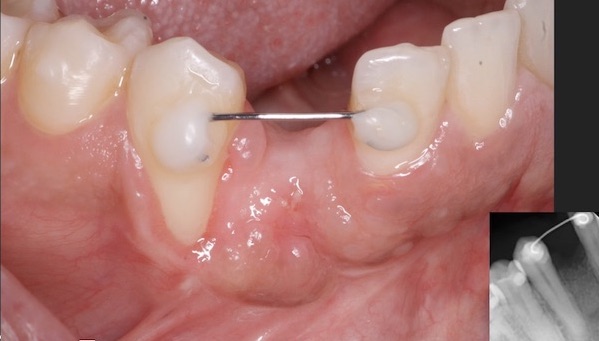
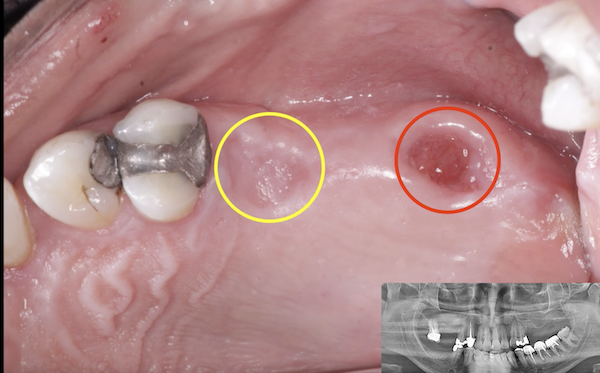
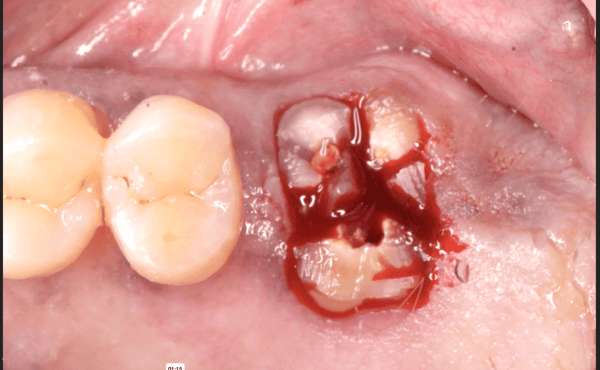
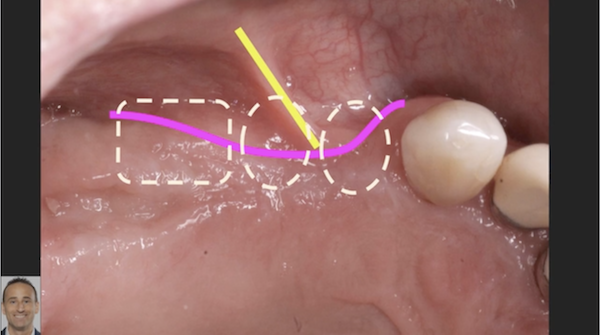
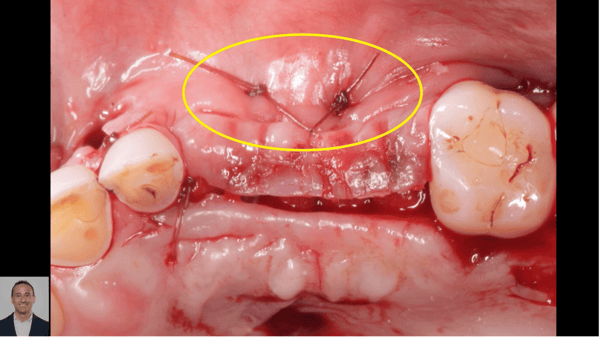
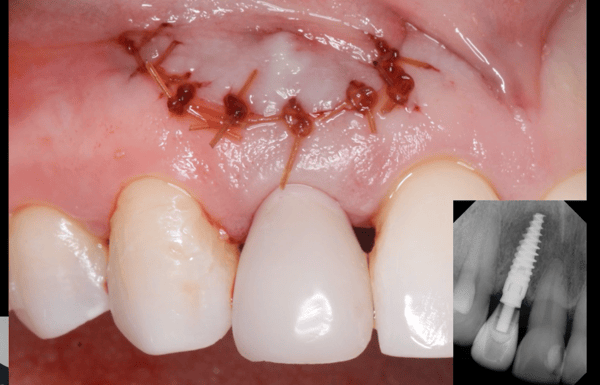
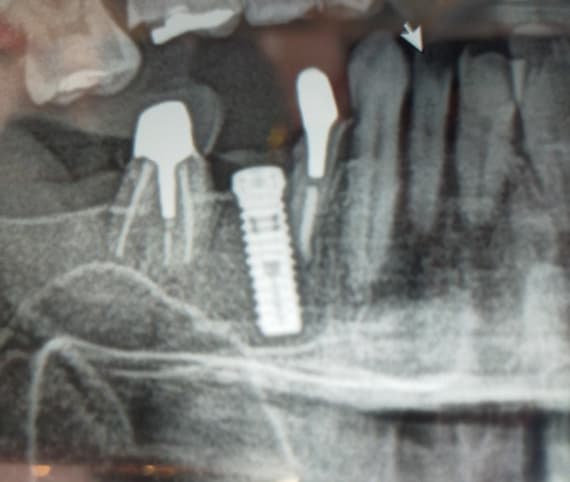
Some dental implant professionals have proposed the “All on 4” treatment plan of restoring a fully edentulous arch with 4 dental implants placed strategically and supporting a fixed partial denture (ie, bridge).

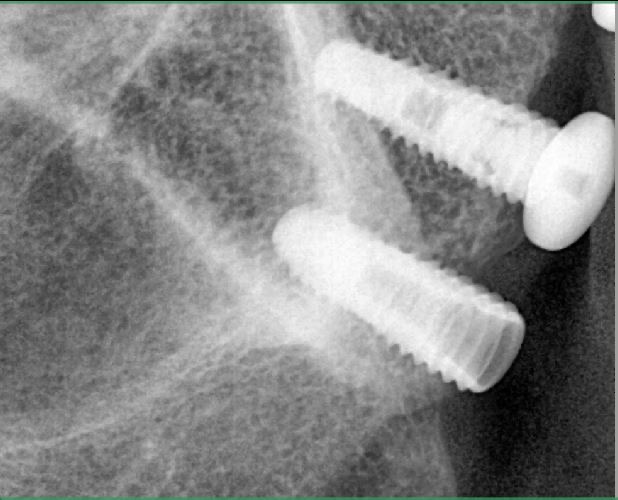
In the maxilla, the two posterior dental implants can be placed into the
zygoma
. In the mandible, the posterior dental implants can be placed at an
angle
overlying the mental foramen nerve for increased bone support. I
am considering this treatment plan for some of my dental implant patients. What has
your experience been with this protocol for dental implant placement?

OsseoNews.com Editor’s Note: For additional discussions on the All on 4 concept, please see this post: All On 4 Technique
Featured Sponsor

Free Daily Email Alert Click Here>>

Get OsseoNews.com Comments delivered daily! Click Here to subscribe.

36 Responses to “ All on 4 Protocol ”

  • Anonymous November 29th, 2005

    I think that this is used in conjunction with the NobelGuide surgical protocol, which, I have heard ends up being very expensive for the patient as well as more invasive in some ways since you have to drill in order to stabilize the guide itself. Has anyone had experience with NobelGuide and/or All on 4? I, too, am curious!

  • Anonymous November 29th, 2005

    I have, the thing nearly failed. I dont trust maxilla and over exposing bone, you can do alot of damage and perf sinus or vital anatomical structure.
    I rather do sinus augmentation place 6 implants do bar or fixed.

  • Donatello November 29th, 2005

    Four implants to end up in acrylic restorations does not seem to be logic.Also what is the need to change a 20 year-Acrylic Denture vs an immediate four-implant-supported acrylic Denture>?
    Because it is fixed? or because the patient is rich?
    Legally we can not induce patients to risk, and today we are risking too much….

  • Gary Elam November 29th, 2005

    I’ve fabricated close to ten all-on-four restorations, and just finished my first nobelguide.
    The all-on-fours were very well received by restorative dentists as well as patients. The cases were restored with denture teeth processed to substructures.

    As for the Nobelguide, I just witnessed (earlier this evening) a 70 year old patient receive 6 NobelReplace implants and a full max screw retained restoration in just under 2 hours. Same type of acrylic restoration as all-on-four.
    I was amazed at the results, and the patent was overjoyed to have this done in a quick and non-invasive procedure.
    I’ve been a lab tech for close to 30 years and I’m impressed with these new procedures.

  • Leopoldo November 29th, 2005

    Yes, all-on-four it’s possible, but you should be aware of patient function, i.e. be sure she/he wasn’t a clencher or a bruxer one. Then, you should check for bone quality, and be sure of implant primary stabilization and not to have put excessive torque (bone necrosis after a while on it. Then, you should be very comfortable about arranging teeth in a perfect position, avoiding any interference to ICP. In the maxilla, a bar-and-clip retained overdenture may be a safer way to solve the problem of your patient. In the mandible, provided that all the above requirements are satisfied, anything will work.

  • Rui Pinto Cardoso November 30th, 2005

    If you only want to earn money easy do it, it is possible. But if you want good results, whith retained esthetics and with durable prosthesis do it the right way. teech your pacients that its better to wait for the ealing of the gum and bone for better results and put more implants, spend more money in your pacients. The all on, we know that is possible like it is possible to be at 350 km/h in the new ferrary models but we don’t do it. Do it the wright way for your pacients like they were your mom.
    sorry this is my opinion

  • Anonymous November 30th, 2005

    Nobel Biocare recomends the multi-unit abutments with the 17 or 30 degree abutment to correct for the posterior implants being inclined off the vertical. Has anybody restored these cases with another technique?

  • Donatello November 30th, 2005

    Zigoma Implants? One of the recent consideration of Dental Praxis Certification was to pre-determine the possible risk any treatment could have….if you are placing Zigoma Implants what would you do in case of implant- or abutment(screw) fracture?How you retrieve the segment close to the sinus lift, what would be plan B for this instance?
    Do patients know about this possible complication?, Are they well informed about this?Which is the rationalle of the tretament when you compare the technique with sinus lift elevation procedures?

  • Arevalo November 30th, 2005

    Zygoma implants are a good alternative to massive bone grafting, we use them whe their is only a possibility to place implants in the premaxilla ( very short implants) and practically no bone at the sinus level. weve done more than 70 cases, and the last 15 immediatley or early loaded, 100% percent zygoma and conventional implant survival. I´ve have yet to see any serious publication showing a zygoma implant failure,this is more than I can say about bone grafting.
    All this will be published in JOMI,CID&RR.

  • Bob Edesess November 30th, 2005

    I have completed 4 arches on two patients. Both patients are doing well although the follow-up has been only 4 months. It is not necessary to use the NobelGuide for this proceedure. The technique is sound and as advertised, is not for the inexperienced surgeon.

  • Anonymous November 30th, 2005

    It might not be recommended for an inexperienced surgeon but doesn’t it seem like that’s exactly who would want to use something like the NobelGuide or All-on-4? I agree with Cardoso - would I really want this used on my mother? on myself? No, I would want my surgeon to be absolutely confident that the procedure that they are performing will not fail in 5 years - I would want the surgeon to be confident that they are placing the best products available - documented and tested in a variety of clinical situations.

  • alvaro ordonez December 1st, 2005

    I would not even think of such approach, I dont even feel confortable with 6 implants, patiets develop parafunctional habits at some point in their lives and the dispersion of forces will play an issue on the longevity of the restorations.
    You would need to re think the issue of how long do you want your work to last.

  • Anonymous December 1st, 2005

    I think that you are disscusing about you never see in practice! All on four is functioning for more than 25 years under the name of Nordic bridge , they have excellent results so the thing is functioning! Perforation of sinus?? i don”t see the problem it is important not to break membrane an working in aseptic condition!
    try it!
    Marko

  • Filipe Melo December 1st, 2005

    Sorry Marko but you are completly wrong… The All-on-4 Concept and Nordic Bridge are diferent things. What makes you believe that they are the same?!! Are you talking about the surgical technique?! Prosthetics?!

  • Filipe Melo December 1st, 2005

    Another thing…
    The All-on-4 maxilla… does not uses implants in the zygoma. The technique is the same as the All-on-4 mandible. And is the best option to avoid bone graft procedures profiting from the quality of anterior bone.
    And believe me… they both (upper and lower) result perfectly.
    The All-on-4 with Nobel Guide turns the technique quite more easier… and as the great advantage of doing a flapless surgery.

  • Anonymous December 1st, 2005

    The original All on 4 Protocol is for screw retention. Has anybody adapted the original protocol for cement retention?

  • Anonymous December 2nd, 2005

    The All on 4 protocol is only one design for full arch restoration. What about cement retention for any full arch case? I think this would be easier to fit than a full arch screw retained case. What is the experience with cement retention in full arch cases?

  • Paul Adams December 5th, 2005

    The All on 4 system works quite well for the parameters it was designed with. But, knowing our mindset as I do, some will push the envelope beyond the limits. They will ask for 33 degree posteriors and extend the cantilever back to the 2nd molar. The case will fail and they will blame everyone but themselves. How do I know this? 35 years of scratching my head wondering why the lab wasn’t consulted first. All ideas are good ideas but not all ideas are workable.

  • Brian Young December 5th, 2005

    There are a range of questions and comments arising from this initial question. I have been involved with Nobel’s guided surgery concept since beta testing. NobelGuide is the only way I place implants in our practice today (unless there is an immediate ext/implant). The ability to plan extraorally and proceed intraorally with precision and minimally invasive techniques is incredible. Furthermore, this procedure is diagnostic…we can determine if grafting will be needed prior to proceeding. Regarding the All on 4 concept, I have done many. The concept of getting the fixture top distal to the implant body is unique. I have provided this concept to many patients with excellent success. We have combine NobelGuide technoques with All on 4, but immediate loading is not possible with the Teeth in an Hour concept (no adjustable abutments…must use the multi-unit abutment which requires an impression) it gets down to ability, understanding, and patient selection. In the wrong patient or with non-ideal occlusal factors, this and other implant techniques are likely to have problems.

  • Anonymous December 6th, 2005

    I used it on my father-in-law, and he is still my father-in-law and I am still married to his daughter.

    All-on-four on the mandible avoids bone grafting of the posterior mandible in many cases. Given many cases of severely resorpted mandible, I am providing a good alternative that is less invasive, less costly, and less time consuming than other techniques.

  • Anonymous December 8th, 2005

    Has anybody adapted the All on 4 protocol for cement retained fixed partial dentures instead of the classic screw retained fixed partial denture?

  • Rui Pinto Cardoso December 14th, 2005

    I use 6 to 8 implants in the maxila, impression open tecnique and after i use a “free” that i adapt and after a take a impression with impregnum. The Gold suprastructure never failed with this procedure. After that it is like a total denture procedure.
    I did my first cad-cam with simplant 3 years ago and the precision is hi but only to make suprastructures that have to be breaked and glued with patern resin and in the lab put in place with laser. that takes more than 2 hours to make but it is more acurate. I put the hybrid strutures generaly in 4 weeks i wait to the gum to be in place, the results and periodontic stability is great.

  • Gary Wadhwa December 18th, 2005

    We have done close to 40 All on4 with 100% success so far. We also have excellent results with zygoma and Teeth in an hour. Overall success with new techniques using Nobelguide has increased significantly.

    Gary Wadhwa

  • stef January 26th, 2006

    Hello,
    1. I did some (more than 30)of all-on-4 and about 10 procedures with guide.
    First thing is very nice, till You don’t loose the first implant… then this is the time to explain the patient why he had to pay so much and has to wear regular denture instead of bridge…
    That happens, also to the inventor of this technique…
    2.With guide I’m not satisfied, although had no bigger problems (if not to count breaking of surgical tray…), but it’s too early for telling anything.

  • Anonymous February 15th, 2006

    I don’t understan why Stef use the all-on-four technique if he doesn’t like. You are wrong about the autor because he has 100% sucess in the bridge. From the theoretical point of view is possible to do an all-on-three bridge. Few implants are better because much bone is available to share.

  • eli February 18th, 2006

    how do I find an experienced surgeon for the all-on-4 system? all-on-4 sounds very good to me. any help is very much appreciated.

  • dr lay March 18th, 2006

    just want to know the exact price of implantation ? please give numbers

  • Patrick May 29th, 2006

    Even with the high success rate of the all on four, if you do enough of anything you will experience a failure. The beauty of doing any implant with the guide, especially all on four or all on six etc., is if an implant does fail all you have to do is unscrew the denture,graft the socket and after healing get out the patients guide redrill the osteotomy and you are able to replace the implant exactly in the same position. Then simply replace the bridge. This is a huge benefit cost wise and the ultimate plan B. The all on four is cost saving treatment plan that makes it available to those who cannot afford 6-8 implants and this enables me to help a great deal more patients. I have to give Nobel props for their pushing of the research and idea of placing, and therefore selling less implants. Theoretically!

  • Anonymous September 28th, 2006

    Can anyone please tell me how this works? Are impressions taken for dentures (to address the out of line bite and sagging facial muscles), with these then being incorporated into a bridge ready for fitting? I’m finding it difficult to accept that aesthetics may well be lost for stability. Can both be achieved?

  • Ken Parrish January 27th, 2007

    My partner and I have been doing the all-on-4 with great success. It is extremely well received by our restoring doctors and patients. The science is published, the data are there, and in our hands it has worked as advertised. Patients appreciate getting an immediate load full arch restoration the same day as the implants are placed and it eliminates the cost and extended time required for sinus augmentations (during which the patient has to wear a complete denture. Patients who have some teeth also appreciate being able to transition to a full arch restoration the same day as extractions and implants are done, no need to ever wear a complete denture. Just one perspective from Louisville, KY.

  • Pedro Peña January 31st, 2007

    I am doing all on four in the maxilla with the aid of computer guide surgery and it is fantastic. With the computer we are able to do the planification and perform a straight forward surgery through the gingiva and finish the case with an immediate loaded prosthesis. In the mandible I don´t find any advantage and on the contrary there are several surgical risks that I don´t want to accept.
    No advantages in all on four in the mandible (except using 1 implant less) increased surgical risks and increased prosthetic risks (failling of one implant means that all the treatment fails)
    It is our opinion of course.
    Pedro.

  • Jackson January 31st, 2007

    This technique has been used for cement retained prostheses for years but just not in a final restoration fabricated ahead of time. With Biotemps or Duratemps that use metal in the framework you can extract, place and load immediately and not be committed to 100% prosthesis success hinging on everything going perfectly. Humans don’t heal perfectly and those boasting thirty or so “all on four” cases with 100% success have my eyebrow raised. I just can’t comprehend a thirty year prosthesis hinging upon zero percent error in the maxilla. Many of us wouldn’t take that gamble. Congrats to those it works well for but I’ll keep placing a couple extra so the odds stay in my favor. I’d love to see some of the materials used on these prostheses and the spans they reach without flexure. And how can you tell the degree of parafunction in some of the edentulous cases? Four uppers on a good clencher? No chance.

    Jackson

  • Rob Schroering DMD January 31st, 2007

    I can see from the many post that the “All on 4″ is certainly misunderstood. I had the same apprehension as well. I went to a Palo Malo course, looked at the science and found that this is a great procedure for patients and very successful. In just 9 months I have performed over 65 cases. All with total success. Their is less cost to the patient and less time involved since this is an immediate load.

    I do not place the posterior implants as zygomatic implants. I angle these anterior to the wall of the sinus. I am now teaching a hands-on course for Nobel for this procedure. My partner has performed over 25 of these and we expect to about double the number this year.

  • anonymous February 8th, 2007

    If you have performed 65 cases in just 9 months, all with “total success,” I question your definition of success. Can “total success” be determined in 9 months or less?

  • nikky November 8th, 2007

    Is the all-on-4 technique recommended mainly to avoid a sinus lift and bone grafting? If a pt doesn’t require either, is it still a viable course of tx? (Ignoring the fact that the conventional tx takes months to complete).

  • drs. T November 8th, 2007

    With the “all-on-4″ you not only avoid a sinusgraft or the mental nerf. If you go back in time you will see it was developed for the lower yaw and the problems we had with the mental nerf and the limitations of the extentions of the bridges to the first molars. By putting the two implants under an angel we can have more extension of the brigde to the rear without putting to much off-load strain on the implants. It is developed from the same principels we used for partial protheses.


Leave a Comment

Note: Please refrain from ad hominem attacks, and promotional comments. Outside links are not permitted in comments. Though we require an email to route questionable comments to our editors, we will NEVER publish your email or use it for any other purpose. Thank you for your understanding.

Note: At times your comment may not appear on the website immediately, because it has been sent to our editors for approval. Once approved, we will publish the comment. There is NO need to resubmit your comment, if it does not appear on the website immediately.

Sun July 20 2008

FREE Weekly Email

Keep current on the latest dental implant discussions! It's Free!

>>Click Here to Subscribe to OsseoNews.com Now!