Has the Removable Partial Denture Become Obsolete?
« Straumann Announces Bone Level Implant | Implant with Sinus Tract: How Would You Approach This? »
Dr. U. asks:
At a recent national dental meeting, the question arose in one of my dental implant courses about the destructive nature of removable partial dentures with cast metal frameworks and clasps.
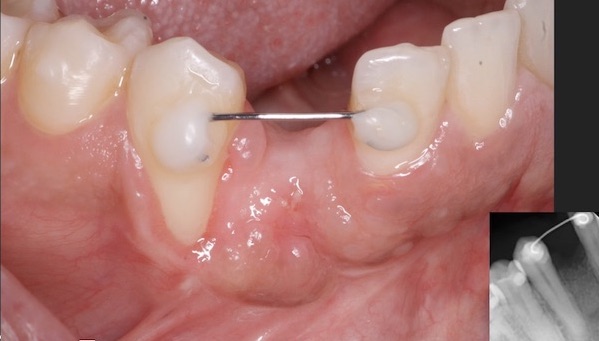
One current line of thinking emerged that placed this kind of prosthesis in a unique perspective. Since we did not have any other means for replacing teeth in partially edentulous circumstances that were not favorable to bridges, the removable partial denture was the only alternative. But the destructive nature of removable partial dentures has not been fully appreciated and they destroy many abutment teeth.
Now with the advent of implants, has the removable partial denture become obsolete? Can we still ethically recommend it for treatment when we know what it does to abutment teeth over the long term? I have been in dentistry almost 40 years. I have so many partial dentures and bridges fail and take their abutment teeth with them. With implant dentistry, have we entered a new age?
Free Daily Email Alert Click Here>>
Get OsseoNews.com Comments delivered daily! Click Here to subscribe.FREE Weekly Email
Keep current on the latest dental implant discussions! It's Free!
>>Click Here to Subscribe to OsseoNews.com Now!
-
Hot Topics
-
Editor Picks
-
Patient Issues
- Cone Beam CT
- Mini Implants
- Bone Grafting
- Oral Bisphosphonates
- Sinus Lifts
- Implant Complications
- Immediate Loading
- Overdentures
- Nobel Biocare
- >>See All Main Topics

12 Responses to “ Has the Removable Partial Denture Become Obsolete? ”
I believe that there is still a place for removable partials in dentistry. Though I hope it is the attachment retained partial. In cases where the patient is not a good candidate for implants (autoimmune disease, uncontrolled diabetes, radiation treatments) and fixed bridgework is not an option, then we can still use the removable partial. A properly designed and fabricated precision partial will not be any more detrimental to the remaining dentition than say preparing two healthy teeth to restore one missing tooth for a fixed bridge.
In my opinion, a removable partial denture is not recomended anymore unless all other treatments are not possible either clinically or financially. furthermore, even fixed partial denture is not the treatment of choice when implant therapy can be performed.
Implant Dentistry has increased our options and in many cases is a superior method of restoring teeth. We need all the tools at our disposal to help all the patients we see. Implant Dentistry is one option and many times the best option, but not always. The needs of the patient within the constraints’ of their ability to pay should take precedent over the desires of the clinician. We are saddened when we have to remove a tooth that can be saved with what we see as standard care, RCT, PBU, and Crown, but some times the patient has no choice in the matter. Our goal is to help the patient, regardless of what we would do with unlimited resources available. Experience will tell you that implant dentistry is not always a perfect or even good solution to a given problem.
In those partially edentulous cases where an implant supported FPD is not an option for anatomical, medical, personal or financial restrictions, a properly designed RPD is still a functional ans cost-effective treatment option. But in 2008 we have to consider more seriously an underutilized treatment strategy which combines the use of few “strategic” implants to improve design, function and esthetics of RPDs. Unesthetic metal clasps can be avoided, retantion and stability are improved, frequent relining of denture base avoided since bone is preserved around implants and prognosis of abutment teeth is improved thanks to better load distribution. I have published a 7 year follow-up study with 100% implant survival and presented recently (at the AO Meeting in Boston) a 10 year follow-up with 96.2% survival rate. You are invited to read also a review published (2007) on this topic (Mijiritsky E. on the PubMed).
We must remember that prosthodontics is for the “many” and not just for the few that can afford it. Most of the world cannot afford an implant supported FPD and still they deserve an acceptable and now also an evidence-based prosthodontic treatment.
Very interesting discussion.
Today….a patient said….even if it was free I would not have an implant. I love my partial.
The patient is always right. We must provide the alternative treatment for our patients and if done correctly….they are not distructive. Think about the last time you did an altered cast method for your free end cases.
My experiences are in complete agreement with Dr Hoos. The patient is always right. Give the information . We don’t want to compare a poorly designed fabricated partial with an implant placed in good bone and proper alignment with adequate integration. They aren’t on equal foundation..
Dr.U: A well designed RPD either extra or intracoronal retainers can be an excellent modality of treatment for partial edentulism. As stated before some patients are not good canditates for implant restorative care for either medical or economic issues. Unfortunately, many of the RPD’S are not properly conceived and are poorly executed. As a consequence, the clinical outcome for the success of this type of treatment is much less than desireable. Certainly, we can agree that there are some implant supported fixed cases that could be better served with conventional FPD’s in the esthetic zone with a high lip dynamics where pontics would be more esthetic. Select the right treatment, for the right patient for that time in that patients life.
Partial Denture’s still have a very important role to play in modern day dentistry. Yes, I do agree Implant retained restorative measures is the gold standard, but not all patients are interested in going through the extensive treatment plans and time that certain implant retained treatment plans require. Cost, for the private paying patient will always be an issue and will surely dictate your final restoration. Obvious issues such as medical histories, and just plain straight forward oral hygiene competence plays a huge role. The real world out there are not fully moving towards the ideal dentistry we all would like to practice just yet. So don’t throw the partial denture away just yet.
Dr. A.J Collins, London, U.K.
I appreciate Dr Mijirtsky’s contribution. I am a periodontist of 25 years and have a practice full of patients with compromised teeth they are not ready to part with and are unwilling or can’t afford to replace with complete dentures or extensive fixed implant restoration. I have not been involved in prosthetic construction or design for years and am now faced with the need to diagnose and recommend placement of “strategic implants” which will improve partial denture function and be of value in protecting remaining teeth with limited bone support. I have been seeking education on this topic in order to help my patients with the best solutions dentistry has to offer. Cosmetically wonderful upper anterior implants have taken over dentistry. I think we have an obligation to our patients to research and develop new prosthestic design and standard of care which can assist our patients who need function, can only afford a few implants and are not willing to become edentuous to go with the currently recommended complete implant supported reconstruction which is in the literature and being addresssed in continuing education today. If anyone out there has additional references or resources which could help those of us exploring this aspect of partial denture treatment, it would be sincerely appreciated.
Christine Ford, DDS Santa Rosa California
Are you willing to consider “small diameter” implants? I have done many removable partials which place NO stress on adjacent teeth because they are completely retained with a few mini implants supplied by either Imtec MDI or Ultimatics “Mini Drive Lock” implants. Immediate loading if you wish, but I usually place the implants, take an impression, pour with analogs, send to a great custom framework lab here in Chico, CA to have a framework constructed around the implants, then fabricate the partial with CORRECT occlusion utilizing both the partial teeth and the remaining teeth in good function, and process it in our own lab with the housings imbedded in the acrylic during processing. We almost always get a quick delivery with “snap-in” functionality, great asthetics with no clasps and no stress on the the remaining, often periodontally involved teeth. I see no downside to this method, since it can easily be upgraded to fixed implants later if the need arises and the patient can afford it.
One additional thought on this subject - I have also done two unilateral partials in areas with posterior and anterior remaining teeth by construction a framework with palatal support on the occlusal and palatal sides and mini implant retention where the missing teeth are. Way less expensive than fixed implants, simple to clean, and the patients both loved it. I’ll try more of these cases as we gain experience. Again there is not much downside - mini implants do not destroy bone as much as conventional implants, and a failure is easily rectified because the bone is still mostly intact.
Over the years, I have learned to hate standard RPD’s because of the destruction they cause along with the fragile nature of the clasps and often poor fit. However, the Equipoise partial denture design has proved wonderful over the years. Patients who have had “regular” partials comment how much more comfortable they are, they rarely need adjusting, don’t stress teeth, don’t cause all the usual problems of standard RPD’s. I don’t do “standard” partials anymore, since I know the damage they do. See “www.equipoisedental.com” I present VIABLE alternatives to my patients, with the pro’s and con’s of each, and let them decide.
Leave a Comment
Note: Please refrain from ad hominem attacks, and promotional comments. Outside links are not permitted in comments. Though we require an email to route questionable comments to our editors, we will NEVER publish your email or use it for any other purpose. Thank you for your understanding.
Note: At times your comment may not appear on the website immediately, because it has been sent to our editors for approval. Once approved, we will publish the comment. There is NO need to resubmit your comment, if it does not appear on the website immediately.