Implants in Alveolar Ridge with Sharp Knife Edge Ridge: New Technique?
Dr. C. asks:
I had to place implants into an alveolar ridge where there was sharp knife edge ridge. My plan was to remove or flatten the crestal bone to create a site which was wide enough to safely accommodate the implants. The dentist I work with recommended that I should submerge my implants deeply into the bone below the outer cortical plate and ridge crest and then remove the crestal bone coronal to the implants later. He said this is a new concept, but I have not heard about this. Is that true? Is anybody doing this kind of procedure and what are your results or complications?
21 Comments on Implants in Alveolar Ridge with Sharp Knife Edge Ridge: New Technique?
New comments are currently closed for this post.
Robert Davidoff
1/18/2010
It would be a mistake to do either of those procedures since they both sacrifice bone. The second one is actually much worse because it places the implant in a position that will cause additional bone loss. I have done hundreds of implant placements on sharp ridges. Use a very sharp start bur or a high speed fissure bur to start the site. Drill down so the top of the implant will be flush with the original bone level. Even if you lose a bit of bone around the head (and you will) the implant threads will be in bone and the implant position will end up ideal...
Wleed Haq
1/18/2010
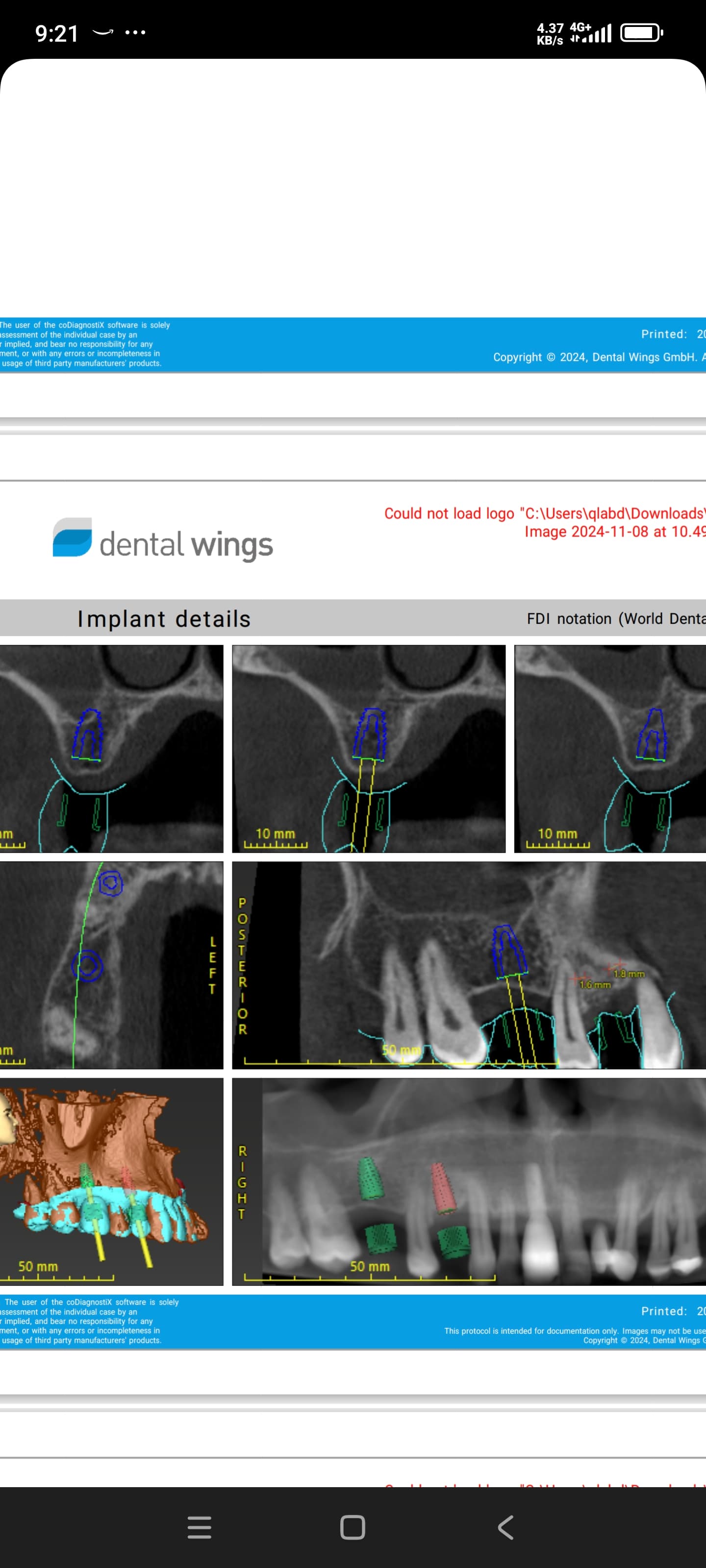
I would not recommend submerging the implants first and then removing the cortical bone; it is very unpredictable procedure and you would be drilling through a knife edge blindly. It may be a new procedure because no one does it. If this is a fully endentulous case, I would sugest CT scanning the patient with a barium sulphate stent/or radioppaque teeth from Ivoclar based on the wax-up and then creating a bone reduction template if you have access to simplant software. This takes out the guess work and you may also be able to immediatley load a provisional prosthesis
Manosteel
1/18/2010
If this is for an edentulous ridge where 2-4 implants will be placed for denture retention, a class C-w ridge can be altered to a B class by verticle reduction provided you will have enough verticle height to place at least a 10 mm length implant which can be surrounded by 2mm of bone, and at least6 mm inferiorly if that makes sense. If you are total width and height deficient then why not graft this site, widthwise, prior to placing your implants??
Dr. Shalash
1/19/2010
this is the first time i hear such a thing!!! u should adjust the ridge before u place the implants. where r u placing these implants? mandible or maxillae? in the max.the cortical bone is very important to achieve good primary stabilty for your implants. placing the implants deeply inside the ridge may comprmise the prosthetic outcome. if u are planning a fixed restoration then u will end up having an unfavorable c/r ratio. Order a good CT scan to assess the width of the ridge. if the height reduction to achieve proper width, is within 3-4 mm, then use a large round bur to flatten the ridge and then place your implants(not the other way around). If the ridge is narrow through the whole length then u should think about developing the site prior to placing the implants.ridge splitting is a very good tech. if u are working in the maxilla and it can be done with simulatneous placement of the implants.
Ken Hasty
1/19/2010
There is a great course on ridge splitting for implant placement by Giles Horrocks (Periodontist)and Dan Cullum(Oral Surgeon)at Implants NW Live.
K. F. Chow BDS., FDSRCS
1/19/2010
Dear Dr. C,
I suppose you are fictitious since most of these interesting questions come with an alphabet.
Nevertheless, it deserves a measured response since knife edge ridges are frequently found on the lower jaws. It is not an absolutely bad idea since you have to find the requisite width for your fixture and that is one way to do it. Furthermore, you may even clip down the sharp ridges and use the bone to augment the bone margins around the fixtures so that you do not have to go too far down....considering that the accepted wisdom is to get at least 2mm bone margin around the fixtures.
But do watch it that you don't hit the IDNerve or the sinus. Trimming the bone down first or later has their pros and cons. I would prefer harvesting the bone first and use it for augmentation rather than getting rid of it later, by then you have to throw it away unless you want to use it for augmentation.
Or you can use minis, yes minis .....then you can maintain the height of the bone and thus the soft tissue and your final prosthesis need not appear soooo taaaaalllll.
William L. Ingram V, DMD,
1/19/2010
Two stage ridge split is definitly the way I would go!
B
Dr.Richard
1/20/2010
submerging your implant is a blind technique,you can not determine how deep to place it in,i did it one time but i had to take many x-ray to check whether it went near the IDN or not.and sometimes you have to think about biological status when you come to the prosthetic stage,remember that the deeper you submerge the more you violate the biologic width.
when you have enough length of bone(>10mm ),and the bone is D1 or D2 ,flattening the crestal bone is the better choice,no need graft,good primary stability.
Scott D. Ganz, DMD
1/20/2010
Interesting comments... We will never get clinicians to all agree on a particular plan of treatment, as we have such diverse alternatives today. However, as I conceived the bone reduction template concept several years ago, it is a very practical approach to solving this dilemma, while avoiding vital anatomical structures. The bone reduction template requires an understanding of the 3-D anatomy as has been suggested via a CT/CBCT scan, for proper diagnosis. Best done with a scanning template to assess the RESTORATIVE position FIRST during the scanning process. This is critical. I have presented and published this technique - to reduce the bone precisely to the needs of the site, and then place implants with a guided approach.
You can find a video on this technique on the DentalXP website. I will be doing a hands-on practical course on 3-D treatment planning Feb 5-6th in Atlanta for those interested... information can be found on my website.
Dr. Mehdi Jafari
1/22/2010
It is -to me- such an astonishing situation. How can we bid our clinical judgement when we absolutely know nothing about the width, height or even the location of this so called "an alveolar ridge" within the jawbones? There is almost a technique of choice for each and every clinical problem if it is really a problem and not the prelude to a commercial
Richard Hughes, DDS, FAAI
1/23/2010
There are really no true new techniques around to mannage this! You either reduce and place a shorter implant. Expand and place a root form or D IMPLANT. Reduce and place a blade implant. Reduce and impress for a sub. One can even graft using various methods.
Dr M
1/26/2010
For edentulous patients in particular with knife edge ridges in the mandibular arch, in which you want to place implants for locators or ball attachments I have removed the knife edge ridge without going completely through the cortex and it has worked out well; narrow body implants such as 3.3s or 3.5s with 3.5 platforms have done well--in the maxillary arch a wiser approach is a ridge split.
Minis are also very acceptable for the mandibular arch in particular; IntraLock makes up to a 3.0 mini.
Dr. Gerald Rudick
1/26/2010
I think most of the comments made by the above highly experienced clinicians have merit, and show a variety of ways to solve this problem.
It would be best if the publishers of Osseonews would permit the dentists asking for opinions, to be allowed to submit some radiographs and photographs so that we could visualize the situation as it is, and not how each of us percieves it.
OsseoNews
1/26/2010
Dentists can post radiographs and photos in our Cases section. Simply click on the "Post Cases" button on the top left of the menu bar. Thanks.
Gary omfs
1/27/2010
In order not to have to reduce height too much, wich is often the case in f.e. class III edentulous patiënts (true prognathism) I sometimes do the following:
1.cut through both cortices at a level of +/-4 mm width
2.turn the removed crest upside down and adapt it to the buccal cortex; if necessary divide it into pieces; fixate and cover with membrane
3. after 3 months you can remove the screws and insert implants of an appropriate size.
No magic, more details in any handbook of omf surgery.
Roland Balan
2/17/2010
to Gary omfs,
if you use disk /BOI Implants (single, double or even tripple disks) you have one surgical procedure and an immediate solution to be loaded.
Although this technique has a long history-
Misch,Scortecci,Ihde, Spahn - it seems to remain out of our mind regarding cases of massive alveolar atrophy.
Carlos Boudet, DDS
3/16/2010
If you have a knife edge ridge to begin with, you will not have the minimum amount of bone buccal and lingual to the osteotomy, and you should consider the technique to use according to what you want to accomplish.\If you need the bone height to stay at the same level, then consider splitting or expanding the ridge. If bone height is plentiful, then the original approach of flattening the ridge until adequate width is achieved, is the best option.
Dr.Sridhar Chowdary
4/1/2010
I suggest you to take cone beam CT.Then to decide treatment plan.In such clinical conditions i.e. knife ridge usually we see in mandibular edntulous PRE-PROSTHETIC SURGERY is of great value.
Another plan is after osteotomy placing a GRAFT with MEMGRANE usually used in GTR.These things should workout.
Richard Hughes, DDS, FAAI
4/1/2010
Consider using a blade implant, cut down and place a root form or blade, consider a sub but you may have to perform osteoplasties first. All these options are dependent on bone volume and quality in their own way.
Dr. Kimsey
4/2/2010
Don't waste bone. Don't worsen your crown implant ratio just do a two stage ridge split and place normal sized implants.
VIRGINIA singer
5/12/2011
Is it OK to use a drill to try and line up top and bottom teeth but drilling off high spots and identifying the areas need using a colored plastic placed between top and bottom teeth and then click,click and then back and forth and continuing with this procedure until they feel the bite connection is better and then using the night card.