Inclination of Implant Replacing Maxillary Canine?
Dr. M. from Florida asks:
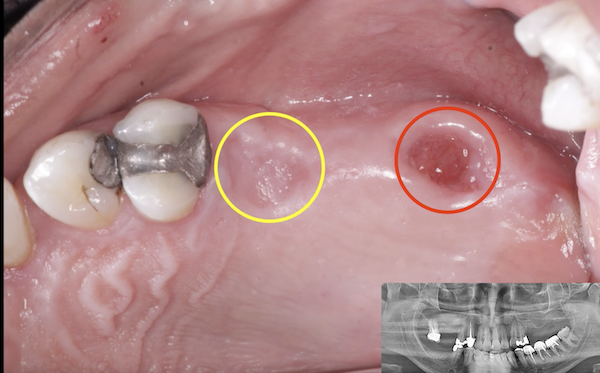
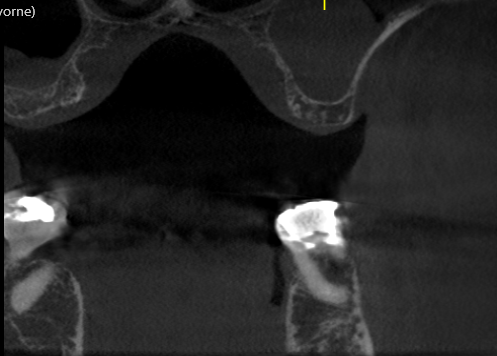
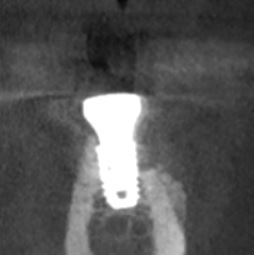
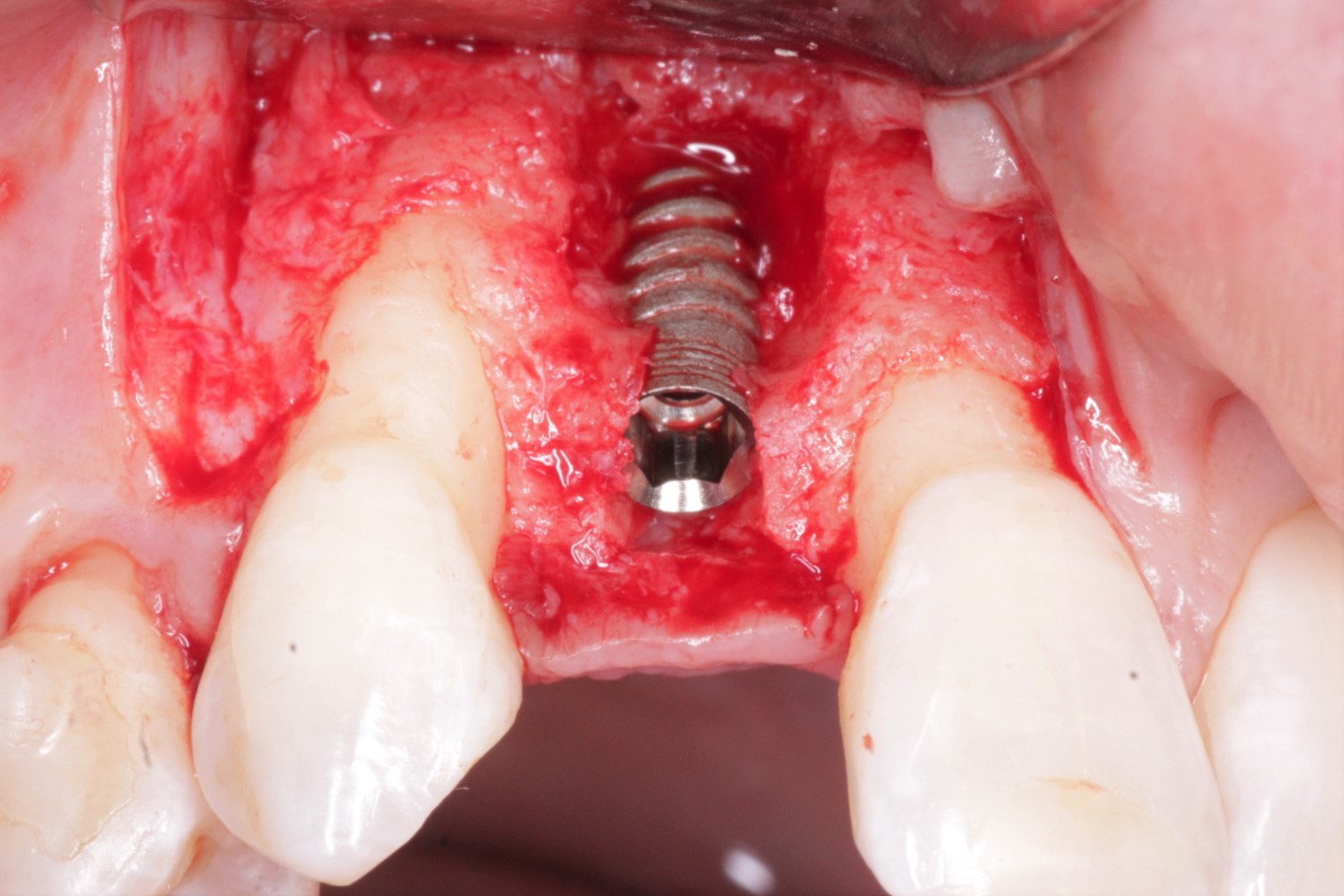
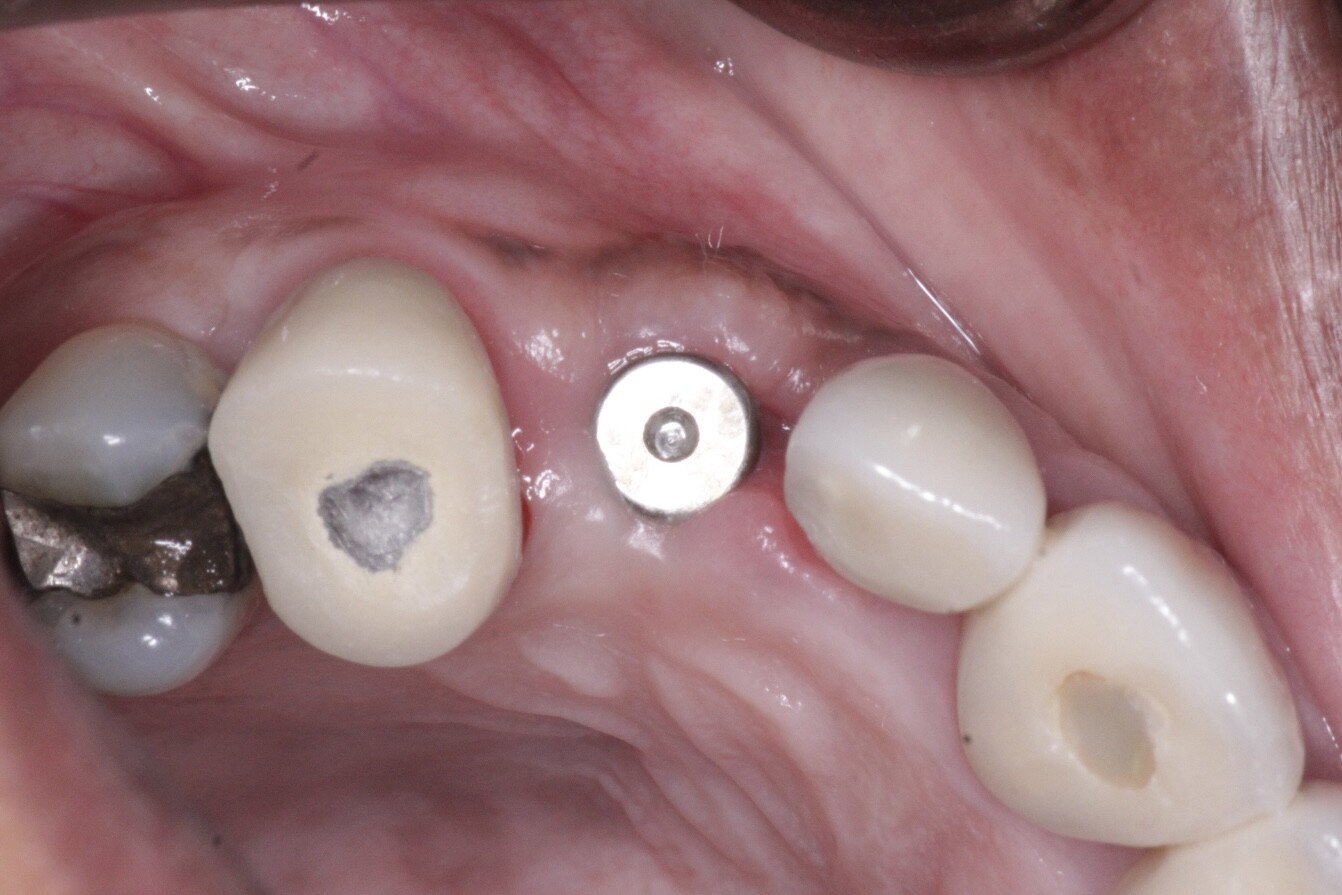
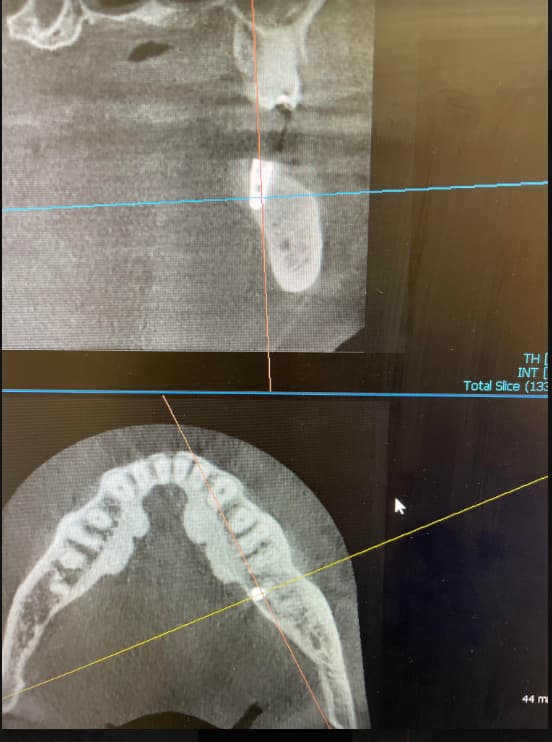
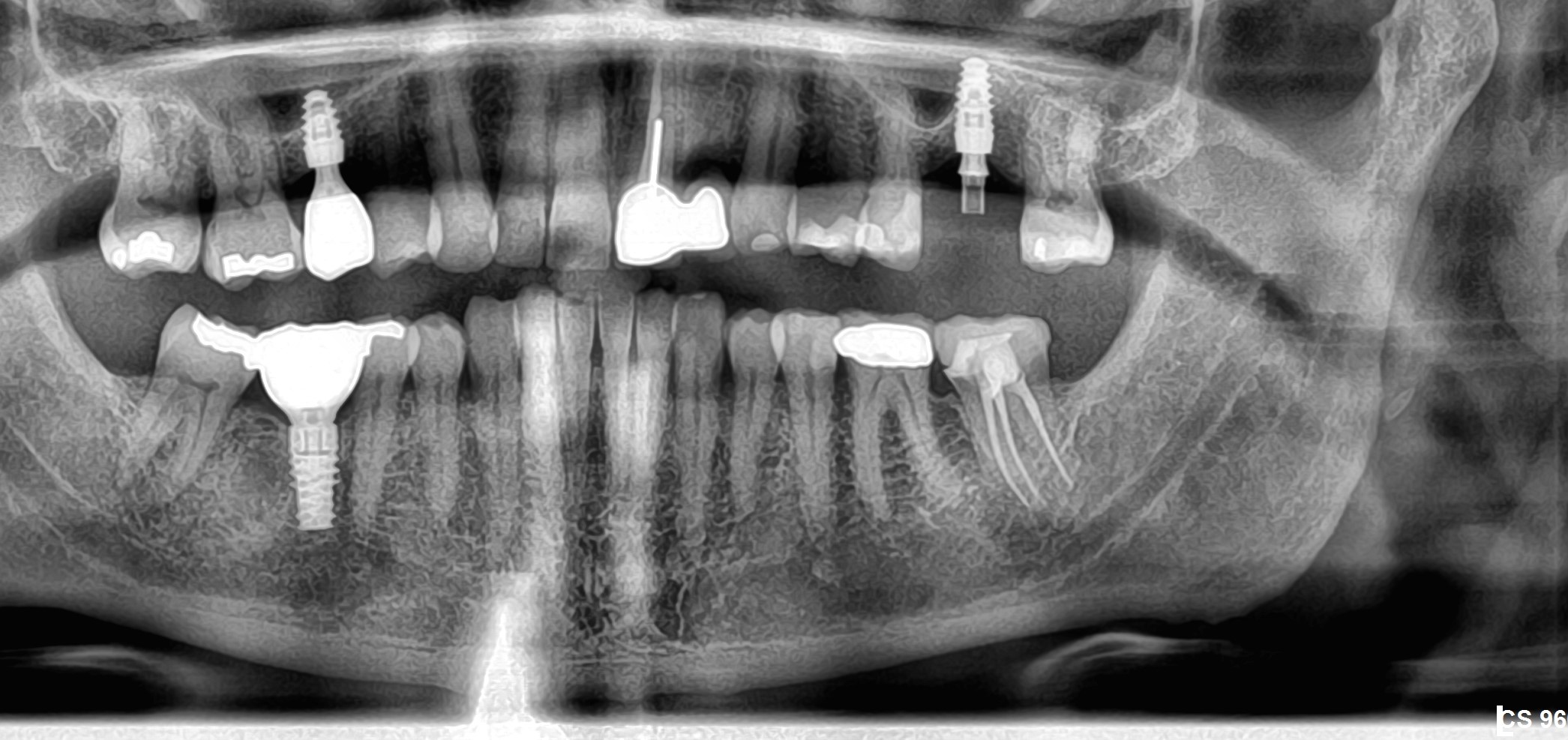
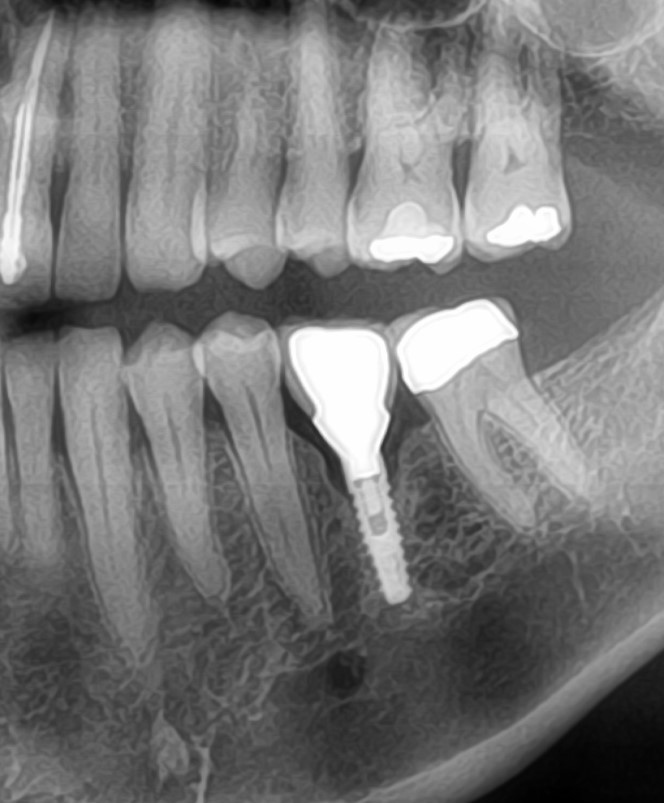
I have recently done several maxillary overdentures utilizing 4 dental implants in the maxillary canine and second premolar areas. I recently attended a course where the lecturer stated that when an implant is used to replace the maxillary canine it should be inclined towards the buccal, just like the natural maxillary canine.
In the cases I did, I placed the implants in the maxillary canine area perpendicular to the plane of occlusion and parallel to the implants placed in the maxillary second premolar positions so that all 4 dental implants are parallel to each other and offer 1 path of insertion and withdrawl of the overdenture. What are you all doing in cases like this?
7 Comments on Inclination of Implant Replacing Maxillary Canine?
New comments are currently closed for this post.
Dr. S
4/10/2007
You were told jsut plain wrong information. Stay inside the buccal cortical plate by 2 mm. Canines are usually torqued towards the palatal slightly
CatScann
4/10/2007
I totally agree with Dr. S. Really bad and negligent information. If you incline the implant towards the buccal you will naturally use an angled abutment increasing the off-axial load. This is likely to cause crestal resorption upon loading. For predictable results remain within the envelope of bone and avoid off-axis loading.
Lawrence Earon
4/11/2007
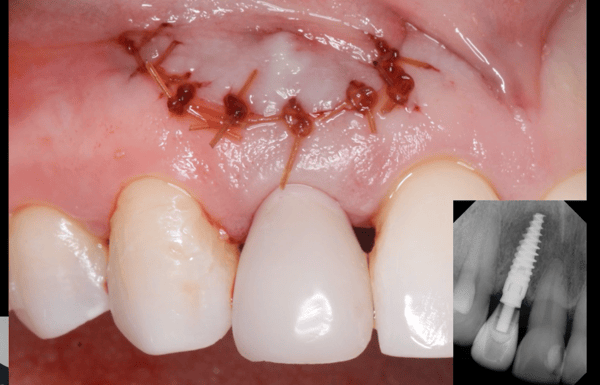
I am in the final stage of my dental implant treatment. I have had 2 surgeries and have visited my family dentist for an impression. I have 3 implants replacing my front teeth. After reading as much as I can on the internet I have a concern.
My dentist commented that the angle of one of the implants, located to the right of the center implant, is more acute than the others. When I asked it this would be a problem he said no and told me a correction could be made outside the implant to insure the teeth looked good.
I am worried about the off-axis load. If the angle of the tooth must be corrected will this increase the off-axis load and if so will this increase the risk or a failure in the implant itself? If there is a problem at this stage is it too late to do anything about it?
I hope these are not stupid questions and thank you in advance for your time.
Lawrence Earon
Sweden
CatScann
4/12/2007
Lawrence,
I would trust your dentist if he feels there is no problem. Each case is approached from a different prospective and diagnosis/prognosis is patient specific.
These forums can be troubling when patients read all the different opinions out there. Off axis loading can be a problem and should be minimized. It doesn't mean that a perfectly placed implant won't have this type of load. An acute angle is not a sign of failure or a sign of future problems...it is very difficult to achieve perfect parallelism even with a CT-guide. Sometimes, we have no choice but to place an implant at an acute angle.
I'm sure your dentist is familiar with this situation as it happens frequently and everything will turn out fine.
Your questions are never stupid and you should feel secure in asking any question to a health care provider. I hope this helped.
SIImplant
4/13/2007
Dr. S and CatScann have put it in the words of the majority of doctors I work with in the Washington, DC/Northern Virginia area. Which is stay in the envelope of the bone to preserve crestal bone and have switched to using an implant designed exactly for this situation, the CoAxis Implant. This implant has a 12 degree angled built into the fixture.
SIImplant
allan
5/23/2007
yes..well catscann, your response to Lawrence really raises the whole question about what is acceptable 'good practice' doesn't it?
It's easy to say 'every case is different' (sic). But that lets the practitioner off the hook. If he or she gets the bloody angle wrong, then 'tough luck' I guess? Is that about the size of it? If so, then maybe bridges are still the best alternative (when possible) as opposed to implants - because many of these practitioners may drill into the bone at the wrong angle? Scary stuff mate..
Dr. Bill Woods
8/6/2007
Allen, are you just a curious poster or do you have an interest in implant dentistry? catscann is correct - there is nothing perfect in aany health care field, and, no, some clinical situations can be very successful with things off axis to a degree. we try to get everything as close to what scientific efforts prove to be correct protocol, but all patients are different and the variables of treatment that go along with each patient. Many researchers are pounding the pavement for "all" the answers and this is an exciting moment in dentistry to have this information being published at such an expansive rate. Age, bone quality and quantity, the patients own dentition, occlusion, health, soft tissues, hygiene habits, medications, anatomy, eating habits, esthetic requirements, and the clinicians choice of implant type, length, width, surface composition, preplanning and surgical skills, the skill level of the laboratory, metalic composition of the abutment, crown margins, immediate or progressive loading, and so forth all play a part. Angulation isnt the only thng we look at. When we want something to last for 10-20 years, we have to look at more than just an angle. For your own curiosity, just ask your orthopedic surgeon if he will give you 10 years on a titanium knee and see what he says. Ill bet you he wont come even CLOSE to the 90+ success rate we have with dental implants over 10 years...he wont even give you 5 years... So...dental implants are a great therapy. perfect, no...but they are one of the most successful therapies in all of dentistry. Something to think about ...The constructive comments on this forum are (mostly) meant to advance knowledge so we can apply it to better serve our patients.At least that is how I see it. The grand rounds forum has been around in the medical community for along time. works well. Bill