Charles, a dentist asks us:
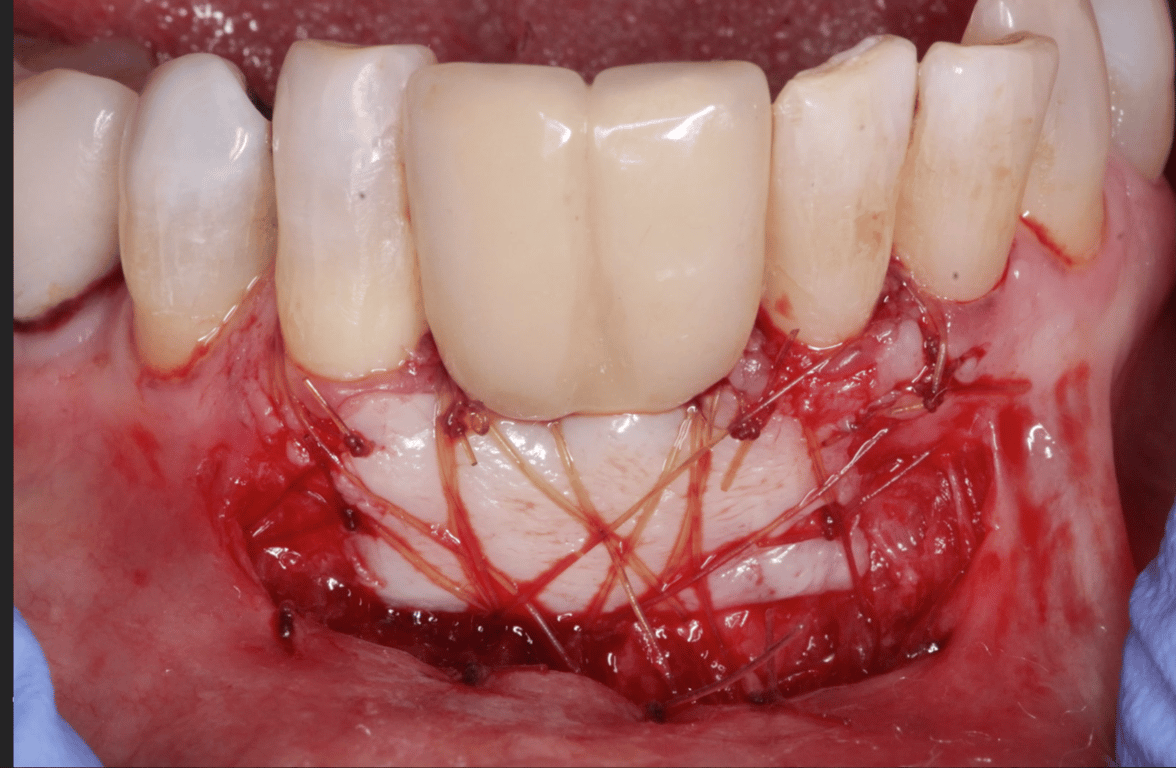
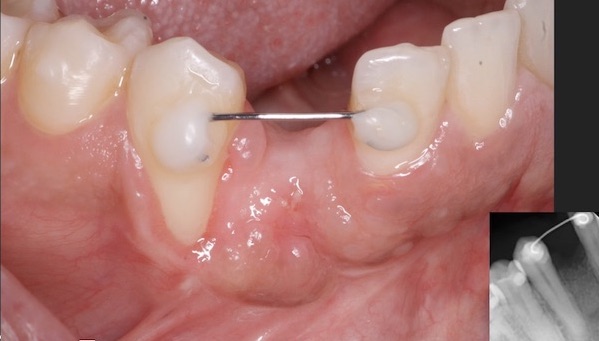
I have a patient who had four 4×10mm dental implants placed in her mandibular anterior. I was planning on doing Locators and making an overdenture.
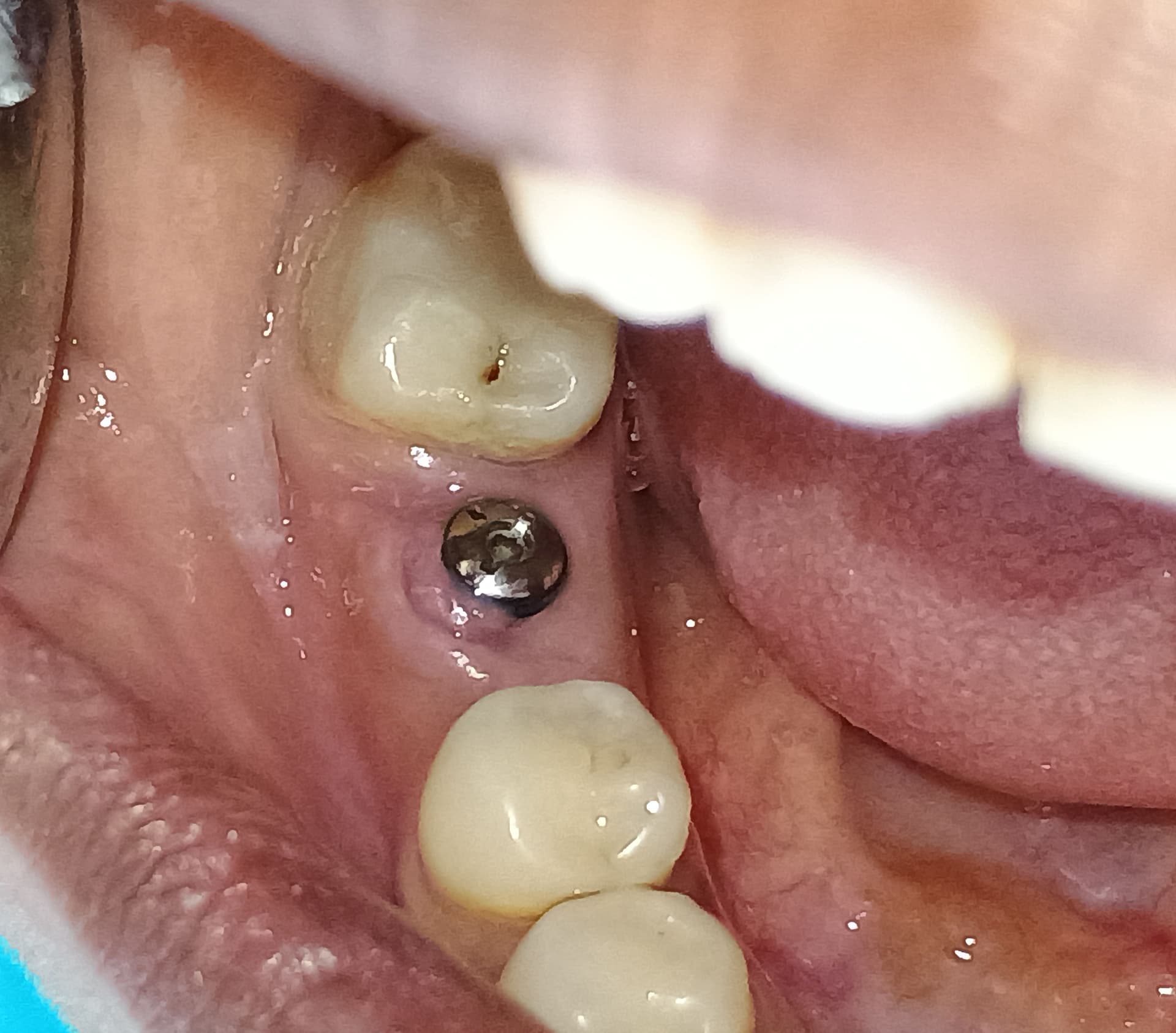
The gingival connective tissue over the dental implants is very dense and
thick. From the implant platform to the highest point on the
surrounding gingival is 4mm for each dental implant. This means the Locator
abutments are going to have to be taller than I planned and this will
create longer lever arms that will apply more force to the dental implants.
Should I still go ahead with the Locators or should I change the
treatment plan to a bar? Thanks.
Free Daily Email Alert Click Here>>
Get OsseoNews.com Comments delivered daily! Click Here to subscribe.FREE Weekly Email
Keep current on the latest dental implant discussions! It's Free!
>>Click Here to Subscribe to OsseoNews.com Now!
-
Editor Picks
-
Popular Posts
-
Hot Topics
- Large Defect in the Labial Cortical Plate
- Abutment Screw Gets Stuck: How to Prevent This?
- Crown 1mm Short of the Margin: Recommendations?
- Suture Lost Exposing the Implant: What to Do?
- Mini Implants in Anterior Mandible: Expectations of Longevity?
- Space Between Implant Fixture and Natural Teeth: How Much Is Enough?
- Bucco-Lingual Resorption Exposing the Threads on Implants: How to Manage?
- Platform Switching: Which Implants are Designed for This?
- Options for Provisional Restoration?
- Porcelain Fractures: How To Approach?
- Loose Bio-Oss Particles: Can Implants Be Placed?
- Maxillary Overdentures: What Implant Support is Required?
- Mixing Metronidazole Solution in Grafting Material?
- Sinus Lift Complication after using Summer’s Osteotome Technique?
- Cone Beam vs. Conventional CT Scans: Radiation Levels?
- Sinus Tear: How Long to Wait for Regraft?
- Mini Implants for Long-Term Use?
- How to Avoid Hitting the Mental Foramen Nerve?
- Best Technique for Removing Osseointegrated Implants?
- Fosamax and Dental Implant Treatment
Implant Courses
>>More Implant Courses

14 Responses to “ Locator Attachments or a Bar? ”
Go with ERA attachments. The ERA’s have .4mm vertical resiliency and transfer less than 20% of the occlusal forces to the implants (Dr. Vicki Petropoulos study at the University of Pennsylvania 2001). This will cancel out any kind of lever because of the tall tissue cuff height.
does it really matter? what is the oppossing dentition. A full denture is clearly less of an issue than a full fixed implant reconstrution.
i am a periodontist so the prosthetic factors should be enumerated by someone with more expertise. However the retentive elements are always the stress release point. How many single tooth restorations have been made with a more unfavorable crown to root ratio?
There are several diagnostic factors that weigh overdenture attachment selection, not just leverage on the abutments by virtue of their length:
1) opposing occlusion
2) interarch space
3) Occlusal vertical dimension
4) paralellism of implants
5) flange thickness/width
effect in the neutral zone
6) technical difficulty
7) cost
i’m also a periodontist and am proud to say i know as much restorative as any restorative guy, implants in particular, which is the way it should be, in my opinion. aren’t we all dentists that combine our expertise for the sake of our pt’s? why should the restorative guy take on all the responsibility?
there will be no problems whatsoever if you pick up the locators intraorally making sure that the overdenture is not impinging on the attachment at time of pick up. my preference would be a bar.
“aren’t we all dentists that combine our expertise for the sake of our pt’s?”
Nicholas Varras
Not this guy, he works for Sterngold
For an edentulous mandible the ideal position of the implant platform is right at the gingival crest or slightly above. That’s why I prefer the Advent implant by Zimmer for these cases.
I suggest you cut the tissue back so that the platform is not so sub-gingival. Did you do the surgery or someone else? What implant system are we dealing with here?
I prefer Locator attachments instead of ERA. They are much more retentive.
The purpose of the bar is to make the overdenture 100% implant supported. With just 4 Locators you still have 30% soft tissue support. If the patient has dished out bone in the posterior segments I would definitely go to the bar. You can have Locator attachments screwed into the bar as well.
Most people who are financially challenged stop short of going for the bar and are usually happy with just 4 Locators.
I agree with the good Dr. Weinberg that you need better tissue control prior to restoring this case. If the implant platforms are in good position, you should reduce the height of the abutment to reduce lever arm.
If you could not manage the tissues well, then either of your options, bar or locator are feasible. I would prefer the bar, due to a bit of cross-stabilization and splinting, but if you have deep “pockets” the patient will be less motivated to clean underneath it. Where as the locator are lower profile and can reduce the lever arm forces you are concerned with, and can be more hygienic than a bar.
Get ready for a maintnance nightmare if you use locators. If you dont mind replacing the attachments every 3-6 months at essentially no charge, you cannot charge enough to treat a pt with locators. Do yourself a favor and treatment plan a milled bar with 4 bredent attachments and you will never touch it again. Once the patient has implants they feel that they are not working if they are having to come and see you all the time because they are loose. Locators do not fit if there is any debris ie calculus, food, plaque etc. There is alot of hype on locators right now and that they are more retentive than a bar, that is just not true. Hader bars are junk which is what most people think of when they think of bars. There are many better designs and attachments than hader bars and locators should be avoided when ever you can.
I have a very busy overdenture practice and would choose a bar in this case, provided you have enough interocclusal space for the bar assembly. I am not fond of the hader bar and their yellow nylon clips or even the ackerman clips as i find they tend to be very weak overtime. A micro “dolder” bar assembly with custom cut dolder sleeves to engage the full length of the bar is a great choice and depending on the postioning of your implants you can get either 3 clips or 5 if you cantilever. Cast or milled bars with attachments coming off them work but you require more interarch space. Good luck.
I’ve done plenty of both types and I can’t quite say that one is better than the other - they are completely different. The bar will give you an implant supported prosthetic while the locators are implant retained. What does the patient want? What are they willing to spend? What was treatment planned from the outset? In my practice, a bar restoration is significantly more expensive and the fabrication is more involved. I have not found the maintenance on either type to be excessive as long as the attachments are relatively parallel. I would sit down with the patient and regroup at this point to let them know the problems and solutions and let them make the choice. If they prefer locators you can reduce the tissue to the proper height and softline over the healing caps until it matures. It will work out fine that way even with a little extra height. OTOH, if the patient wants to go for the big bucks, you have enough implants and hopefully enough vertical height (you didn’t mention it but this is a big criteria) to go for the bar. Bredent VK-SG’s side-mounted are a good option for extra retention in lieu of hader or dolder. Good luck.
Wow! Thanks for the slam on the Locator!
The problems you are having sound more patient related then attachment related. If your patient eats with their denture out there is a good chance of impacting food into the attachment. Same with poor hygiene. These problems are true with most attachments.
To help this patient you could use the Green or Red males which don’t have a center “male” to them. Because Locators have duel retention using just the outside retention works fine.
As for the “hype” on the Locators I’m not sure what you are referring to. Many Locator users have taken upon themselves to share their experiences; these Doctors are in no way affiliated with Zest Anchors Inc.
Zest Anchors stands behind our products. If you feel the attachment not the patient is the
problem, contact me and I will refund your money.
Scott Mullaly
Zest Anchors Inc.
well said scott
Dr. G
I agree with Scott, I love the simplicity of Locators, find them very retentive,and expensive and MUCH less complicated to fabricate and maintain. I can’t think of a reason to bother with a bar anymore! I have no interest in Zest either.
From a lab/biomechanical point of view, I recently presented the topic of the closure of the Inter-Implant Space (maxillary or mandibular) with an Implant Borne Bridge (IBB) and found considerable interest among Dentists attending the ICOI/Montreal meeting.
My objectives were to create an efficient, cost effective implant supported prosthesis for the often encountered patient scenario of not enough bone, but a desire for a fixed implant supported prosthesis.
The IBB answers that need with a completely rigid, attachment-free, highly hygienic, patient removable solution that combines
prosthetic simplicity with great esthetics and function. It is a “feathered flange prosthesis” assuring very high patient comfort as it replaces the lost hard and soft tissue volumes only. It creates a very cost effective environment in which well established prosthetic pathways lead to the correct restoration of the maxillary and/or mandibular arch with correctly positioned anterior teeth (o. oris/lip support, esthetics ßàfunction interplay) and correctly positioned posterior teeth (buccinator support) incorporated into an occlusal plane that is in tune with the patient’s biomechanical / rehabilitative needs.
Based on work started in the late 1940s defined by Dr. A. Gaerny, Switzerland, as the “Closure of the Interdental Space”, I evolved the current IBB design into an extremely simple implant restoration that
- competes effectively with Spark erosion technique approaches, (albeit that we still do quite a few spark erosion cases on a daily basis),
- utilizes free-standing abutments (no inter-implant bars needed, great hygiene),
- utilizes a secondary connector made from Vitallium 2000 resulting in great cost savings,
- utilizes advanced inner/outer telescopic design principles,
- utilizes “hydraulic attachment effects” for prosthesis retention (no moveable attachment parts to be replaced),
- offers full repair/add-on ability without having to replace the restoration (in case of prosthesis / case extension over time, or implant loss at any time),
- costs significantly less as modern materials and advanced design features are fully applied.
As far as long term follow ups go, there are ample long term references by Huober G.; Gaerny A.; Zarb GA, MacKay HF. Sekine H; Kishi M, Yasaki H, Nakayama I, Uetake M, Mori T.; Voitik AJ.
Leave a Comment
Note: Please refrain from ad hominem attacks, and promotional comments. Outside links are not permitted in comments. Though we require an email to route questionable comments to our editors, we will NEVER publish your email or use it for any other purpose. Thank you for your understanding.
Note: At times your comment may not appear on the website immediately, because it has been sent to our editors for approval. Once approved, we will publish the comment. There is NO need to resubmit your comment, if it does not appear on the website immediately.