Angularity of Implants Towards Lingual Side: Special Abutment Needed?
Mike, a dental implant patient, asks:
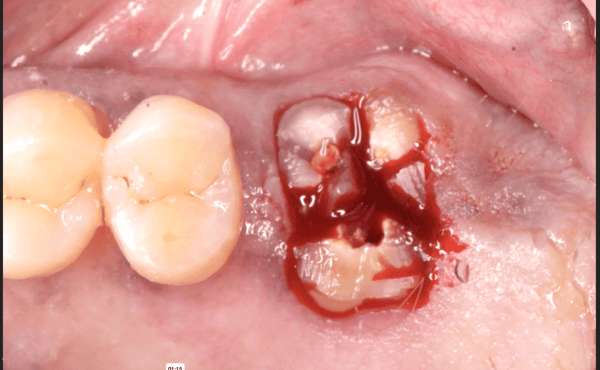
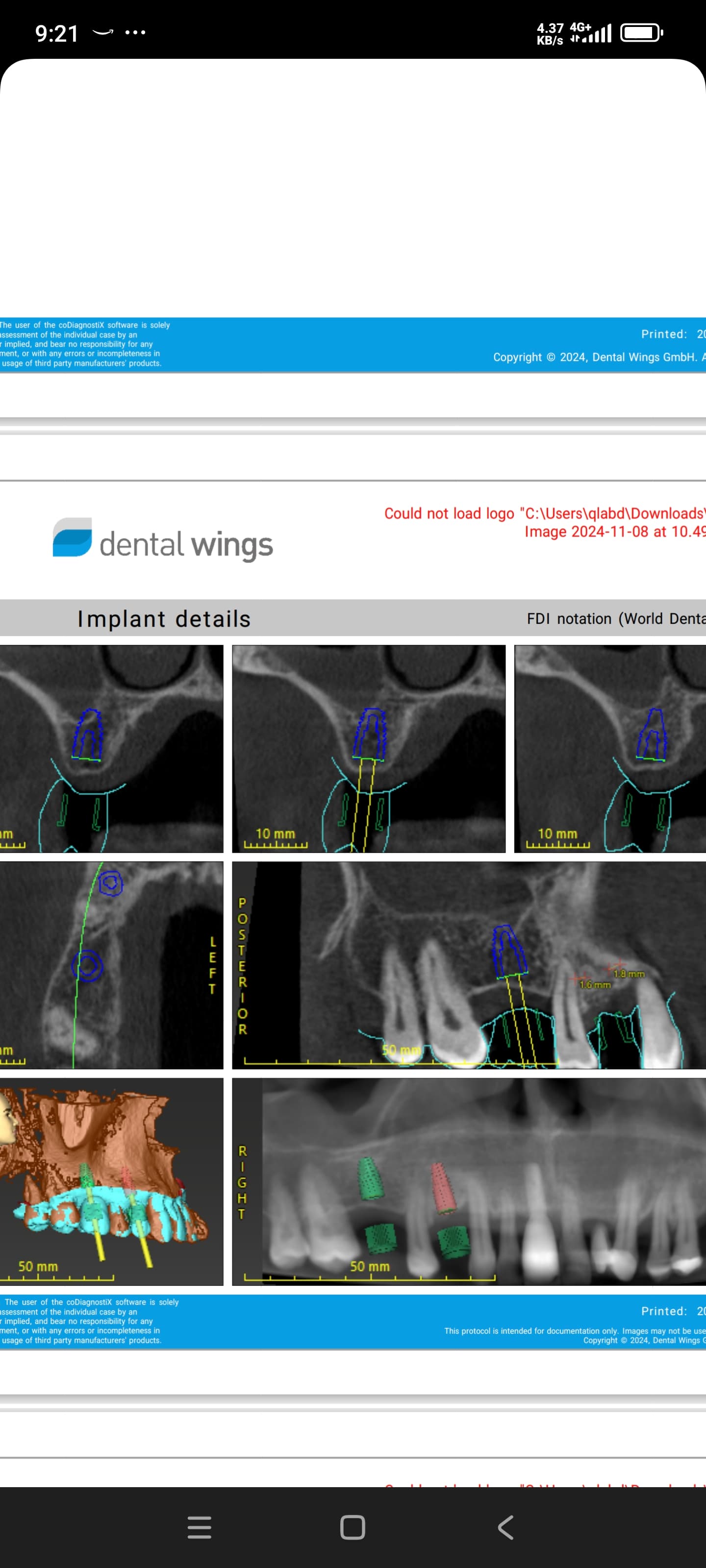
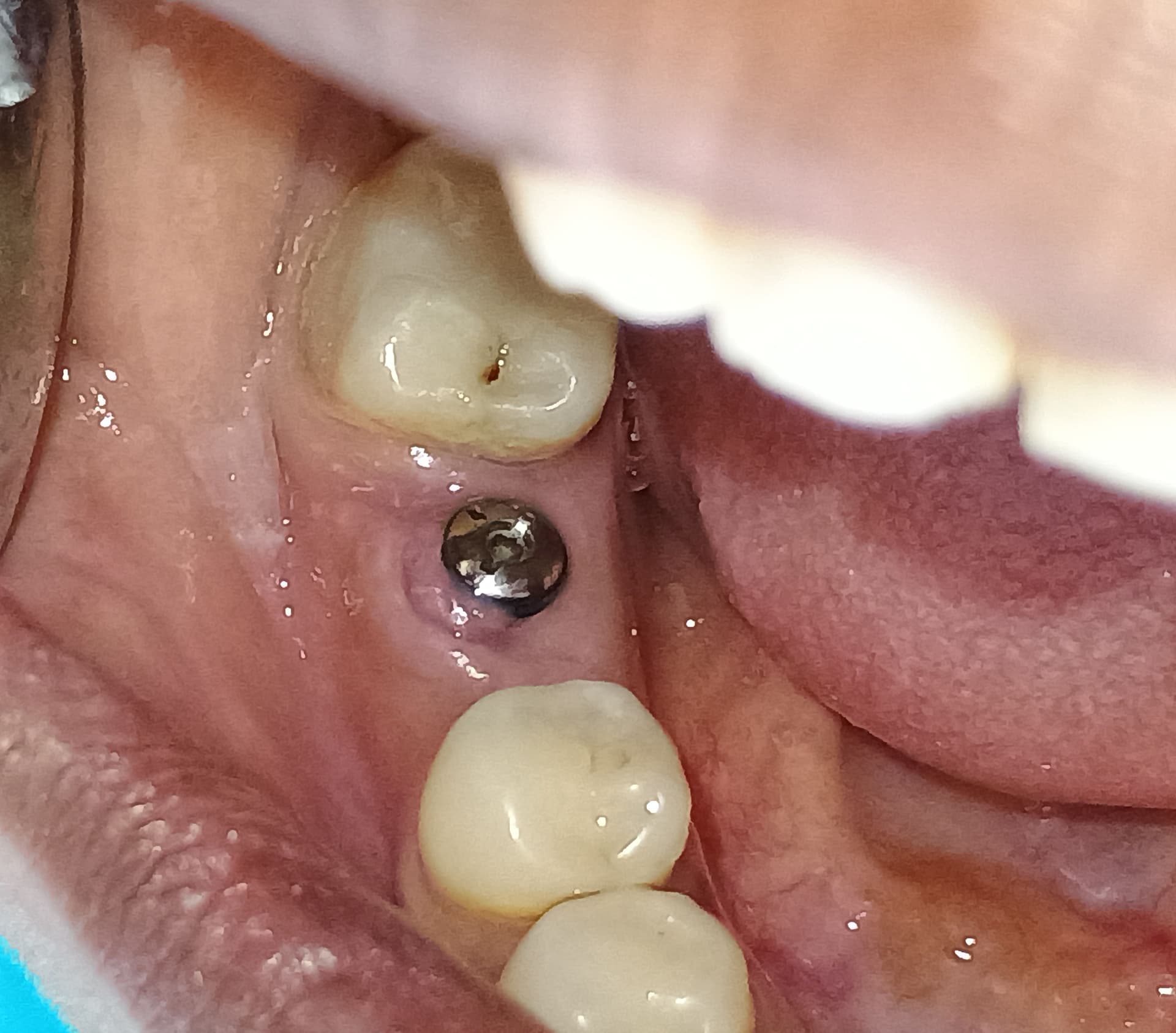
I am a 65 year old patient that has had dental implants placed in the #18 and 19 positions. My periodontist says everything is good, but my general dentist says the angularity of the implants, especially of #19, is too much towards the lingual side. An impressions taken with the abutments in place were sent to the dental lab, and they refused to make the crowns, saying that a special abutment was needed to correct for the angularity. The concern of my general dentist is that the angularity is so great that a special abutment will not be adequate because the bending forces from chewing will soon break the attachment screws. What should I do?
15 Comments on Angularity of Implants Towards Lingual Side: Special Abutment Needed?
New comments are currently closed for this post.
Dr. Ben Eby
3/25/2008
Implant level impressions need to be taken and custom abutments need to be made. Number 18 and 19 should be splinted to reduce the force on the lingually placed implant. This should do it.
Bruce Bay area OMFS
3/25/2008
Sound advice. Fixture level impression, custom abutments and splinted. Also make sure the lab that he's using is very familiar with implants.
Alejandro Berg
3/25/2008
Hi: I would say change labs, the position is probably correctible with a implant level impresion and casted or cad-cam abutments, then a splinted cemented structure. in some cases if the angulation is to strong you can do the splinted structure directly with no abutments and use that as a cosmetic advantage( the emergence of the screws is by the lingual side) so there shouldnt be a real problem.
SFOMS
3/26/2008
Great advice, but first get a second opinion from another lab or dentist. It is certainly possible to do what others have described. Outcome and long term success will depend on sustaining healthy bone volume at the implant interface, which is a total other discussion.
The other person partly responsible for your current situation is also the implant surgeon. If your periodontist says things are "good", why are you having these issues? Could the angulation have been optimized? Or is this the best its going to get? Could the angulation have been optimized? Or is this the best its going to get? should be a few questions to ask... Just my 2cents.
Patrick Cross
3/26/2008
It does seem odd the lab said a special abutment is needed and did not provide your DDS with the proper solution. An experienced implant lab provides solutions for just about any angulation and for that matter an experienced implant dentist should know that a custom abutment can solve just about any angulation issue. As for the issue of implant failure as a result of the angulation I routinely place implants at 30 to 40 degrees when doing a full acrh rehabilitaion. Those are splinted together. Since the bone on the lower posterior is usually just about the best bone quality you can find you probally will have no issues.
ManOSteel
3/26/2008
Custom made abutments abutments can be made with UCLA abutment waxups cast in type IV Gold alloy to correct for angulation and rotational problems, it's done all the time! P Cross is absolutely right! Perhaps if your GP Dentist depends on the opinion of an unknowledgeable lab for his implant info you might condsider another dentist with a Post Grad Prosthodontic Certificate, and or Implant Fellow. From ManOSteel Cert in Pros. Indiana Univ.+ FICOI
Rich Mao
4/1/2008
The problem is not the whether you can get an abutment in. the problem is once the crown is in function is the abutment going to withstand the forces of mastication causing the screw to break inside the implant.
Al
4/5/2008
This was the reason given to me for using TWO dentists for the implant placement. Now it makes sense, reading about your problem. I guess it ought to be obvious to us - but hadn't thought of it before - that the dentist can easily get the angle wrong when drilling into jaw bone - especially the upper one!
I wonder how common is it for American dentists (or others) to work as two-person team to get a more 3-D sense when preparing to drill? Any answers?
Don Callan
4/6/2008
Did the general dentist supply the Periodontist a surgical guide?? This is a BIG problem, most do not.
Mike Danielson
4/7/2008
I am the author of this question with more background and an update. My general dentist sent me to an endodontist and the endodontist sent me to a periodontist for the problems on #18 and 19. The teeth had to be extracted and after a few months of healing, implants were inserted. The periodontist did not make a template to guide the drill. My general dentist shares a dental practice with her husband who is an oral surgeon. They took a 3-D x-ray and combined with the impressions taken with the original abutments in place, sent the information to a prosthodontist on the East coast. I am waiting for further information from them--I call the general dentist every week for an update--been about a month now--nothing new on what to do. Thanks you for your helpful comments.
ACDDS
4/12/2008
This is a good example of how in a multi-step procedure involving 2 dental professionals many things are not communicated to the patient or between professionals.
1. The periodontist should have had a referral for restoration from the dental professional who would do the restoration.
2. Whoever was doing the restoration should have provided a stint. 3. If the bone was inadequate for the position of the stint, then the everyone must be informed and have a plan b to make the restoration and occlusion work.
4. Know your lab, know your lab, know your lab.
Patrick Cross
6/11/2008
I would like to address the issue of breakage of the abutment as I did not in my previous post. If this were something of concern which it may or may not be. The question is what other choice does one have.
1)remove #19 and replace, no way!
2)Try it splinted and see what happens. I see no other options.
Also depending on the abutment implant interface (internal connection vs. external connection) The internal connection by its very design is very resistant to shearing forces. Sign an informed consent and go with it, if you haven't already. Please update us.
rk
9/19/2008
Great discussion, but missing several facts. What are the specifics of the implant? Internal or external connection, diameter and surface. Were the implants torque tested to confirm osseointegration?
If the fixtures have were torque tested and passed the test and have a rough surface, the chances of de-integrating are very low. The literature has shown that off angle implants are not at a greater risk for failure. Since they are in the mandibular posterior region the esthetics are of almost no concern.
The question that has to be answered is are they "so" off that they are not restorable? If the lab states that a special abutment is needed then they are stating that it can be restored.
Go ahead and make a fixture level impression and wax up the case. That will give you the amount of correction that is needed. I seri doubt that these implants cannot be used with out a successful outcome.
R. Hughes
9/19/2008
If the implant cannot be restored,then it has to be put to sleep (not used). See, if it can be backed out or bone sectioned and thus repositioned, or slip another near said implant and then use the new one ( you may have to use an STR from Pacific Implants or another plate forn from Park Dental. Good Luck!
Jason
11/24/2008
All labs are not created equal. Dental implants are still in the early stage of acceptance for most patients, althought it is becoming the standard of care. Many small labs may not have the experience needed to handle implant work. My company is much better at working with implants now than when I saw my first implant case 10 years ago. Most implant placements can be restored with a custom abutment. Have your doctor use a lab that works with custom abutments on a regular basis. Not only do you want the implant resored, but you want a crown to look and fuction correctly. Good Luck.