Non-Ideal Positions and Angulations
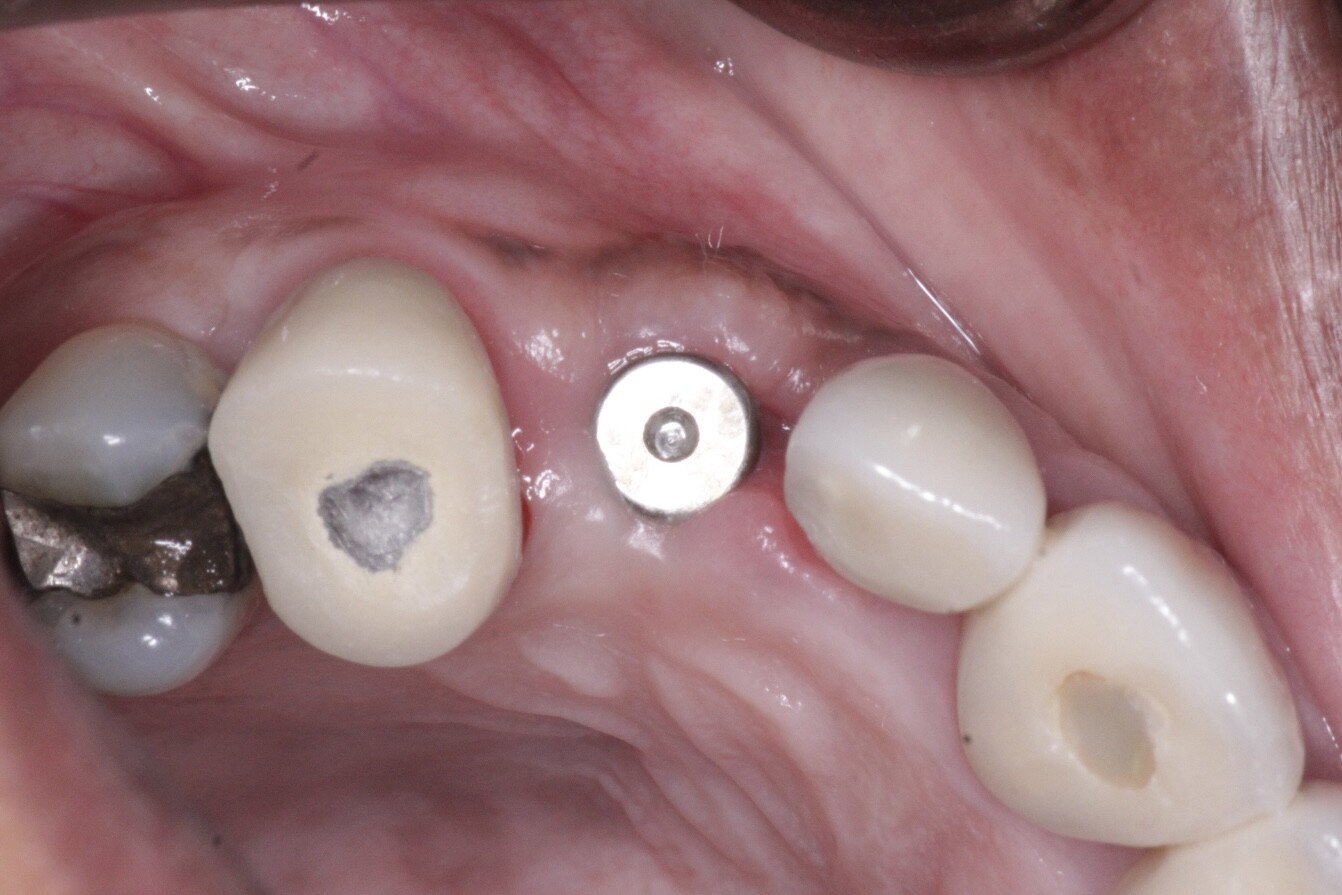
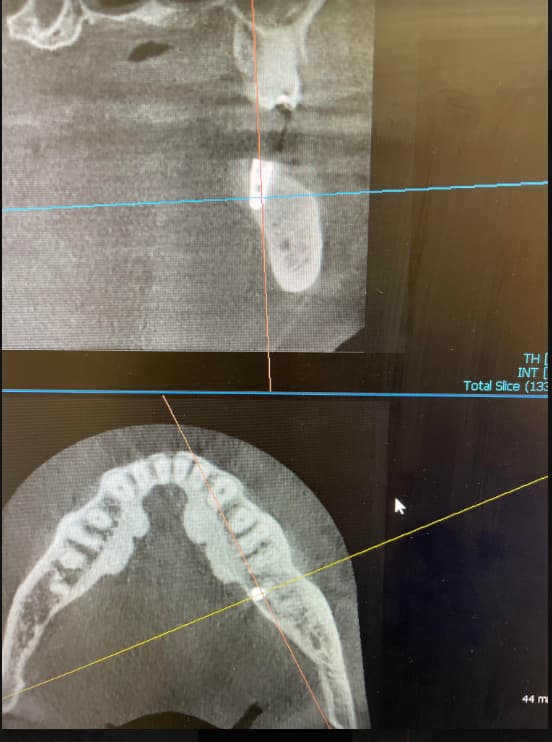
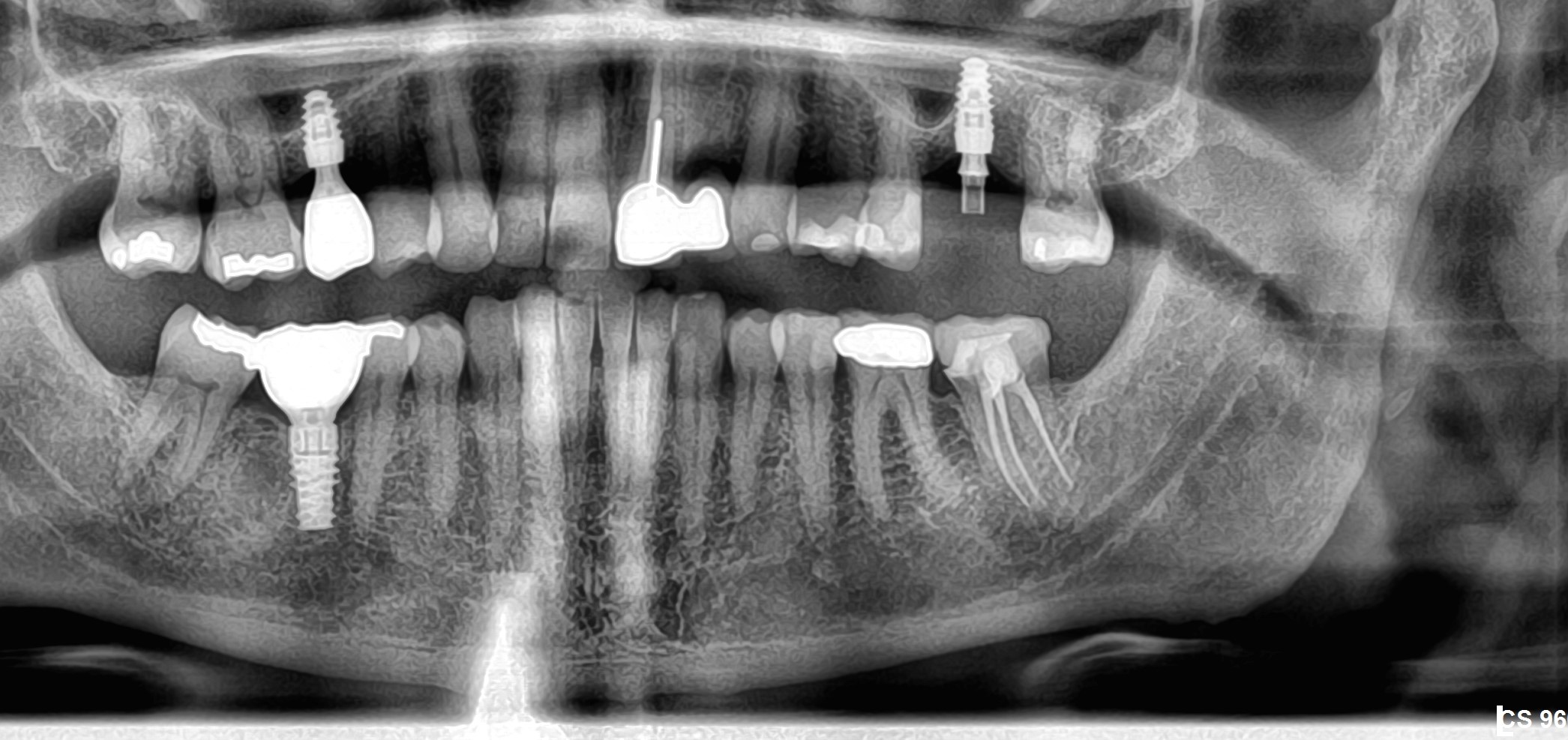
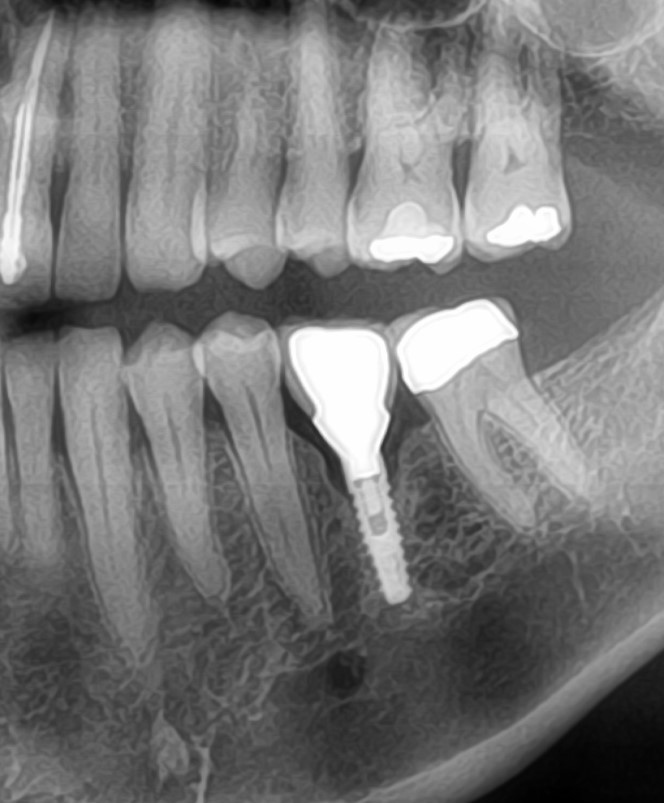
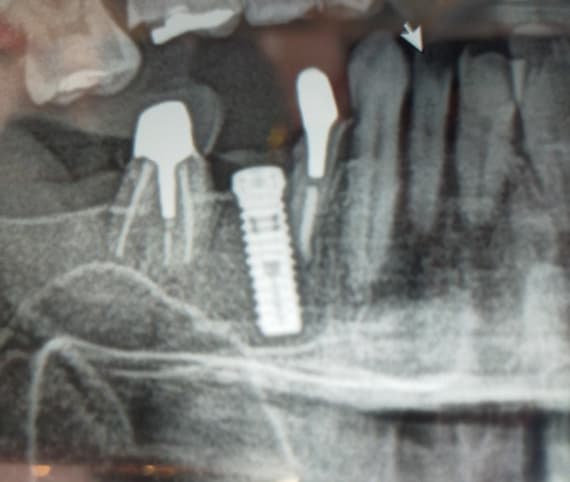
Print This PostThere are times when dental implants are not placed in ideal positions with ideal angulations. Suppose you intend to restore an edentulous mandible with a dental implant supported fixed partial denture.
You have taken accurate records, mounted your diagnostic casts, waxed-up the case, made your surgical stent, etc. The patient is wearing a maxillary complete denture. Your treatment plan is based on the placement of 5 regular platform dental implants in the classic A-B-C-D-E positions. The patient has a narrow, atrophic mandible which you split and grafted. Unfortunately there is sufficient bone width for the placement of narrow platform implants. The implants in A and E positions are angulated 15 degrees to the distal to accommodate the anterior loop of the mental foramen nerve. The implant in C position is angulated to the lingual to avoid perforation of the buccal cortical plate.
What would be your technique for restoring this case with a fixed partial denture? How would you make your dental implant level impressions? What design would you use for the abutments? What design would you use for the metal framework? Feel free to leave your comments below.
Free Daily Email Alert Click Here>>
Get OsseoNews.com Comments delivered daily! Click Here to subscribe.FREE Weekly Email
Keep current on the latest dental implant discussions! It's Free!
>>Click Here to Subscribe to OsseoNews.com Now!
-
Editor Picks
-
Popular Posts
-
Hot Topics
- Locator Attachments: Trouble Picking Them Up in Overdenture?
- Advice for Complication in Creation and Maintenance of an Interproximal Papilla?
- Implant Systems: Commercially Pure Titanium vs. Alloy?
- Type of Anesthesia for Dental Implant Surgery?
- Implants Too Close: Can I Use Orthodontics To Create Space?
- Large Defect in the Labial Cortical Plate
- Abutment Screw Gets Stuck: How to Prevent This?
- Crown 1mm Short of the Margin: Recommendations?
- Suture Lost Exposing the Implant: What to Do?
- Mini Implants in Anterior Mandible: Expectations of Longevity?
- Space Between Implant Fixture and Natural Teeth: How Much Is Enough?
- Options for Provisional Restoration?
- Loose Bio-Oss Particles: Can Implants Be Placed?
- Maxillary Overdentures: What Implant Support is Required?
- Mixing Metronidazole Solution in Grafting Material?
- Sinus Lift Complication after using Summer’s Osteotome Technique?
- Cone Beam vs. Conventional CT Scans: Radiation Levels?
- Sinus Tear: How Long to Wait for Regraft?
- Mini Implants for Long-Term Use?
- How to Avoid Hitting the Mental Foramen Nerve?
Implant Courses
>>More Implant Courses

5 Responses to “ Non-Ideal Positions and Angulations ”
Certainly is a problem to face this situation (poorly placed implants) but in most cases one can overcome this problem with personalized abutments like procera abutments made of zirconia or with overcasted gold/plastic ucla abutments.
It is clear that in some cases one can use prefabricated angulated abutments.
It is also clear that almost everybody has seen almost horizontal implants that are so far of the place that they should be that the only real choice is to remove them or to let them sleep forever.
greetings
I think it is safe to assume that every one of us imagines the case described slightly differently.
Nevertheless, if applicable, what I would suggest is to try repositioning the middle fixture by cutting out a block of bone around it and then anchoring it to a prefabricated rigid splint from above and a monocortical bone plate from below.
When possible, this will usually result in a more favorable soft tissue response near the emerging abutment and better vector distribution of the forces applied during function.
For external hex implants distal angulated implants are a biomechanical advantage, and well documented. placement of angulated multiunit abutments in accord solves the prosthetic problem and reduces cantilever length. Although I prefer angulation in from buccal to lingual direction as not to invade the lingual clearance, in case of thin remanent bone I like to only angulate mesio-distally and not bucco-distally.
The posterior angled implants are easy to deal with. Simply use pickup impression copings so draw is not an issue. Use either a multiunit type of abutment or wax the framework to the implant aka the “UCLA” style. Also, the hybrid prosthesis should be screw retained since access hole orientation and position are no big deal. The toughy is the anterior implant. Implants positioned too far lingual impinge on the lingual frenum and salivary gland ducts and can cause difficulty with hygiene. If the implant is too poorly positioned, simply put it to sleep with a cover screw and retain the hybrid with 4 implants. If the A-P spread is reasonable, and the opposing arch is a complete denture, then there should not be unreasonable forces on the retaining screws. I am a big fan of the kiss principle and there is no reason to get too technical with a simple case like this where only one implant is technically “poorly positioned” that could cause soft tissue problems.
it is a excellent topic on the
position and angulation of implant posted by michael johnson.
Leave a Comment
Note: Please refrain from ad hominem attacks, and promotional comments. Outside links are not permitted in comments. Though we require an email to route questionable comments to our editors, we will NEVER publish your email or use it for any other purpose. Thank you for your understanding.
Note: At times your comment may not appear on the website immediately, because it has been sent to our editors for approval. Once approved, we will publish the comment. There is NO need to resubmit your comment, if it does not appear on the website immediately.