Radiolucencies Around The Implant
Print This PostAlan, a dentist, asks us:
I have a question regarding a lower arch oral rehabilitation case that I have done 1 year ago. The patient had severe peridontally involved
teeth which were all removed to be replaced with
5 dental implants.
The dental implants were placed by an oral surgeon. It was done as an immediate case and a fixed lower denture was placed on the same day. The prosthetic part was completed by me after about 2 months of waiting for the surgeons OK to proceed.
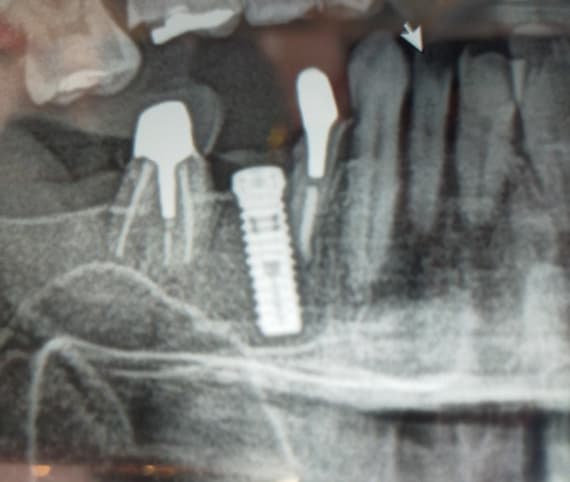
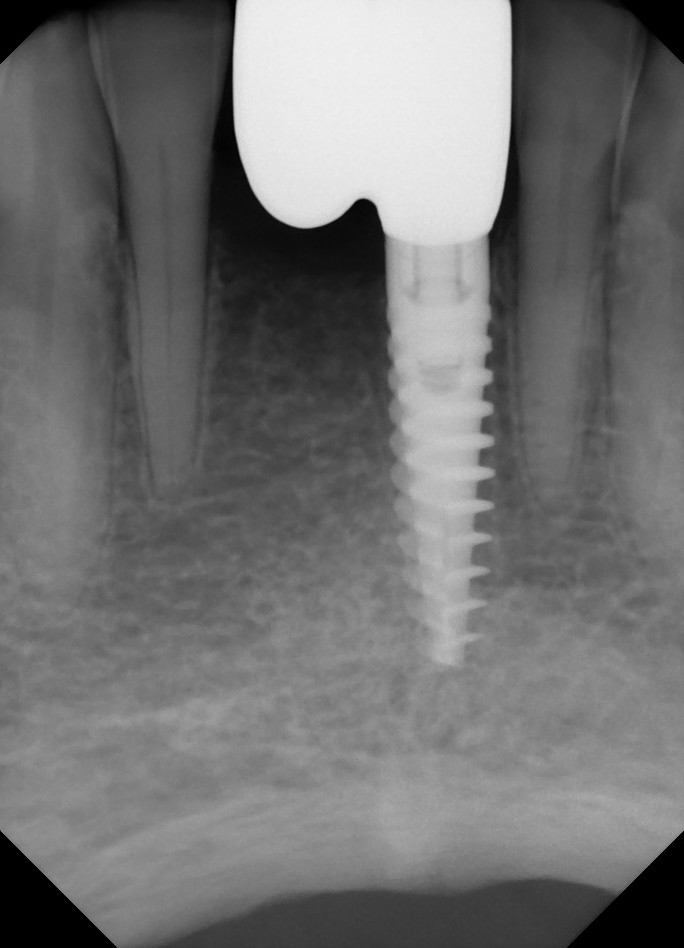
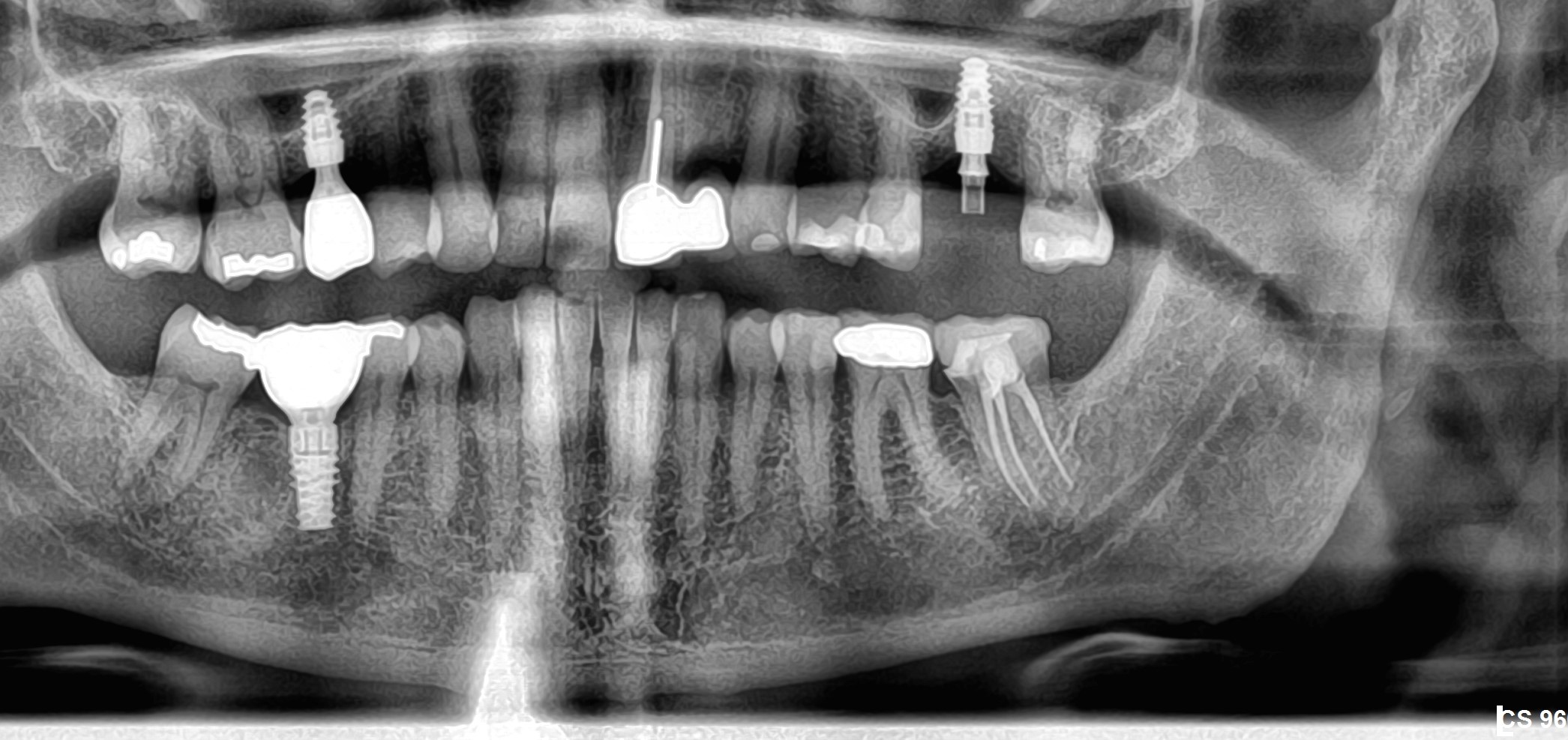
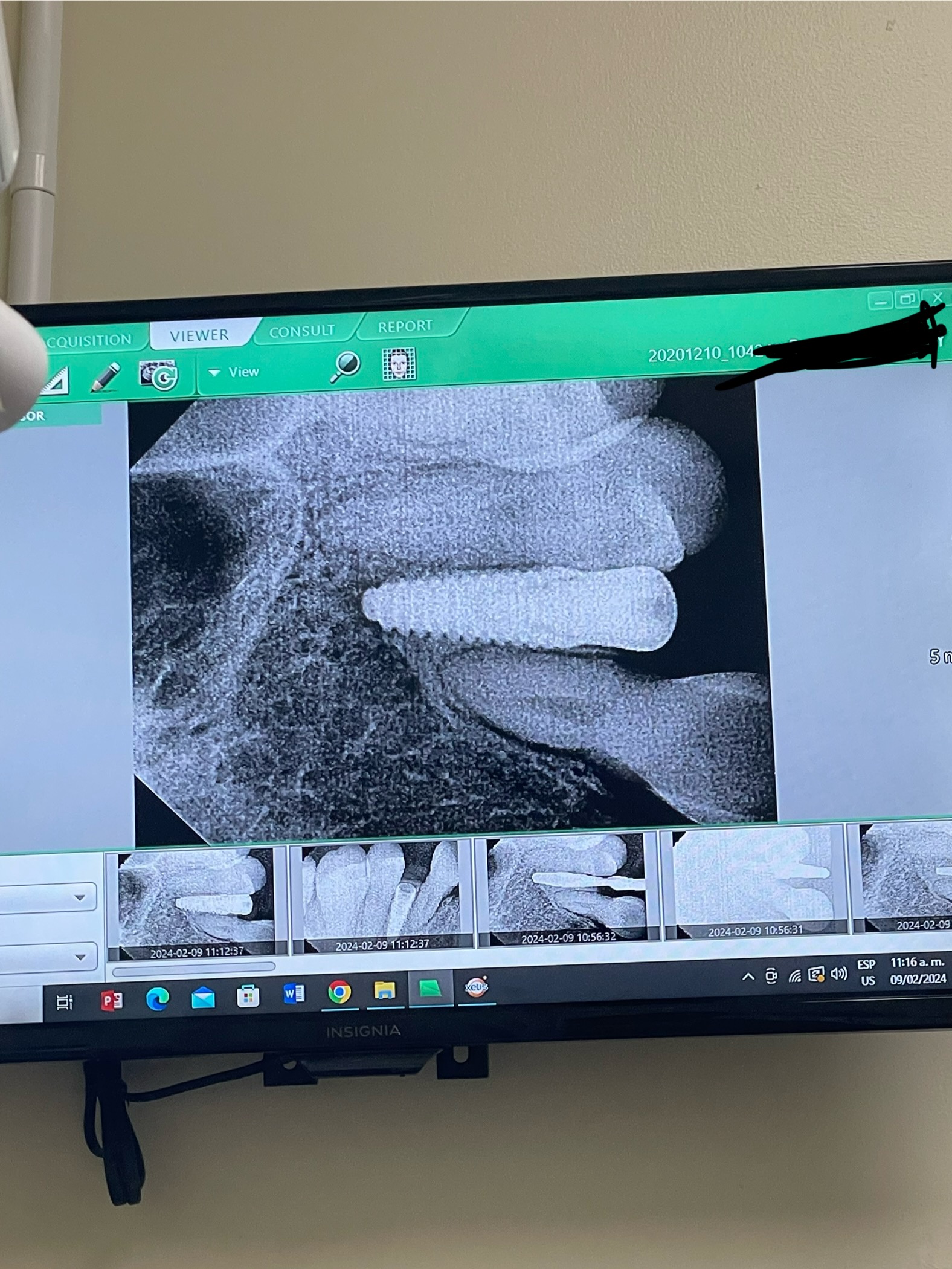
My problem is that during recent examinations, I have found that one of the dental implants was mobile. I suspected the abutment was loose and as I didn’t have the proper torquing wrench, I referred my patient back to see the oral surgeon. I was told by the surgeon that there were no problems. However during his most recent visit, I still found the dental implant mobile and it was painful for the patient. I took an xray and confirmed my worst fear: radiolucencies around the dental implant!
I am not sure what should be the correct way of telling the patient especially after the surgeon who checked it said it was OK. How would you guys handle this case? He currently has a screw retained
fixed lower prosthesis. I am rather new to the implant field and have been only doing the
prosthetic part so far. I would appreciate any comments and suggestions. Thanks!
Free Daily Email Alert Click Here>>
Get OsseoNews.com Comments delivered daily! Click Here to subscribe.FREE Weekly Email
Keep current on the latest dental implant discussions! It's Free!
>>Click Here to Subscribe to OsseoNews.com Now!
-
Hot Topics
-
Editor Picks
-
Patient Issues
- Cone Beam CT
- Mini Implants
- Bone Grafting
- Oral Bisphosphonates
- Sinus Lifts
- Implant Complications
- Immediate Loading
- Overdentures
- Nobel Biocare
- >>See All Main Topics

34 Responses to “ Radiolucencies Around The Implant ”
First of all
why would you do IMMEDIATE IMPLANTS in sockets AND IMMEDIATE LOADING?
And if you are over zelous to do that why would you not increase the nos. of implants to 7,8 instead of 5? so some thing like this happens still you have enough nos. of implants to support your prosthesis.
How can you insert final proshesis if you do not carry proper torque ranch?
Any way it is hard to pinpoint your problem from just the sign of radiolucency and symptom of pain.
yes it could be failing implant,and if it so and you are sure, correct thing to do is to tell the patient TRUTH,
even if offends your oral surgeon for missing diagnosis.
Oral surgeons are not GOD, they are human beings too, they can make mistakes too. Just discuss the matter with him and try to find proper solution.As you do not have surgical skill you need help from your oral surgeon to resolve this problem.
Implant loose at 2 months = failed implant Period
That implant is gone….
What to do… What to say… thats the question that wanders arround everybodys mind in a case like this.
My recomendation is:
First buy the proper equipment i/e torque wrench, screw drivers etc…
Second: Tell the truth to the patient.
Third: Discuss the case with your surgeon and fix the problem
Fourth: You should make a better case planning… 5 implants for a case is a little to close for comfort i would have placed 8.
Fifth: Replace the failling implant and place a couple extra so you will have better load transfer and distribution.
Cheers
I would explain to the patient that the implant has failed and needs to be removed. Patient should not be upset if he was properly informed before the implant treatment plan started that the success rate of implants is excellent but not 100%. Then i would place another implant for no charge or minimum cost so as for the prosthesis. Please check and reduce your cantilever if you lost the most posterior implant on the arch. Definitely avoid immediate implant placement in combimation with loading if you do not have the proper training to do so. It is difficult to imagine somebody having the knowledge to do immediate placement and loading without a torque wrench. i think the treatment plan should be prosthetically driven and not surgically. the patient came to the office to get teeth not implants. did you give the oral surgeon a surgical stent? did you treatment plan the case together? did you make the denture for him? You also should be able to know when the implant is failing. I am not trying to be mean but i think you should start your implant practise with easy cases than a full mouth reconstruction
Thank you for your comments. I do appreciate your honest feedback. I admit i have made an error of judgement in regards to the treatment planning aspects of this case. Simply to assume the method of placement and number of implants based on the words of a surgeon is a lapse of judgement.
I am not overzealous. I may be inexperienced which is why i agreed to the notion of immediate extraction and immediate placement and loading. But i have learned from my mistake with this case.
As some of you suggested, i will speak to the oral surgeon and discuss the case first before speaking with the patient about it.
Another thing i would like to ask is, what kind of radiograhic features around the implant does one see if there is an imbalance in occlusion?
What is the best way to check the occlusion and what do you look for?
What is the best way to gain more knowledge in the field of implantology. What things did you guys do or attend to become more competent with implant therapy?
Thank you for your time in answering my questions!!
In answer to your questions, a surgical stent was made, to guide where the implants were to be placed. A temporary acrylic bridge was made with the hole relieved where the implants would be. Cylinderical temporary abutments went on and cold cure acrylic was added when the bridge was in proper occlusion.
I believe my treatment plan could have included consulting an prosthodontist who can give better advice regarding the prosthetic aspects of the treatment.
I have done simple cases of single implants and implant supported bridges.
How did you guys move from simple cases onto full mouth rehabiliation cases?
The torque wrench i am referring to is to place the abutment which was done by my surgeon. I do have the prosthetic screw driver if that is what you are referring to to place the prosthetic bridge.
This is a scary conversation we are having, and not a good reflection on our profession. The time to learn the concepts relating to implant dentistry, types of fixtures, treatment planning, occlusion, aesthetics, and other implant matters is BEFORE treatment. Shame on any dentist who delivers treatment that they don’t understand. We need to stop asking specialists how to do our work for us.
The Implant is gone, next I would get another OS, one that will tell the truth.
Allan
We do understand that you must be having prosthetic screw wrench.
point is How can you justify not invesing couple hundred dollars in proper instruments to practice implant prosthodontics,when (I AM SURE)you must be charging handsome fees for SUPER IMMEDIATE full arch FIXED denture?
Abutments screw loosening is not uncoommon (particularly) for less experienced clinicians like you.
For every loose abutment screw
are you planning to send patient to surgeon?
FULL ARCH CASE REQUIRES LOT MORE THAN SINGLE UNITS.
certainly you need more training in not only in implant pros. but also in restorative denistry too.
Occlusion is not only for implants restorations.
There are plenty of courses out there.
For implants I would suggest a 2 years once a week course at NEW YORK university.As I am not familiar with other courses.Good luck
I think some of the early comments were a little too critical. This kind of case can work. YOu should just leave yourself an extra implant or ywo. Patients don’t want to go without teethand they don’t want to wait forever. Sounds like you should look for another surgeon to work with. If he was worth his salt he probably would have given you much more direction. Research the surgeon you use and the type of implants he uses. I would tell you to pass over any surgeon who is adamant about/ married to using one particular system, especially if it’s 3I. Ask him how many AO, ICOI, AAID meetings he has been to in the last several years. Get yourself up to date. I thyink there are 3 good systems out there Straumann, Nobelk and Astra. Zimmer is a close second.
I am a GP and I place my own implants. THe last time I referred out to a surgeon, the patient came back with nerve damage. In several hunderd implants I have never done that. My partner had one case go to a different prominent surgeon for 3 implants. Sent a surgical guide and two of the implants came back place in intimate contact their whole length. If a GP caught doing it - ouch the board would have a feild day. I took out a root tip today cleaning up after a surgeon I had referred the patient to for seral extractions (type I diabetic patient). Point is do your homework and know the science and make sure whoever you work with is really good or you will suffer badly many times over. Restoring a poorly placed implant in the esthetic zone is an equal nightmare. Good luck.
Allan,
I would recommend the Implant Prosthetics by MISCH. It is a good book to start with getting familiar with the prosthetics of implants. Also explains about occlusion for implant supported crowns and overdentures. Do not forget that there is no periodontal ligament so the only movement of the implant is the elasticity of bone.
As far as overloading of implants by occlusal imbalance there could be two radiographic features a) a radiolucency all around the implant like a periodontal ligament which means the implant has failed (Isidor’s article)or b) crestal bone loss which you can sometime prevent from getting worse by reducing the occlusal forces. The literature is not very clear on this subject.
as far as implant programs i know the NYU 2 years full time, the loma linda i believe 3 years full time that they are both excellent. I have also heard about Misch implant institute. It seems that there are quite a few options. I think i get 3-5 different brochures a month from people who want to teach implants.
NYU 2 years full time implant program is not for american graduates(GP).
But perio/pros/or other post graduates are offered fellowships in same program.
check it out.
I am reading this thread and am ashamed of ALL OF YOU, especially the bunch that consider themselves IMPLANDONTISTS.
#1-most implants are restored by G.P.’s and frankly we dont have all of the wrenches because the various specialists use different systems requiring multiple sets of equipment
#2- a failed implant [in this case ONE OUT OF FIVE] is RARELY a restorative issue. It is probably a function of an immediate implant [something frankly I DO NOT DO UNDER ANY CIRCUMSTANCES, let alone periodontally involved teeth] which are immediately loaded. READ the literature about the percentage of immediates that fail. And the ONE out of FIVE is about that percentage
Lastly- the tone of this thread is embarressing. Alan reached out to have advice on how to handle a situation. He did not commit malpractice, he did not place an implant that failed, he did not harm a patient, and is not culpable in any way. The single piece of decent advice given to him was to deal with the patient truthfully, and the Oral Surgeon needs a lesson in diagnosis and treatment. And his placing a five unit restoration assuming the occlusion is appropriate is SNOBBERY on the part of you implant snobs. A properly placed implant, restored is no different than any other full mouth rehabilitation.
The bottom line is you have a patient with a problem and now you need to determine how to solve it. There can be a lot of finger pointing and to get into a p..ing contest over your dilemma will not provide the best service to your (underline your) patient. I am still uncertain as to whether you have determined if the implant is failing even with a radiolucency or the abutment has just come loose. In my own practice, I was sent someone else’s case to assess implant stability and it was just the abutment had come unscrewed, not the screw that goes into the abutment to anchor the bar. Simple solution.
When it comes to using the team approach, it is important to know the limitations of who you are working with. There are many practitioners, specialized and general, who place implants without understanding how to fix them when they become problematic. Yes, a truly loose implant is a failure. A firm implant with an osseous defect may be reparable in certain circumstances with guided bone regeneration. In my area, many practitioners wait until the implant falls out and start over. Early intervention can turn an ailing implant into a maintainable one. Waiting till it falls out could cause the site to not be reusable.
With regard to placing implants into infected sites, I think it is a gamble based on my experience. Infected sites have a significant amount of inflammation and inflammation leads to unpredictability. When a patient is looking for a quick replacement, be careful not to compromise your good judgment in the name of expediency.
The awkward situation now requires a lot of back pedalling. With my referring doctors, I have provide loaner torque drivers, which is my cost of doing business. Of my many referring people, I only have one who has bought the drivers, because he wanted to make the commitment to working with me. He prefers the indirect technique and owning the drivers makes it easier for him.
If your surgeon is not supportive, you may have to get help from someone else in your area. I would suggest if the implant needs to be removed that you refer the patient to someone who does bone grafting. Then the implant can be removed, the bone repaired and the implant placed a later date (likely six months).
Contact your area colleagues and find out who handles the implant problem cases. I think that is who you will want to work with in the future. Someone who cannot recognize a failing implant may not be the one who can support you when you have failures. If you do enough, you will have failures.
From what I gathered, it appeared the case is screw retained. If this is the case, you may have not had a passive fit on your prosthesis which could have torqued the implant and thus caused failure. Passive fit is key and that was a question that did not appear to be addressed. Despite the infected quality of the bone, it four of the five are not having a problem, or so we think.
When it comes to our profession, pompous demeanors run rampant. Some of us are quick to judge and some of us don’t know how much we don’t know. You need to have a good rapport with your colleagues and you may sift through several before you find the ones you can really trust. Also, you may have more rigid criteria for which patient you send where. Complex multi-implant cases may go one place, while single implant cases go a different way. Just some food for thought. Best wishes.
One of the most problematic areas in implant dentistry today is extraction/immediate implant placement. There are several issues at work here. First, in a patient where teeth are being extracted for periodontal reasons, the bacterial flora is varied, some of it may be antibiotic resistant, and some may be in a vegetative state deep within the bone matrix. There is often an inflammatory component leading to significantly increased matrix metalloproteanases (i.e. collagenases). The mechanism of bone turnover will be quite different from normal healed bone. Add to that extraction site defects that allow quick epithelialization down a portion of the implant body, the complication rates go up dramatically. Over the past 8 years, after finding my own success rate averaging 70% in these sites, I have been using a YSGG laser to debride the osteotomy, remove apical pathology, and get a bacteriocidal depth effect in the bone. Then, with appropriate grafting techniques, my success rates have improved to be almost identical with healed sites. I would suggest everyone start referring to the current literature using these new modalities. As we employ this new paradigm, ignoring these new challenges will only come back to bite us.
Well just an update, i have seen the patient, i have explained the situation to him. He is not angry or unhappy. AT the present moment he is not having pain. He does not wish to remove the implant at the moment. I have told him of the risk of leaving it there and he understands. I guess i will recall him regularly to check on his progress.
A side question, as my patient has a screw retained prosthesis. Is it advisable to remove the prosthesis to clean periodically?
What Satish say is correct. We are just GPs, some may be really into implant surgery but some of us only do the prosthetic part. It is not that we don’t want to invest in the proper tools. It is the fact that we can’t stock up on all brands of surgical kit that our surgeon uses. It doesn’t make sense to for those of us who do the prosthetic part only.
Satish u mention something about 3i implants. Have you had bad experience with them?
I am thinking of taking up the surgical aspect of implant therapy, what systems do you guys feel is worthwhile investing in?
Again i appreciate your advice, especially those who are not overly critical of my situation. Lets face it, shit happens. This site is just a good way for us to learn from each other. To be honest i do feel quite bad after reading some of the comments. But i have learned a lot of valuable advice. So thank you all. I really appreciate it!!
sorry my question regarding 3i was to LD not satish.
And in answer to your question, Satish, i have worked with my surgeon for many single and simple bridge cases and so far the abutments have not required to be tighten by me once the surgeon has fixed on the appropriate abutment. Initially in this case, i hoped it was the abutment loose but i may be wrong, the implant could be loose.
Thank you for your suggestion of courses. I will certainly ugrade my knowledge further.
For those who feel that i didn’t treatment plan properly, please rest assured, proper planning was done. The other thing i want to clarify was my patient only had 3 loose anterior teeth left with little bone surrounding them. Most of the implants as i observed were not placed in the infected sockets but rather in sound bone.
The system we used was 3i, following their DIEM immediate occlusal loading guidelines.
I am not in a postion to say how many implants is enough in this case but new ideas emerge all the time. Like Nobel’s All on 4. I respect all your views and you all have a right to them. But please don’t be so quick to judge an idea, and a person.
To be honest i have only been out practising for 4 years. I know i have a lot to learn in terms of clinical aspects of dentistry and patient management. It makes it harder when i am working in a solo practice in a country different from where i graduated.
My same year peers are only keen being bread and butter Gps, thus it is good to be able to talk to experienced practitioners on this site.
Thanks!
Hi Allan
I teach in intitution where we use many different implants systems;we use LIFECORE,STRUAMAN,NOBEL,ENDOPRE,3I,BIOLOCK ect.
Every system has pros and cons.NONE OF IS PERFACT FOR EVERY SITUATION.If you are not planning to do surgery than stick with system your surgeon uses or ask him to place implants system what ever your choice is.Try to join AAID.ICOI.AO and local study clubs and attend their meetings you will enrich your self in implants knowledge.
It sound like you are very young guy,do not be discouraged by one incident,just educate your self more.
GOOD LUCK AGAIN.
Dr. Krantz:
I hope you are not lumping me in with your “implant snob” group. You say Alan did not commit malpractice. But how would the patient feel knowing they just invested thousands of dollars in treatment by a dentist who doesn’t even understand the basic concepts of this restoration. Would you want your hip replaced by someone posting questions on an internet thread? You say implant full mouth restorations are no different than dentate ones. What about pontic placement, A-P spread, occlusal table width and canine vs group function issues–are these exactly the same in teeth vs implants. I don’t think so. If Alan sent the patient to this surgeon without a plan, shame on him. If the surgeon sent the case back to him without his volunteered input, then perhaps he should have at least told the patient that he has little experience with this type of restoration and might want to restore this with the guidance of someone else. Either way, did the patient have any say in this? I’m not sure what an implant snob is, but I do know that patients routinely receive treatment from dentists who have no training at all in what they deliver.
How arrogant of some people to assume things of others? In asking questions regards to finer details doesn’t imply absence of knowledge or no training! There is no one that knows it all and shame on those who puts down people who wants to learn. We all had dental training and when we graduate, we get other forms of training. What each of us think of concepts of occlusion might be different to others. Asking you guys your views, doesn’t mean I am clueless.
By the way, read the bottom of the post. It reads: we maintain this blog as a means of fostering intelligent discussion on important dental topics.
Intelligence doesn’t equate to arrogance.
Dr. Langstein:
You implied that you knew that the doctor who restored the case did not have the training or expertise. On what basis do you
make that canard??
Any legit expert recognizes that 20 percent of implants fail. That is not my opinion, that is the number.
One out of five is what my mother taught me is 20%
And the doctor who restored the implant DID not commit malpractice in the restoration of them. Not having a wrench is not malpractice.
The only implants I place happen to be Bicon[s] and they do not need a wrench. Neither do many other systems.
I just happen to be comfortable with them. Is that malpractice.
If there is a loose abutment on a case that was another system, I get the wrench from the surgeon/periodontist who placed the implant and the patient is well served.
Restoration of Implant retained prosthesis is NO different theoretically, or practically from any other restoration. Good occlusion for a fixed partial denture is good occlusion for an implant retained fixed partial denture. All of the parameters that you spoke of are the SAME for an implant as a “roundhouse” within limits. And the failure of a single abutment is NOT an occlusal failure. The loosening of all of the abutments would be indicative of that.
Or maybe you want to go back and be trained properly????
Whoa! First things first. Alan, I totally agree with you that we must share info among us and that this is a valuable way to learn. I am not, I repeat, am not impuning your integrity in any way. I simply stated that I don’t think we should have specialists dictate treatment to us; they are the subcontractors and we are the general contractors. You stated that you were new to implant dentistry, so my point is why do a sophisticated restoration when you are not sure of the occlusal issues, or even the treatment planning issues. Again, I ask what would the patient think if they knew you were relying on someone else for your treatment plan. I think that is a fair question to ask. If you were having a prosthetic leg placed, you would probably want to know that the physician had done numerous cases and was prepared for any and all outcomes. This is not a personal attack and I am sorry if it came across that way. I can certainly give you lots of great courses and organizations to pursue implant dentistry.
Now, Dr. Krantz,
I don’t think you understood a word I said. My points have nothing to do with wrenches. I made my “canard” because dentists who spend time training to treatment plan don’t usually allow specialists to treatment plan the case for them. I don’t see how you could disagree with this.
I think I will respectfully disagree with you on some of your other comments: Implant restorations are different.
First, Pontics posteriorly are less appropriate with implants than with tooth-borne restorations. Second, occlusal table width(see Misch) is narrower in implant restorations. Third, although you may disagree, I believe implant restorations should more often than not be splinted to share load than teeth. I never suggested that the failure of the single implant was an occlusal failure. I’m curious to know where you came up with the 20% figure for failures–could you cite the reference? So I do not think the parameters are the same for implants and teeth. In an implant fixed partial denture, the teeth don’t intrude(no pdl) and therefore the occlusion should first hit the natural teeth on light contact and the implant restoration on heavier contact. I’m happy that you are content with Bicon; I won’t disparage any implant company but I’m not comfortable with Bicon’s philosophy. But that is not the issue here. You state implant restorations are the same as teeth; I say they are not.
You are making a simple poblem very complex. As I published in the late 1980’s any implant that is painful as well as mobile is a failure and should be removed asap so the bone can regenerate for a replacement, usually about 3 months. If the patient is functioning on the remaining implants, what’s the problem? Brannemarks group has shown that 4 are as good as six. Get the failed implant out and retrofit the prosthesis after the replacement integrates.you already have the guide splint. This is described as a very sophisticated procedure and probably should not be attempted by inexperienced clinicians but I see no malpractice.
Any mechanical engineer would tell you that if you have a retaining screw, you need to know what kind of torque you deliver. There is a formula for that, but instead of “showing off” with complex formula, I would recommend reading the label or instructions from your implant manufacture…. (Recommended Torque is clearly printed) and get a good torque wrench to deliver the right torque.
Not respecting manufacture’s instructions is… malpractice.
Well i am glad we got that all cleared up. Ira, i understand your point regarding having treatment done by the most experienced clinicians. I would like to address that point, in that all experienced clinicians start from being inexperienced. Only through practice will they become epxerienced. As long as the patient is advised beforehand that his case is complex and offered the option of prosthodontist. Patient decides based on their own criteria. I can tell you, that this case i did for a very low cost because i would rather earn less and gain more experience.
Thank you Paul. Your comment was one of the most helpful and reassuring comments. And it makes sense also. For now as my patient is comfortable on his remaining implants, I think redoing the failed implant and letting it intergrate is a good way of fixing the problem. I will probably however remake the prosthetics as retrofitting is quite difficult as u mentioned. Thank you.
Please stop being so fixated on the torque wrench. It depends on what system you are using. The prosthetic screw driver i have limits the torque already.
This case is the classic example of implant dentistry being viewed as a surgical procedure with the dentist “just restoring the implants”
A perspective on implant dentistry is in order. The success of osseointegration is all but a given in the year 2006. But that is only a part of the answer. In the originval Branemark protocol all facets of dental pathology should be addressed including control of periodotnal disease, caries and occlusion. Implant dentistry is just a variation of the Amsterdam and Cohen periodontal proshtesis, the difference is that implant fixtures have replaced tooth roots. All of the pain staking steps of conventional prosthodontics must be attended to. To really fan the fire, the foundation of the periodontal prosthesis was classicly perpared by a periodontist.
Implant dentistry is frequently surgically driven. That being said the surgical specialist ususally has more experience with implant dentistry than the restorative dentist. It is obvious that the restorative dentist was relatively inexperienced in this case. That being said it is imperative that the more experienced member of the team be there and ready go to the wall to assist to the restorative dentist. That should include but not be limited to actually going to the restoratives dentists office and removing the proshtesis together to evaluate the case. If the surgeon is “too busy” to do that, then get another surgeon.
This, essentially, is the nature of the problem. Implant dentistry should be prosthetically driven, not surgically driven. Most surgeons have no concept of restorative dentistry and when faced with inconsistent bone, place implants in bad positions without any regard for the future restoration. Many surgeons even place implants first and then look for a restorative dentist to finish the case. I practice in an affluent New York suburb and you would not believe how many surgeons do not graft, or graft properly in order to place the implant according to the prosthetic plan. Implant dentistry is truly and interdisciplinary field, but you don’t see too many surgeons at restorative implant courses. You don’t have the plumber come to your house and drill holes in the floor without knowing where your sink goes first.
Hello Alan,
Immediate implant placement and loading in the mandibular symphesis area is now a well verified technique and is not an indication of poor planning. In your particular case there are 5 implants, 4 of which are still viable. You now essentially have a 4 implant retained prosthesis. It is not a good idea to let the remaining infected implant reside in situ. It should be a simple matter to disassemble the superstructure, remove the implant (probably with fingers), debride the site, fill in the prosthesis hole and reassemble it. A four implant retained lower symphesis prosthesis can still be a viable support, providing the distal cantilever is not too extensive.
On another matter, getting into the implant treatment arena is not an inexpensive undertaking. Over 20 years ago we all learned in bits and pieces wherever we could and the learning curve was slow and less than ideal. Today there are amazing and comprehensive courses and while a good training programme (including surgery) can often cost about $30,000.00, it is by far the best and in the long run, the most cost effective way to learn. Also, the armementarium and inventory is a costly investment. It is dismaying to see how some implant suppliers are promoting the implant placement and restoration procedure as a simple and revenue generating protocol where in fact it is not, unless it accounts for a significant part of your practice.
Hello Dr Nimchuk
In my case, it is actually one of the distal implants that has failed. I think i will have to get my surgeon to replace the implant and make a new prosthesis. Without the distal implant the prosthesis cantelever is too long.
Just out of interest, what surgical courses do you recommend? I believe you mentioned some courses costing around $30000?
Hello Alan,
There are many excellent dental implant surgical and prosthetic courses which advertise on the Web. Any of the Misch Programmes are excellent, so are Arun Garg’s programmes, also the Pacific Implant Institute, to mention 3 with which I personally am familiar with.
Dr Nimchuk, Thanks for your helpful info. I will look into the programs you mentioned.
I’m a patient, not Alan’s of course, but a patient searching for a solution to a disaster (my teeth or what’s left). I actually appreciate that this Doctor was reaching out for help. At least he took action not relaying only on his surgeon.
Any how
I realize that this is an older thread, but very interesting. we are STILL at an age when there are those who believe that implant dentistry is (or should be) surgically driven. 20 years ago, I thought it was. I was uninformed, and counted on the surgeons for all my answers. That couldnt have been further from the truth. The surgeons were not relying on my prosthetic ability except to restore them after they returned to my office. No surgical stents, and certainly no preprosthetic planning - meaning no prewaxing, no trial dentures, no ICT, no surgicuides,etc. The surgeons placed implants were the bone was. I accepted that. But I was commonly perplexed on how to restore some of these cases. I had (and stil have) a good lab tech. What I did was the best I knew how to restore at the time. Most of my efforts worked but if there was a failure, and there were a few along the way, I always took the hit. After I started the AAID maxicourse, my eyes were opened. I no longer accept “where the bone is”. I now rely on my own preprosthetic planning using surgical and prosthetic protocols that have helped me enjoy implant dentistry as well as improve what I can offer the patient. Two of my specialists were restoring their own implants. one is no longer practicing a specialty. The other, well i dont refer to that office at all. I can call my periodontist or OMFS for anything and they are VERY helpful never condescending when problems arise. It is my belief that the paradigm 20 years ago was that implant dentistry WAS surgically driven, and maybe it was to an extent given the fact that we were not taught to place or restore implants in dental school. BUT - The paradigm has defitinely shifted and there isnt a training program in the nation that teaches otherwise. Even for a single posterior implant with abundant bone, I use a pan, PA, prewaxup and surgical guide to plan and place as a minimum. It may require an ICT surgiguide which gives me capabilities within 0.1mm accuracy. I can see anatomy, aviod some disasters, determine the best system, determine the type of surgery and on and on. Even with all of this, it isnt perfect but surely dentistry on a much higher plane for me and my patient.
As far as courses I would add the AAID Maxicourse. It is university based and prosthetically driven and hosts a wide variety of specialists and generalists who collectively teach what is needed. The course is lead by world class clinicians in their respective fields and attended by generalists and specialists alike. I learned a ton of perio and surgery from some of the specialists there and I found that they were more than willing to share everything they knew, which was a bonus in addition to the scheduled lectureres. The learning curve is steep and exchange of information incredible, even mind boggling for me. You can expect to spend maybe even $45000 depending on where you are and travelling to and the equipment you purchase and the implant inventory you decide on. Depending on your local impant market, it may take awhile to recoup your investment. But, you will have all the instrumentation you need, a torque wrench will not be an issue, you will know when to intervene on a case gone or going south, you will understand what is going on with your patient rather than just guessing and you will be able to discuss options with your patients and/or other practitioners for solutions. You will be able to prosthetically drive implant dentistry and the decisions for success cases which ultimately will help your patients and enoble your profession.
I am continually grateful for all the dentists on these threads who have contributed to helping others clinically to plan cases, give sound advice or help solve problems we all can face. dentistry is not 100 percent. What great technology we now have to allow those with experience to extend their insight and benefit all. Bill
Leave a Comment
Note: Please refrain from ad hominem attacks, and promotional comments. Outside links are not permitted in comments. Though we require an email to route questionable comments to our editors, we will NEVER publish your email or use it for any other purpose. Thank you for your understanding.
Note: At times your comment may not appear on the website immediately, because it has been sent to our editors for approval. Once approved, we will publish the comment. There is NO need to resubmit your comment, if it does not appear on the website immediately.