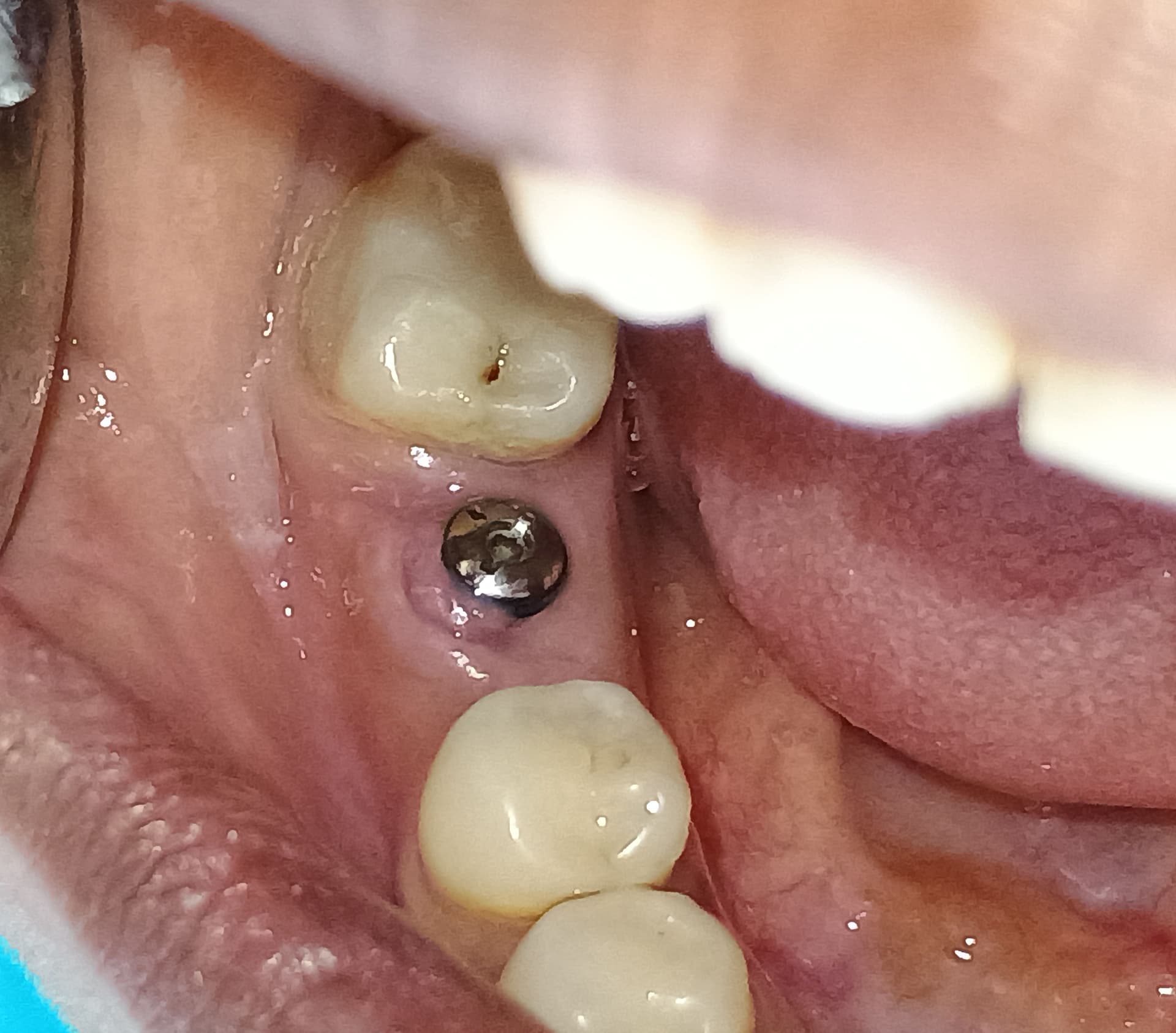
Dr. Kaplan asks,
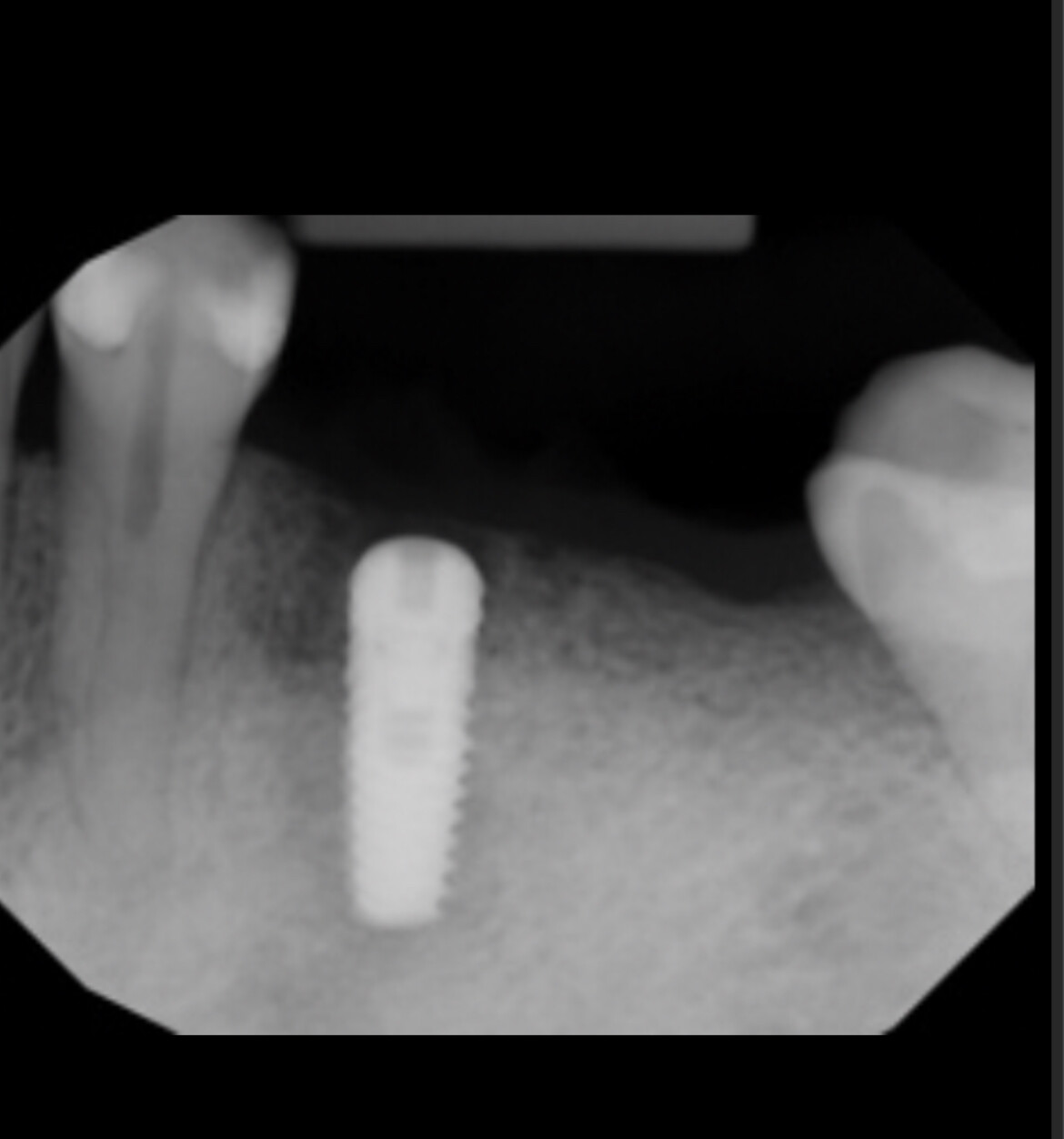
I have a patient with a severely resorbed alveolar ridge.  The only
bone
left is in the mandibular anterior region.

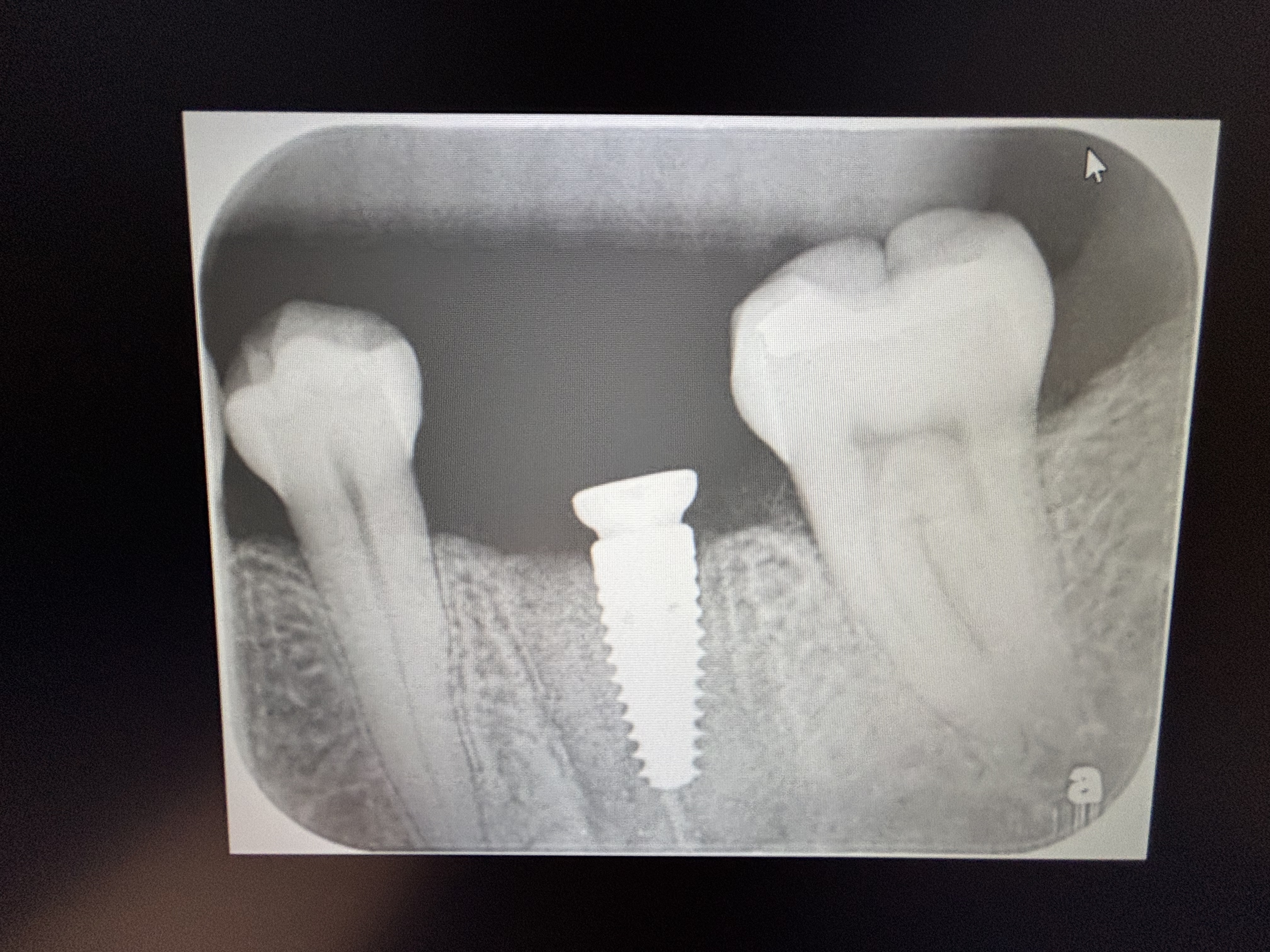
I had 4 regular platform
dental implants placed there engaging the inferior cortical plate of the
mandible. 
I was thinking about using magnets for retaining an overdenture because
they
will provide retention and minimal stress on the dental implants. Has
anybody
done a case like this? Any suggestions?
Featured Sponsor

Free Daily Email Alert Click Here>>

Get OsseoNews.com Comments delivered daily! Click Here to subscribe.

6 Responses to “ Resorbed Alveolar Ridge ”

  • William D. Nordquist June 13th, 2006

    What Was Old and An Almost Abandoned Implant Modality is Now New Cutting Edge Techology

    The old subperiosteal implant is now new cutting edge technology. These implants are cast using high grade titanium, are HA coated and augmented so that they become osseo-integrated. They can be made from a CAT SCAN model or direct bone impression. The cross-over struts are imbedded into the ridge using a notching procedure to get them far away from the transmucosal abutment and bacterial contamination. These implants are imbedded into newly formed bone and do not touch the periosteum. The term subperiosteal is now a misnomer. The new name is Custom Endosteal Implant. These implants are used in any atrophic situation; single teeth. unilateral edentulous minimum ridge, as well as, the full arch severly atrophic maxilla and mandible.

  • chanda kale June 13th, 2006

    try locators. in my opinion, locators will be replacing ball and bar attachments for lower arch in the near future. they are easy to place and provide amazing retention.

  • David Levitt June 13th, 2006

    Ihave done many magnet retained overdentures in the past. I abandoned the technique some time ago due to corrosion of the magnets and or keepers. Other than the corrosion problem they worked extremely well. I believe Attachments International still sells the magnet sets. Where is the mental nerve in this case? If it is at the crest of the ridge a denture held down by attachments will cause pain due to nerve compression. In such a case a bar overdenture is needed.

  • GC, Tahiti June 14th, 2006

    dear dr Kaplan, to my opinion,the first question to ask before choosing the prosthetic option is what do we have on the upper arch?
    The approach to restoring lower arches is very different whether you deal with natural or denture teeth.
    If you have an opposite maxillary full denture, any system should work , use a balanced occlusion with no contacts on anteriors except on protrusion and your patient wil be happy-either overdentures,bars,etc…
    It is another issue for the dentate patient on the upper because theocclusal forces will be directed from natural teeth to implant-supported teeth , and it would be a better bet to use a fixed implant bridge with no cantilevers which could either cause impingement to the nerves exiting the foramani or create more resorption on posterior saddles.
    for the very demanding patient asking for back teeth and a full occlusion, bone grafting made by serious people or distraction osteogenesis can sometimes be options .

    to complete this post, magnets should be discouraged for many reasons: lack of long term action, but essentially for corrosion reasons- not to forget where magnetism comes from…
    Four implants are not a problem, branemark novum uses three, malo uses allonfour and many of branemark classic hybrid bridges lasted years on four, so no big deal.
    I would friendly recommend that you think your implant practice as a prosthodontic practice with an implant component and your next full cases will be streamlined.
    prosthesis first and you’re in.
    very friendly , GC

  • anton j voitik mdt June 14th, 2006

    Dr. Kaplan,
    Based on what I have learned over the years and biomechanically speaking: placing the implants trans-osseous in such a mandible was a great choice. Before making a final prosthetic device decision (removable or fixed) I’d take a look at Bosker’s work (referred to by C. Misch in older versions of his text book)and the great treatment outcomes he achieved.
    From my lab work experiences: I have built passively fitting prostheses(ad modem Branemark-types)aimed at redirecting all occlusal forces via the fixed framework to the trans-osseous implants with great reports back from practitioners for about ten years now (Emphasis is on passive fit).
    It appears that the multi-directional deformation of the mandible under such a device generates osteo-inductive tension within the periosteal layers of the posterior quadrants that seem to encourage the type of bone regeneration originally described by Bosker.
    But, as always, it will be the diagnostic set-up with a properly placed occlusal plane accomodating the masseter pull, that will be the decision making element as to what is possible and what is not. Good luck!

  • Anonymous June 19th, 2006

    Locator abutments on the two anterior implants make the others sleepers if your going for an overdenture.
    Otherwise all on four without any cantilever


Leave a Comment

Note: Please refrain from ad hominem attacks, and promotional comments. Outside links are not permitted in comments. Though we require an email to route questionable comments to our editors, we will NEVER publish your email or use it for any other purpose. Thank you for your understanding.

Note: At times your comment may not appear on the website immediately, because it has been sent to our editors for approval. Once approved, we will publish the comment. There is NO need to resubmit your comment, if it does not appear on the website immediately.

Sun July 20 2008

FREE Weekly Email

Keep current on the latest dental implant discussions! It's Free!

>>Click Here to Subscribe to OsseoNews.com Now!