Should My GP Place Implants?
« CT Scans: Standard of Care for Implants? | Multiple Failed Bone Grafts »
Ann, a patient, asks us:
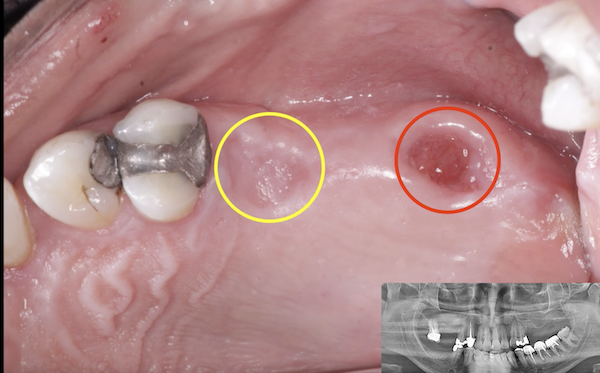
I am 48 years old. Last year, my general dentist extracted my top back
molar due to “too little tooth structure left to the crown”. He told
me that he hoped my wisdom tooth would move in to fill void. So far, it hasn’t.
Last month, I bit down on a popcorn kernel, fracturing an upper bicuspid. The dentist removed the back portion, and agreed to leave the front until I could arrange for a dental implant. So it looks as if I need dental implants for both teeth.
My general dentist wants to place the dental implants, and says that he has done a couple hundred of them. I’m feeling that I should go to someone who does this procedure even more often, such as an oral surgeon. Am I right to think that a general dentist isn’t apt to handle this as well as an oral surgeon? What is the preferred way to proceed with dental implant treatment? Thanks.
95 Responses to “ Should My GP Place Implants? ”
Dear Ann,
The placement of implants is not governed or “owned” by a particular specialty of dentistry. There are many specialists including oral surgeons, periodontists, endodontists, prosthodontists, general dentists and even orthodontists who perform implant procedures on a regular basis. However, you are exactly right in choosing a practitioner who you feel confident with.
General dentists are not limited to specific procedures, unlike a specialist whose practice is that of a specific field. Certain specialists depending on the state laws can only practice what their scope of specialty describes.
You have several factors to consider…
Factor #1…
Why are general dentists doing more implants? The commercial pressure of implant companies to carve out new territory for their products have some implant manufacturers marketing directly to the general dentist. Without the comparable years of surgical training, they are convinced once they take a weekend course or two and place a few implants, that they too can offer patients and double their revenue by placing and restoring implants. This is the marketing ploy of implant companies that increase the liability of general dentists but do not explain the downfalls of placing implants. If everything goes well, no harm done, but sometimes complications do occur. And those complications end up in a specialists office. I do not disagree that some general dentists are more than capable of placing implants, that is not what I disagree with. I disagree that practitioners have a feeling of false confidence after attending a few courses and feel they know the tools to start an implant practice.
Factor #2
The implant placement is held to the standards of care of a specialist, even tho a general dentist had performed them. This is to increase the overall success rate of such procedures, because frankly without the proper training and understanding of implant and surgical techniques, surgeons have a higher success rate than non-surgeons. Also, experience plays a role.
Factor #3…
Surgical exposure and training. Unless your general dentist had gone through oral surgery training, it would be very difficult to learn how to manange the cases that dont go very well. Shouldn’t your mouth be in the best hands possible? Its not only your right to be able to access the best quality, but also your choice to access the best care possible.
So in essence, I haven’t really answered your question, but given you insight in how to make the best decision. If you feel the implant is not complicated and your dentist is confident, I’m sure everything will turn out great. If there are any complicating factors, you may want to seek a second opinion to know what’s out there as far as options are concerned.
I think that there is no need to
be an oral surgeon to place implants.Such rumours is plain marketing from surgeons to monopolize the market.It is pregraduate knowledge, just that u need some exp too.
If u dont trust ur dentist its your fault for picking otu someone not so trustworthy
Just because a specialist has placed more than several hundred implants does not mean that he understands the prosthetic limitations or complications associated with implants. I have resotred hundreds of implants that were not placed in proper position based on the patients occlusion.
The question of GPs placing implants can be a difficult question to answer. If however, one keeps the patient’s well being in mind, the issue becomes clearer. First, one should recognize that there are no “simple” implants. Complications can arise during any surgical procedure and it is the responsibility of the doctor to be well educated and experienced in the management of not only procedures when they go well, but when complications arise. Medicine has very little problem with this concept. When a disease or condition presents outside the training of the family practioner the patient is referred to a specialist. It is this team approach to patient care that has the best track record for success.
It is truely unfortunate that some really believe that surgical procedures can be preformed by individuals who essentially have little training in surgery, anesthesia, reconstruction except of course for the “weekend residency” they took promising to increase their billing production. How unfortunate for their patients as well as the quality and integrity of the profession. The one question we should all ask ourselves is quite simply, “If this were a family member, how would I want them treated?”
I can’t agree more with SF OMS, and I am shocked by xe’s comment. SF OMS is not only giving out a very honest professional prespective, what he/she wrote also makes common sense. As someone who trains residents in surgical placment of implants and manage other surgical complications in a large dental school where predoctoral students treatment plan and restore simple implant cases, I know for a fact that surgery is not a pregraduate knowledge. xe, Please stop mis-informing patients.
Talking about increasing billing production..I have tried to restore more implants placed by the ORAL SURGEON that were not readily restorable without having custom angled abutments done every time..this was all done without the gp involvment because the OMFS knows not only surgery he knows prosthetics also. They place the implants before the patient has the opportunity to change his mind
Not all gp’s that place their own implants and restore them are doing so after taking just a weekend course. It would be absurd to introduce any surgical procedure based on such exposure. I’ve taken a two year course at NYU and in that course alone placed and restored about 80-90 implants.Then I spent another year as a clinical asst in the implant dept. For an OS to tell patient’s that gp’s that are placing implants are doing so after only taking a wkend course is unjust unless the dr knows the gp and his training.What motivated me to go back and spend the time to get the training I need? I was sick and tired of having the periodontist or OS do bone driven cases and I got stuck restoring these without having my input.If the GP is qualified then the big advantage is that before the osteotomy the final case should be envisioned from a to z.Many times the perio or os don’t have that vision ,they just want to get the implant in.It’s unfortunate but gp’s exposure to dental implants is very often through implant sponsored seminars. That’s not enough.In order to be a good implant dentist the investment in time must be made .To study and understand the fundamentals and build from there.
Ann,
The dental specialists that have proper training in placing implants and managing complications associated with implant surgery are the Periodontist and Oral Surgeons. They are the specialists that have undergone proper basic and clinical training and deal with surgery everyday. Other specialists, such as Prosthodontist and Endodontists are not properly trained in implant surgery. In fact, most of the residency programs in Prosthodontics and endodontics DO NOT teach residents how to place implants. It is out of their scope of practice. It does not matter how many implants your dentist has placed. However, if you dentist has not gone through proper residency training, then in my opinion, he or she’s not capable of providing you, the patient, with the best care.
Hope this helps.
SF OMS and Dr. Mosery are both right. The question is how does one get the training. It is just more likely that an OMS or a periodontist gets a structured training in his/her residency. The OMS has some additional advantage in managing surgical complications and having experiences from the training in other maxillofacial/oral surgical procedures. The periodontist has the advantages in certain other areas. The dentist who has appropriate training in both prosthetics and implant surgery has some advantages that a surgical specialist doesn’t have.
General practitioners (and prosthetic dentists) have a substantial advantage in having a stronger grounding in the functional aspects of implant placement and design. This is because they are involved in the design and development of the functional part of the implant– the prosthetic tooth to which the surgical fixture is attached. Granted that oral surgeons have more experience with surgery, but that is not where implant failure tends to take place these days. Implants fail due to either a patient’s poor suitability to this modality of treatment, or because the implant was either positioned or designed poorly. In my view, function is beside the point to an oral surgeon; he is out of the picture long before the implant is used.
Unfortunately, the patient is caught in a bit of a political issue. For oral surgeons, implants have become a lucrative toe hold into the area of prosthetic dentistry– a branch of dentistry in which they previously served at best an ancillary role. Many oral surgeons advocate strongly for the use of endosseous implants to their patients, regardless of whether another type of prosthetic treatment is feasible or even makes more sense. For this reason, patients should never select implants as a means of tooth replacement without first conferring with their general dentist or prosthodontist. If implants are chosen as the most appropriate course of treatment, it is imperative that the surgeon maintain a close dialog with the general dentist for guidance during surgical phase.
Your dentist is in the best position to judge whether your best interests would be served by having the surgical phase of implant therapy performed by a surgeon. After all, your general dentist will be seeing the fruits of his labor for the many years you remain in his practice, and he will want to be certain of a durable, favorable result. Due to the transient nature of the doctor-patient relationship in an oral surgical practice, the sense of accountability is not as keenly developed in the typical oral surgeon.
Let me clarify my statements since some individuals may have read too much into my statements. Can General Dentists place implants, sure they can, if they have the confidence and knowledge and experience to ensure good case selection and good outcome. Can they or are they qualified to do all implant cases, chances are no, they are not. That’s where the specialists come in, we *chose* to concentrate on a certain discipline of dentistry to ensure we can provide the very best of our specialty field. The field of Dental Implants is where many specialties overlap and merge into, therefore you will have widely varying opinions about treatment planning, etc. The marketing factors of claiming surgery experience is a priority to gain a monopoly in the implant field is not a fair statement. We feel the it is the patient’s right to ask for a second opinion, or to seek out someone who may be more qualified. It is their right to make an informed decision about their own body and their care. To limit that from a patient could be just as negligent as doing harm, especially in cases with poor outcomes. I do not get involved with litigation, but there are many referral relationships that are strained by this very practice of not informing the patient of their options. To conceal the truth is just as bad as blatant misinformation.
I very much agree with MB-GP, who hit the nail on the head. Communication is the key. Why do most implants placed by GPs end up easier to restore, because you can envision the restorative outcome and consequences of placement. The implant surgeon has virtually no responsibilities of the difficulty of maintaining gingival health around the implant once the implant is placed. In essence, if proper communication and placement was done in the first place, the dentist would have no motivation to place implants, unless it was financial. Even then, the efficiency of placement and case recruitment and maintenance of a whole armamentarium of supplies is enough to discourage some practices from even starting an implant practice.
Having said that… there are many other surgeons/implantologists you can try to find the best result for your patients. If implants are difficult to restore due to placement, tell your implant surgeon, provide feedback, or choose another surgeon for implant placement. No one dentist is tied into a surgeon forever. I’ve built my practice from re-do’s and second opinions because of my ability to do what the general dentist is asking me to do. In every specialty, there are individuals who practice without the respect given or regard to other colleagues. Those maybe some specialists to avoid, we as specialists are here to make your communication, patient care and outcomes better not worse.
Everyone here who comments and responds here is for the benefit of all, I donate my time and energy to browse on topics in which I feel I can make a contribution. I’m sure everyone can benefit from a professional discussion and not have to read the forums with territorial propaganda and mis-information.
i think the key factor here is that the GP who removed the tooth told the patient that he thought the third molar would erupt into the space. no grafting was done and the patient was mis-informed. there is no way that the wisdom tooth would erupt into the extraction space in a mature adult.
this seems like a very poor knowledge base of basic dental biology, and inferring from that, i would have to assume that he/she knows very little about implant biology. so what if he can make a crown on an implant or has placed many implants, sounds like he doesn’t know his left from right and i wouldn’t want an implant done in this office.
and don’t make assumptions about specialists placing poor implants. this is an over-generalization and does not represent the norm.
Prior to 1984 70% of all dental implants were being placed by general dentists. In Europe and Asia today 60% of all implants are being placed by general dentists. Prior to 1990 in this country, most Oral Surgery and Perio Programs weren’t even teaching their residents to place implants. Even today those who do only require 25-40 implants be placed to be considered competent. This means that most Oral surgeons and Periodontist who finished their residencies prior to 1990 probably learned to place dental implants in a weekend course sponsored by an implant company.
Implant dentistry is a restorative discipline with a surgical component. Periodontist and Oral Surgeons are so far removed from the restorative side of implant dentistry that they are highly inclined to place implants where the bone is rather than where the teeth need to be. This makes it very difficult to set up a proper occlusal scheme. Remember the last one to touch it is it. And it is usually the general dentist. How many Periodontists and Oral surgeons are going to be willing to go into the court room and admit that they placed the implants at an angle that required the general dentist to place off axis forces on the implant which is really what caused it to fail. My guess NONE.
The bottom line is if you have good surgical skills and the desire to learn the other necessary skills, most general dentists can sucessfully place 95%of all implants. The AAID is a very good source for finding out where to take more courses. Contrary to popular belief becoming credentialed by this organization will give any dentist(this includes Periodontists and Oral Surgeons ) the necessary skills to competently place and if the desire is there restore dental implants.
P.S. I am credentialed by the AAID and have placed several thousand dental implants, managed all but two complications and those were handled by an Ear nose and throat physician. The reson for this is because I din’t want some cocky OMS telling me and my patient that I should not have placed the implant in the first place. Everyone has failures and we all need help sometimes.
not to go out on a limb here, but it sure sounds like you have a large chip on your shoulder for specialists. this is tragic in my opinion. if you have specialists in your area who suck, this is understandable. but please don’t be one of those super-dentists who does everything b’c you think you are better than someone else who specifically trains in this region of dentistry.
most periodontists i know, including myself, stay trained and in contact with regular gp’s in the restorative end of implant dentistry by visiting with the referring doctors, and making sure they know that the crown, etc… works out well. helping with impressions, etc…
“several thousand implants”, hmmm. 10-years of practice=2 thousand implants, (if you mean you have placed 2-thousand or so.) that’s 200-year. 20-years of practice-thats 100-year. that’s a lot of implants for a gp for each year. i am a periodontist and do 200-300 per year. i find myself post-opping patients all day long for implants between surgeries to make sure they are healing as perfectly as possible. you must do a lot of surgery between your general procedures, molar endo, crowns, veneers, bleaching, etc…
i have to say that’s pretty damn impressive for a gp if you also do c& b, extractions, s/rp’s, composites, amalgams, crowns, veneers, sealants, ortho, endo, etc…
please remember that not everyone is “cocky”. we are here to help you and your patients, not to tend to a garden of procedures like some knight guarding a castle. your attitude, although possibly understandable due to your geographic circumstances, makes you look like you have a napoleon complex towards what you and others do.
please prove me wrong so i can rest easy.
lastly, most specialists i know place implants where the crowns are supposed to be and graft accordinglywhere are all these specialists who don’t know how or where to place implants, b/c i don’t see them in my area, and not vice-versa. do you stay up to date with the most recent bone grafting priniciples? are you placing implants with block grafts and ct grafts in ideal positions? in immdediate extraction sockets, sinus lifts? are you sedating your patients? are you immediatley loading your implants?
please tell me that you have the time and the energy to manage this surgical portfolio, along with staying up to date with your restorative princilples. if you do, i want to meet you.
i think it is great that gp’s place implants and i always offer to them and allow them to get their patients in my office under sedation and allow them to do the surgery. frankly i find it fun for me and them. but don’t, under any circumstance, assume that oral surgeons and periodontists are cocky and don’t know how to place implants. almost all of the research you are privy to comes from us and our organizations. the drive for implant biologic advancements does not come from the ADA.
sorry, had to vent. prove me wrong and i will apologize.
the issue here is that the gp doesn’t know basic principles of even tooth movement and wants to place screws into this lady’s head, isn’t it?
Ann,
You have stirred a hornest’s nest, and touched upon a somewhat controversial subject. Your question is what is the “preferred way to proceed”, and I believe that until recently the preferred way was the “team approach” which involved collaboration between a surgical specialist (periodontist or oral surgeon) and a restorative specialist (prosthodontist or general dentist). The reasons why this has changed are numerous have been outlined by previous posts.
In my experience, the best dentists (specialists and general dentists) collaborate with each other to deliver the best results to their patients. We recognize our areas of expertise, our limitations, as well as those of our colleagues. Get a second opinion.
Ann,
I’ve been a dental implant sales rep for quite awhile so here’s a little different perspective on this topic. Honestly, there were a lot of great points made above and I’m guessing your probably pretty confused. Basically, if it were me or a family member of mine, I’d choose the prosthodontist that’s placing implants in your area. Essentially most of our key note speakers are prosthodontists which I’m guessing isn’t uncommon amongst my competitors as well. It’s because they offer a very unique perspective. They simply have the most well-rounded knowledge and experience with both surgical and advanced restorative procedures. You may not be aware of this specialty but I can assure you they’re very knowledgable individuals. They spend a fair amount of time dealing with difficult cases nobody else wanted to attempt and fixing other doctors screw ups.
If you aren’t able to locate a prosth near by that places implants, my next choice would be a GP that’s had a fair amount of experience placing implants and underwent more than a ‘weekend seminar’ of training. Providing it’s not a complex case, I personally would take the GP with less education on implant placement than the Oral Surgeon any day. Surgeons drill holes and plug them. This may be a major stereotype but it’s held true in MY EXPERIENCE. They’re concerned about function and that’s about it. They simply aren’t cosmetic guys. Again, I’m sure there are some surgeons out there that try to keep informed on issues affecting esthetics but that’s simply not what I’ve found. Furthermore, the whole accountability issue is huge. Your general dentist is essentially married to you, the patient.
After the GP with an advanced level of training and experience I’d go for the periodontist. They’re at least concerned about the soft tissue sculpturing. Great looking soft tissue is a major prerequisite to an esthetic implant case and they’re the experts.
Then, that leaves the oral surgeons. I’m sure there are a lot of surgeons just cringing right now but it’s important to remember that I’m speaking from my experience in my territory. Anne, the things I’ve said may vary from region to region. In all honesty, chances are you’d see some nice results from the surgeons in your area and probably even your dentist. Regardless, I think your safest bet is to go w/the prosth. Good luck!!
For Ann the question is why would my dentist think that a third molar would magically drift into another postition?
Having two implants adjacent is better than just one. As a gp who places his own implants I must say I would not have if the specialists would place them consistently well as a result I took several hundred hours of continuning education and cadaver courses so that I could manage whatever I needed to.
How extraordinary that we hear how GPs are placing thousands of implants perfectly with no problems, no complications all in exactly the right positions
flawlessly.
Unfortunately this is not the reality I see as a surgical specialist. I have SIX ongoing cases right now that were disasters placed by GPs and Surgeons. I’m left cleaning up the mess which is not a comfortable position for anyone. The bottom line is this– there will be complications with surgery no matter who performs the procedure. If GPs can’t get consistent results from the surgeons they work with FIND ANOTHER SURGEON. It is about communication and the restorative team member’s involvement in treatment planning and stent design.
Also as far as GPs placing the majority of implants before the early 80’s as was mentioned in another post. Let’s not also forget that time was probably the least scientific, poorly documented and marred by failures leaving patients with little chance of recovery. Thank God those days are over!
I am neither a General Dentists nor a Specialists. But I talk to both everyday. I would find a good surgeon, Perio or OMS, to place any dental implants that I needed. In addition, I would go to a General Dentist who is involved in the restorative conversation and provides a surgical stint for the proper placement of the implant or uses a surgeon who makes them for every case. Even single tooth cases can have complications. You may have a slam dunk case but no professional will guarantee that prior to surgery. I would be more comfortable with a person who has seen more than a couple of complications in case my slam dunk case becomes problematic. Follow your instincts and do what is best for you.
I forgot to add if the implant can not be placed where the surgical stint requires then the surgeon should graft the site and come back when it has healed and place the implant in the proper position. This also means that the GP should not extract the tooth and then refer the case to the surgeon. The surgeon should do the extraction which could allow for immediate placement of the implants without having to wait for the extraction socket to heal just so a GP can bill for the extraction.
Ann: Look for experience and training. Ask some hard question like, How many implants have you placed and restored whether alone or as a team. What is your success rate? Do you have photos of finished cases? Can I talk to patients you have treated both recently and many years ago. I am a GP and have been placing and restoring implants for 33 years. I have over 700 hours of continuing ed. in the field of implants and have seen the good,the bad and the ugly over that period of time. I am also credential by the AAID. Having placed and restored over 5,000 implants, I know what can go wrong and what to expect in most situations. There are many fine oral surgeons, periodontists, and GP’s who can do the job for you. I also believe that ANYONE! who doesn’t have adequate training should be avoided. For a GP to place implants, they should have a minimum of the 1 year MaxiCourse offered at various teaching institutons. Simply taking a weekend course with no other training or experience is going to be a disaster. But, there are specialists who haven’t had much more training than that and are in the same boat. Look at all of this before making your decision
Hi Ann,
My concern is about the bicuspid. you may need a second opinion before having a tooth extracted. A good restorative dentist and a periodontist will give you the answer. Then, consider saving the tooth or have it replaced by implant. My preference when I need implant surgeon is for the periodontist in a mouth that still have teeth because they will treat any infectious disease and discuss with me about occlusion and others options before deciding on implant. They tend to work the implant into harmony with the remaining teeth, they follow up on the implants with their regular perio maintenance already incorporated in their practice, and most of all they try to save teeth before considering implant restoration. This is also the opinion of the prosthodontists that the periodntists is easier to discuss and work with in general. If the case is a completely edentulous one, I will refer to the oral surgeon because there are no teeth around to be concerned about perio and often extensive grafting will be needed, sometime with extra oral locatons for search of doonor sites. This is in general and encouraged by general consensus, you can find excellent and honest specialists and dentists with a lot of appriopriate trainings and constant keep up with litterature in the field to work with. My concern is every one should recognize the limit of one capacity, GP or specialist, since one can not know every thing. Please ask for help if you think you are not sure, don’t do harm to patient who trust you. For Implant company, they shoot for money and don’t face patient, we are!!! Hope this will help.
A dentist knowing his capacity and limitation.
I, too, work for a dental implant company, and after reading the above comments, I just want to make a quick side note. If you are a specialist and are not fond of the idea of the implant companies educating GP’s in a weekend (or longer) course, then keep in mind….if you are purchasing those implants, you are doing nothing but helping their cause. There ARE very well known, reputable companies that DO NOT target GP’s and DO NOT teach them to place. (I use plural loosely because I ASSUME there’s others besides ours.)
Just a reminder.
No one….I repeat no other specialty understands the anatomy nor has dissected and reconstructed the head and neck more than an OMFS. With that in mind, OMFS by sheer virtue of the scope of their surgical training are most adept to place implants. They have visually seen the internal anatomy of the sinus when they disarticulate the upper jaw from the skull during jaw surgery. Certainly, the degree of comfort they possess with major surgery makes implant placement child’s play to them. To further elucidate my point, the comparison of a GP -v- OMFS is like an internist doing an appendectomy. As for the Rep who commented earlier, your motivation is to sell implants. A younger Oral Surgeon with even 5 years of private practice has a keen sense of awareness of esthetics. The days of wacky placement of fixtures are over! Furthermore, thanks to implant companies and their push to support GPs in placing implants, the complexity of the cases the OMFS see are extremely technically difficult requiring bone grafting, sinus lifts just to cultivate an area into which implants can be placed. Comparison cannot be made between placement of fixtures into an ideal ridge by a GP to those placed by a surgeon into a severely compromised ridge that required grafting, sinus lift…Apples to apples! Furthermore, in a simple case one cannot claim that a GP would place an implant better than a surgeon! GPs have no right to criticize surgical specialists as a means of bolstering their own careers! Placement of implants is surgery thus it should remain in the hands of surgeons. I do agree with SF OMFS wrt the fact that when a GP or anyone who places an implant finds themselves in a court of law, the expert witness will undoubtedly be a Board Certified Oral & Maxillofacial Surgeon!!
I am a GP and have been placing and restoring dental Implants since 1980. I place the ones I know I am able to and send most complicated placements to an OS. No complications in all those years and 98% success rate.
All of your rantings sounds like the battle between sailboaters and powerboaters, a useless war. Just think what is best for each individual patient and the problem is solved!
this comment does not really answer the question raised by ann. but as a board certified OMS who has a practice primarily in reconstructive surgery, I can tell you that I have yet to place an implant that was “easy” it is always easy for one who does not know what problems to look for, and does not realize the complications were directly resulted from incomplete surgical knowledge. I have had many complications and most difficult ones to deal with have always been in those “easy” cases. to all
GP’s forging ahead with implant placement I say, good luck when you are sitting infront of a jury of the patient’s peers and have to defend your training with an BC-OMS as the plaintiff’s expert witness. It will happen it just takes time. I know because I have been an expert witness.
I love expert ( in their own minds) witnesses.
Let us all bear in mind that implant dentistry is not a specialty recognized by the ADA. Therefore an OMS testifying as a so called epxert witness carries no more weight than a credentialed member od AAID testifying for the defendant. Let’s keep in mind that in Europe ans Asia most dental implants are placed by GP’s. We must get over this stupid turf war. This will end up being the same battle that the endondontists fought in the 60’s and 70’s about root canals. Today most GP’s are doing fine root canals. Some root canals fail, some implants fail, and guess what GP’s are not the culprits in many of these failures. “Can we all just get along?”
I am a GP by legal defination, but the last filling I placed was 1989. Since that date, my practice has been only implant based prosthetics. Credentialed by the American Board of Oral Implantology as a Diplomate, I am qualified to place and restore implants with other highly trained professionals. The specialists who regard everyone else as incompetent, overconfident, and financially driven are not better trained for implant placement, and certainly not well trained for the main reason for implants, the restored teeth.
Ann can find qualified people in any metro area by looking for credentials on the AAID web site. I do not claim to have a OMS surgeons skill except in a small area, placing implants. And I can restore them a great deal better.
Dear Ann,
It’s pretty simple to me. If you trust and believe what your dentist is telling you then go ahead and have your dentist do it. If you doubt there ability then you should go and have a specialist your dentist would recommend or pick one out of the phone book. Most dentists who are upstanding and of good reputation would not try and purposefully mislead you. Who can do what better is a matter of opinion as you can see in the above posts. Good Luck
The comments posted on this issue, reflect to me, the importance and value of this community web service. Regardless of the differences in points of view, these discussions are of immense value. This is a patient speaking, who has posted questions, and generally studied this website for several months. Thank you to all who responded.
Let me refer our oral surgeon friends to a recently published 7 year retrospective study from the Journal of Oral Implantology in which 1st year general practice residents (actually AEGD) from UF-Jacksonville have achieved a 96.6% success rate placing implants. Yes, 96.6% success by freshly graduated general dentists. Implant placement in many instances can easily be done by general dentists. On the flip side, I would gladly leave the more challenging cases to the specialists, ie grafts, sinus lifts, etc.
I forgot the reference.
J Oral Implantol. 2006;32(3):142-7.
I completed a two year residency in oral implantology which involved both the surgical and prosthetic aspects of this modality. This makes me a GP with extra training, since implantology is not a recognized specialty. I guess I am the closest thing to a specialist in implants though. It would be silly for me to say that I am the most qualified doctor to place implants. I think that it boils down to the education received by the GP or the specialist in the field of implants. Like it was stated before some GP’s have great training in surgical placement some don’t, the same goes for periodontists and oral surgeons (especially if they were not taught implants in residency)… We should all get along. Maybe the solution to this controversy would be to make implantology a specialty and then I could be the king of implant placement
Ann your solution is to ask your doc what his training involved, have him show you pictures, and talk to some of his implant patients. Also, I always encourage my patients to get a second opinion on the treatment proposed.
Hi,
I am an Oral and Maxillofacial Surgeon and I relly do believe dental implantology is a field which can be done by any sincere certified dental personnal provided he or she has had good training and subsequent confidence in executing the work.
You know, tonsils are really easy to remove - maybe I should start removing those too. I’m sure there is a weekend course somewhere. Oh wait, there are guidelines in medicine for who is actually qualified to perform what procedures. The fact is, implant placement is a surgical procedure, and therefore must be performed by individuals with surgical training. Placement may appear simple, but by experience rarely is. If one is not able to manage intraoperative surgical difficulties such as the need for bone grafting, sinus elevation or nerve repositioning, or complications such as mandibular fracture or an implant in the sinus (both of which I have seen from GPs) then surgery should not be attempted. Oral surgeons in California were sued by the plastic surgeons who claimed they should not be performing simple facial cosmetic procedures. There was an extensive 3-year review in the California legislature and an ouside investigation of the skill level of oral and maxillofacial surgeons before the legislature approved that oral surgeons with documentation of special training may perform certain procedures if they apply for a permit. This is the level the medical community demands. So, GPs may want to perform certain surgical procedures, and many may be able to do so well, but that does not mean they are qualified by training. In my opinion, this question needs to handled as it is in medicine. In order to perform a procedure at a hospital, a physician needs to submit documentation to a credentials review committee. That committee has specific guidelines as to the acceptable level of training to perform the requested procedures. In my opinion, the surgical placement of implants should not be done because one “wants to” or thinks they “should be able to” or so that we “can all get along”. These are not medical qualifications. Or the “study” at UF-Jacksonville - perhaps their next study could be to teach chimps to drive a car in a straight line and then see what success rate they have driving down the street. I bet 96.6% could do it. I believe specific guidelines need to be developed regarding implant placement with regard to actual surgical training, ability and experience. There are poor quality practitioners in all the specialties - OMSs who can’t figure out how to place implants in a restorative-driven manner shouldn’t. This is not an excuse for others without proper formal training to step in. Those surgeons should be boycotted - perhaps that will force them to become trained in all the aspects of implant treatment planning and placement. In the meantime, I do boycott companies that sell implants to GP’s.
Much has been said already!
I believe that any General Dentist placing implants should have adequate, provable and up to date surgical training beyond simply removing teeth.
I also belive that any Oral Surgeon or Periodontist placing implants should have adequate, provable and up to date restorative training.
I personally believe the gold standard is to have the same (competent) person placing and restoring the implants. The days of an oral surgeon doing a bit here and there, then the prosthodontist doing his bit are fast dwindling.
I am an Oral Surgeon by training, but am very much still a practising Dentist, who will seek the advice of more specifically trained colleagues (Orthodontists have a lot to offer for instance)if need be.
Capitalist medicine has struck again. Everyone of these responses makes excellent points but they are not mutually exclusive. We would serve the community better by cooperating at all times. I am a GP and when I have a difficult case my specialists collegues are right there for me and my patient in every way. The secret is knowing one’s limitations and to quote Dr. Carl Misch, not do what you know but do what the patient needs or find someone to do it. Ann can tell if her doc is competent just by asking him. Love the comments. I hope they help the patient
Judge the man, not his discipline.
The mental software varies; an oral surgeon may be less gentle than a periodontist yet a GP may have more experience removing teeth (other than 8’s) than either groups. Extraction of teeth is only a recent periodontist activity? Many prosthodontists are white dentists, fearful of that red stuff.
The one stop practitioner offers a simple logistical
and legal outcome. If it fails, he/she is the bunny. Immediate extraction, immediate impressions and immediate crowns in theater by a solo or a duo? Additional costs old chap, sorry.
Mixed provider treatment can be complex in planning and modification. The appropriate provider with experience can predict/modify a treatment plan.
The major problem is when the self-appointed best person starts saying who or what should not be done to insurance companies or patients. I have seen many botched extractions by pedodontists and periodontists, but I don’t judge their discipline for it is similar to asking “Is a Rabbi better at advice or football than a Priest”. Observe the man at work, the hands, the mind and the heart. I am President of an Implant Group: some of the hotshots become so cocky with themselves that they no longer feel the thirst to attend. Observe the man (woman) not the uniform. Me? How many implants? Well the last one I did was a sinus lift for God!
Why are we even discussing replacing a second or third molar? Is 1st Molar occlusion not adequate?
Ann,
Proper training is the key. Just because someone is a specialist chances are they placed few if any implants in their training programs if they have been practicing very long @ all. Just recently have more oral surgery and periodontic programs implemented implant placement as part of the training. So guess what, many of the “specialist gods” were trained in implant surgery by manufacturer courses just like many GP’s. Many GP’s like myself have done all types of surgery during our careers and doing bone grafts and placing implants is a logical next step. I got sick of hearing from the “specialists” I didn’t use the surgical guide &/or “I put the implant were the bone was”. I then had to try to restore an implant case with expensive components to cover the specialists poor placement. After the implants are restored, the GP is married to the patient and from my experiences the specialist is no where to be found after the dentist restores the implants. Just for your information I always provided my specialist with a complete restorative treatment plan, photos, x-rays & surgical implant guide for proper implant placement. I always informed the patient that a bone graft may be necessary once the surgical site was observed by the surgeon. Now after 20 years of getting marginal results & a lot of headaches I went for more advanced training. I just completed a year long surgical implant residency program dealing with the diagnosis, treatment planning, bone grafting and implant placement. Ironically in a class of approximately 100 dentists there was only two oral surgeons. the rest of the class were periodontists, GP’s and a few endodontists. Now with a CT scan & a implant software package there should be no doubt what the proper treatment plan should be. So ask about the individuals training & are they using the latest in CT scan and diagnostic software to make their recommendations for treatment. Finally, if you do not know how to treat surgical complications of any type you shouldn’t be doing surgical procedures.
Sincerely,
GP John IL
LET’S START TO TRAIN ALL PEDODONTIST AND ORTHODONTIST TO DO DENTAL IMPLANTS……WHY CAN’T WE ALL GET ALONG..
Dear John, you need to find better specialists to work with.
I read all these statements obviously written by multiple backgrounds…gp’s periodontists as well as oral surgeons, etc..
In choosing a doctor to do ANY procedure, you must go by recommendation of qualification, not personality. There are fabulous gp’s and average surgeons, and visa versa as well as the same for any other group placing implants or whatever you require a doctor for.
This is not about ’selling a personality’ it is about ’safety’ and success for a patient from the beginning of the surgery of determination of implant, bone placement, etc to the final prosthetics of a patients care. ANYONE in the dental field today places implants. It is NOT a matter of function of DEGREE but one of experience, dedication and success. Egos should not be involved nor should comments re: who is more qualified by degree, but rather by experience and success rate. Talk to people, listen to different sides..etc. An implant should NOT hurt, should not be complicated and you should, after the procedure feel comfortable to go shopping, meet the ‘kids’ or just go relax. THAT is the feedback you want from those who have experienced the surgery. Good luck!! This opinion is from a ‘non’ dentist but has seen many patients have them placed. I am sure this comment will be published in all fairness .
I am a GP that places implants and restores them I have a Certificate in Prosthodontics, am a Fellow of the International Congress of Oral Implantologists. Have taken hundreds off hrs of courses mini resedencies etc. I do a pretty fair amount of surgeries including over 40,000 extractions and 7000 3rd molar impactions! If the GP feels qualified in placing and restoring the Implants then why not!!!! The specialists generally charge 40 to 200% more than the GP to do esentially the same job and end up with the same result. In many instances the patient is worse off with OS or Perio placing the Implants because they care about their $$$ and aren’t too concerned with what happens after the Implant placement. Let’s face it, most implants fail after loading ie restoration and it’s the restoring Dentist who is usually held accountable for failures since we all know GPs can’t be anywhere near as knowledgeable as an OS or Periodontist or at least according to them. Thousands of excellent implants and implant supported restorations are placed every day by GP’s and these numbers will increase!! The problem with some specialists ie OS and Perio is that they get into these rivalry and turf wars with GP’s because the bottom line with them is their $$$$$$, PLAIN and SIMPLE!!! No one has the exclusive right or a monopoly on learning on these services and delivering them. I feel that in the future that Implantology will displace many procedures currently done today in the areas of Endodontics, Periodontics, and Restorative Dentistry, due to the fact that the statistical probability of implant sucess is surpassing that of heroic procedures in these areas. Gp’s will be capturing more of the market in these services since they are usually the first to interact with the patient and there is less and less business today derived from tooth decay. The OS and Perio specialists can concentrate on the really hard cases that test their skills as specialists. At any rate, they’ll just have to learn to live with it!!!
What happens if in the future there is a general demand for implants instead of bridges or partial dentures? what are you going to do about it? Are you going to exclude general dentistry from the reconstruction of masticatory system? Limiting implant dentistry to specialists seems to be very absurd, or at least impractical.
General dentists should not be excluded from implant dentistry, but there should be the need for credentialing. In order to ensure patient safety. I think any dentist with the proper training should place implants. I am scared of those dentists taking a weekend course and using their patients as guinea pigs. Now days even the endodontists are starting to seek training and placing implants. I don’t see this as a bad thing. But I don’t want to tarnish the reputation of our profession because we don’t have a credentialing system.
Anne,
A very simple response to your question:
Ask your general dentist if he/she is capable of handling all of the potential complications associated with placement of dental implants?
Ask he/she are there specialists who may be better qualified to perform this procedure and manage any potential complications?
If the answer to the first and second questions are yes and no, then it is up to you to decide.
Anne
I hope that you’ve solved made a decision about who your caregiver will be and gotten your work done by now, considering you initially asked your question back in September.
Get your implant done where you feel comfortable. I would never do a procedure on a patient who doubted my ability to do it competently.
Implants are a more advanced procedure, but a GP with experience is more than capable of placing them in certain situations. I am currently in dental school and am very interested in implant dentistry. I do not want to spend an additional three to six years in a residency in OMFS or Perio. I will most likely spend one year in an AEGD (Advanced Education in General Dentistry) program that concentrates in the placement of dental implants to gain experience in this field.
Just as many other people said, ask your GP about his experience in placing implants and if you are uncomfortable with his answer for any reason, ask him for a referral to a specialist with advanced training for the placement of your implants.
Best of luck making up your mind.
Dear Ann,
certainly GPs could place implants, the only risk is that those GP could not handle any possible complication as a specialist….
Did you ask your doctor also about how many crown or bridges has done before he treated you…..
Even ,if anyone want to avoid GPs to place implants there would be no legislation to stop it, since big companies put so much pressure in GP s to do it
Best,
Dear Ann
As an OMF surgeon I believe dental implantology is primarily a surgical specialty. If an implant fails it is because of the section within the bone is visible or no longer fused to bone.Rarely it is caused by the fault in the crown, so I dont agree with the sales person who thinks prosthodontics are the best people for placing implants.
Simple cases with good surrounding bone probably best treated by your own dentist if he is properly trained and treated many cases . In your case if there is enough bone below your sinus it should be moderately easy. Complicated cases best see an Oral surgeon. But do not assume that Oral and Maxillofacial surgeons can all place good implants. They too have to be properly trained.
ps I agree with your dentist about giving the wisdom tooth a chance to erupt.
MHA,
Have you been living under a rock? Most failures are due to prosthetic design or mismanagement of occlusion…hyperocclusion, protrusive interferences, etc… I am a GP and spent two years of my life doing a full time residency in implantology. I did everything involving implants. I did every type of bone grafting, soft tissue grafting, overdenture… everything and anything you can think of. In fact, as residents we gave implant courses to OMFS, periodontists, and prosthodontists. Your statement about GP’s is completely wrong!!!
Reading the above comments, there are some valid points, but there is a reason there are specialists, there are many specialiste along with general dentists that can place implants well. but all should agree that the placement of implants is prostheticially driven.There is a reason for the TEAM approach in implant dentistry. If surgeons ( oral surgeons and periodontists ) started restoring implants,then why go to the GP. In most areas, the dentist is captain of the ship, the surgeon is the navigator, we are told were to place the implants. I have to diagree with one of the comments above, a specialist must practice within his realm of speciality , it becomes a disadvantage to the patient if a surgeon starts treating planning dental cases without consulting the primary general dentist.
Implants are a viable option for tooth restoration, But as an oral surgeon it is not our place to “sell implants”, patients should be given all alternative treatment options including removable prosthesis, fixed prosthesis, implant or do nothing.There is a criteria for implants, and I agree with one of the above comments that the general dentist is best at giving the patient the treatment options. It is also very professional not to talk to patients about implants on the day of the extraction, patients are nervous about the procedure happening now, they will not remember what you are saying, it is advisible to discuss this with the patients dentist prior to treatment and discuss this with the patient on the post op visit ( umless it;s an immediate insertion implant)
I rcently read an article at the Journal of Implant Dentistry which was about the systemic contraindications to implant placement.In that article, the authors who were both periodontists from U.of M., have repeatedly used the word “Periodontal Appliance” instead of Dental Implants.I am very wlling to know how the oral and maxillofacial surgeons,GPs and newly arrived endodontists feel about it.I am afraid that while the surgeons try to keep the GPs away from implant surgery,the periodontists keep everybody away from their PERIODONTAL APPLIANCE.
Hi, is anybody there? I am very eager to know how you think about it.Please somebody answer my question or maybe it can be the topic of a new discussion.At least the oral and maxillofacial surgeons who will be soon kicked out of the field, must show some sensitivity.
From J S.
I am a patient age 67 wearing full upper denture
considering implant supportive new denture suggested by my GP. He wants to do the surgery. Has 15 years experience with implants. After 40 years without my own teeth and shrinking gums, bone etc; will I almost definitely need grafting? My GP said I will not. What degree of success can I expect to obtain at my age? How long do implants normally hold up? Thank You.
Dear Ann:
As a patient recently having two implants by an obnoxiously arrogant OMS, I can tell you I wished to hell my dentist would have done them for me. This is after suffering trigeminal neuralgia on right side of face from someone not concerned enought to do an adequate evaluation and patient history because they “knew better than anyone else”, including my dentist of 25 years, this was a case for routine parts and service.
Believe me, your GP will have more concern and will most likely stick with you when things go bad, so far mine has. The OMS couldn’t get me out of his office fast enough.
GPs well trained could place implants, the biggest problem are two ,one-day-courses that makes gps beleived they are trained.
The core conflict in above comments appear to be who should be doing implants. There is one thing clear in everyone’s comments that our common goal is to do Quality service for the patients.
This goal can be achieved in several ways. Some small towns do not have highly skilled surgeons, a general practitioner usually pulls teeth, does periodontal surgery, he or she can start doing some implants without a problem. Same way a prosthodontist can do the same.
But there is a better way, that is to make a team and connect the team with Technologically advanced communication tools. The whole network work comprising of dentists, specialists, laboratory technicians work for satisfying patient needs. This is not any different in other industries. You can resort to primitive societies where the specialization or even superspecialization did not exist. Today with advancing imaging technology and designing systems with CAD/CAM tools, you can not provide highly reliable and quality treatment by yourself.
Let me explain with an example. Let us say that the patient is 78 years old with multiple medical problems. The patient wishes to attend his grandson’s wedding but she is embarrased by her teeth falling out during eating. She will like fixed, esthetically pleasant teeth by next month. She has atrophic Maxilla and Mandible with loose dentures.
There are treatment design challenges. We have multiple factors to analyze. We need CT scans, medical cardiac clearances, laboratory support. We are today able to deliver fixed temporary teeth to the patient in a day, thanks to team work.
I have worked as a General Dentist with MAGD, MDT and took all the course in the world, but there was always some cases I could not handle. I had oral surgery training overseas, but since I practice general dentistry, I could not get good in surgical skills. I ended up going for Oral & Maxillofacial surgery. I work in a team environment and take a lot of Prosthetic courses. I understand principles of prosthetics, orthodontics and Laboratory work to give better surgical treatment.
The argument that other countries have general dentist doing implants etc. I have friends who are trained in oral surgery but they do orthodontics. US offers the most advanced, superspecialized health care, and that attracts the best people in health care. Do not ruin it with petty turf battles.
This is all pretty interesting. Care to speculate on where implant dentistry evolved from in the first place? Look it up. Hint. It wasnt an ADA specialist. Just someone interested in knowing it would work. On the edge trial and error if you will. General Dentists taking risks and having vision. Like Hilt. The surgeons and ENTs and Perios didnt envision it first. And it has evolved worldwide for almost a century. The ADA doesnt even recognize it as a specialty but mandated it finally be taught in the late nineties after it couldnt avoid it as a discipline any more. The stats were in. But there is no specialty in implants. It has crossed all boundaries. We are all in it together. I need a specialist to support me and my decisions with patients and they need me in the same way. Its an exciting discipline and we all need to understand the benefits and limitations. But, we are all colleagues here and, damn, lets continue teaching each other instead of pointing fingers. Lest we end up like our paralytic congress who has ceased to function as an entity due to ego. Bill
The surgeon who places implants may find that “un-expected” conditions warrant use of bone grafts, membranes, connective tissue grafts, and other advanced ridge/bone augmentation techniques. Who is trained to do this? At uncovering (stage two) soft tissue plastic surgery maybe required. I submit periodontists have such training.
G.P’s placing implants? I do, and enjoy both the disciplines of placement and restoration. A quote from the Smithsonian:
“The Wright brothers’ best-known pre-aeronautical occupation was bicycle repair and manufacture. Their bicycle business provided them with an adequate and enjoyable living, an upstanding reputation in the local business community, and an outlet for their mechanical interests. Knowledge and experience with bicycles also proved valuable to the Wrights’ development of a successful airplane.”
At the end of the day, we (GPs) are responsible (and liable) for making sure we have the right education and training prior to performing any procedure.
I think sometimes our ego gets the better of us and, combined with the aggressive efforts of certain implant companies, we decide to take on treatments that may just be beyond our capabilties.
My rule of thumb is: if I get hauled in front of a judge or panel for, say, a bad implant surgery, I have to be held to the same standards as an OS or Perio. Can I look them in the eye and say I have the same confidence and skills?
There’s a saying in car racing that when a bold or aggressive driver crashes, he “ran out of talent.” I don’t want to do the same.
Personally, I am very happy, busy and profitable restoring a few hundred implants a year. Why frustrate myself and my staff with the addeed hassle of surgery? Most importantly, my patients are delighted and their referrals are by far my top way of gaining new patients.
By all means explore new skills, treatments and protocols, but don’t just chase the dream because it makes you feel good (or rich).
Well, Implants are easy to place and restore, IMHO a class two composite is much more difficult that placing an implant.
The thing is that specialists get so angery from the idea because they make a lot of money out of dental implants (more than impaction or PDL surgery), so they always will complicate things for GPs.
For example they will refuse the use of mini implants to solve width problems and tell you it isn’t an implant and that you need to do a block graft.. seriousely guys.. look at the literature and find out about the success rate of these procedures (grafting) after 5 or 10 year.
Now the important thing is to select the cases that a GP can do and refer the cases he’s not comfortable doing to a specialist (he will not do miracles of course).
So placing an implant isn’t like removing a condyle.. it is an easy straight forward procedures that we all should do it in our daily practice.
P.S. I do a master degree in periodontology by the way, my study is about dental implant too so i’m not exactely a GP nor a specialist. lol
Here’s one more observation on implant placement. I am a G.P. who places and restores. My surgeon ENCOURAGED me to place because he thought I could do it and should. So set aside at least one ego. Surgeons placed because that was Branemark’s protocol. Then periodontists got on board. What’s more profitable? An hour of scaling and root planing, or an implant? I’ve lectured for implant companies for 7 years. And essentially why? To promote the OMS/perios I was sponsored by. Most will place the abutments and send impression parts to the G.P.’s. Why? To control them and keep the market share. I am embarrassed about G.P.’s not torquing ALL abutments. I’m embarrassed that so many of them have checked their brains at the door when it comes to implants. I’m also embarrassed by my specialist friends that will not use the products of some implant company because they teach placement to G.P.’s. Whatever happened to what they consider to be best for their patients? That mentality is pathetic. But any OMS/perio that goes to all the trouble to diagnose the case, place the implant, place the abutment, furnish impression parts, should also take the shade and impression and seat the crown. And some do…you know it. They have my blessing. My business model is that once the healing abutment is on, it’s MY case…period. I want complete control of the restorative result. So I started placing to gain even further control. You read through all these blogs we have on this site and you will see a few common themes. There are altruistic docs. There are rational docs. There are realistic docs. There are ego maniac docs. And those that seem to get the most upset are those coveting the almighty dollar because implants are so lucrative. Put it in, it will integrate, then let the poor G.P. and lab deal with the placement. The days of poor placement, folks, are NOT over. I see them weekly at my lab in Southern California.
Everyone blogging this site has a business model that seems to work. OMS/perios doing everything, OMS/perios doing only the surgery, G.P.’s doing restorative, G.P.’s doing everything. Don’t any of you taking harsh stances forget…”If it’s being done, it’s probably possible.” Lots of us treat patients well…good outcomes…and get there by different routes. Any of you that have never had a failure have never done an implant.
Big fight over an unfinished product, Future dental implants will be easier to place on any kind of bone, and will Osseo integrate on 100% of the cases, reducing or eliminating the need for grafting. We have to remember than oral surgeons, periodontists, GP’s, endodontic, etc… We are all dentists, and we should all be working together for the sake of our patients. If we are unable to resolve our petty disputes, somebody outside the dental field will., One possible outcome can be : on one side the dental hygienists moving up on restorative treatments as an inexpensive referral service and oral health gate keepers , and on the other side, all the specialists , no more GP’s. Specialty training at dental schools will be shortened to accommodate the demand. Specialists will no longer treat only difficult cases on patients who can afford their fees, but also Welfare patients at GP’s Fees. Insurances Companies will no longer have to deal with specialists fees, saving millions. As today, we, General Dentists are America’s oral health gatekeepers, we treat our patients with honesty to the extent of our individual training, and we refer to our friend the specialist if the case is beyond that (of course the patient also has to be able to pay their fees.). For all those cocky specialists, do not forget that, we, the General dentists are the ones who helps keep you crown over you heads.
I think this question is difficult to answer. Complications just happen and both oral gurgeons as Gp’s make sometimes the wrong descisions to resolve these problems. Maybe you can ask which garantees they will give you. For exemple what happens when there is an implant failure. Do you get a new one for free and what are the conditions to do so? I think someone ( GP’s and surgeons) who do quality jobs also gives in some extent a warranty on his/her work.
If the surgeon or GP explain to you all about implants they should mention you all the main problems they can encounter in you case and what are the advantages but also disadvantages of putting an implant in in your specific caseAn what are the alternatives whit their problems and survival rates. I think that you get a lot of information how someone does his/her job in how he/she explains about your problem and takes the time to let you understand and think about it
( not forcing you in the direction of an implant but let you choose for it)
It was fun reading all these comments. I am a GP involved with the restorative phase of implant dentistry (past 8 years).
Recently, I started a one year implant continum to get more involved with the placement of implants. This was a personal decision fueled by my interests and love for the discipline. Moreover, I was motivated by failures caused by poor placement angulation by so called “Highly trained and God like competents OMF surgeons and Periodontists”. As noted earlier, non axial forces heavily contribute to failure post placement. I have yet to see/hear a patient complain about the surgeon or the periodontist during these post restoration failures. As a GP, I am sick and tired of hearing Oral Surgeon defend a poorly placed implant by saying they could only placed the implant where the bone was: those days are over and the surgeon should be held liable too in a failed restoration case. It is time to rather start placing bone where we want the implant needs to go.
I believe I am going through one of the best implant continum that ever existed, though many more additional practical courses will be necessary thereafter. Implant dentistry is not a recognized specialty so what other courses are we supposed to take as GP? Just as much as some Oral surgeons/periodontists think of GP as ill qualified, I have no doubts that there are many incompetents surgeons out there and I have worked with some of them who honestly do not deserve the merit of the glorifying title they received.
Hopefully, there would someday be an education requirement standard that all involved with implant dentistry could be judged by at minimum. For now, as GPs placing implant, competence level would be key in deciding for or against a referral likely to, not just a surgeon, but a competent surgeon/periodontist.
HAH
I agree with the previous post. I am a periodontist who received implant training during my residency. I know of many GPs who are well qualified to place implants and some specialists who shouldn’t be within a mile of an implant handpiece.
That being said, quality training is rare for most GPs. The previous poster is actively pursuing education that spans more than a few hours over a weekend at the local Holiday Inn Express. A complete review of the literature is VERY necessary to understand the consequences of surgical decisions. I commend GPs and anyone who puts the time in to learn to do things properly. That’s why I pursued perio.
During my residency I also learned the restorative aspect of implants. I restored 14-16 full mouth cases not including simple crowns. This helped me understand the restorative/prosthetic end of implants. I firmly believe that we shouldn’t place implants if we have never restored a case.
I think the ADA or whoever is in charge should make a minimum educational requirement for anyone (GPs and Specialists) to place implants. This should include treatment of complications and restoring a few cases.
I always think to myself if what I’m doing is the way I would want somebody to treat me or my family. I don’t do anything I’m not confident in. I hope the weekend warriors do the same for the first patient they see missing a tooth.
There are a lot of valid points above. It is imposssible to evaluate any clinicians skills purely based on credentials. I think the most relevant questions for a patient to ask are:
1)How many have you placed?
2)What is your success rate?
3)Can I see some of your cases?
There are good people who have had a lot of training and credentials. There are mediocre people who have a lot of credentials and training.
THe biggest risk and morbidity issue is damage to the inferior alveolar canal. This is an unforgivable event. Most other implant “complications” are relatively easily addressed. Failed initial placements can always be replaced.
What a terrific bunch of posts since my last! A dedicated G.P. and a periodontist. I couldn’t agree more with everything they said. Implants will never be a specialty. It’s not needed and the politics would be overwhelming. Our periodontist is correct. The ADA or someone needs to step up to the plate and require some minimum standard. I lecture for two implant companies and I’m still shocked at the lack of involvement of restorative doctors in the abutment phases of their practices. They readily delegate that responsibility to the surgeon. They will torque a wheel on the freeway with 6-8 lugs nuts and won’t torque a titanium abutment? An error on the former could kill your family and an error on the latter could cause a loose crown. Where’s the logic? What is it about TITANIUM that scares the heck out of G.P.’S? I have cases requiring abutments in titanium, gold, and zirconium. I have cases that require cast-to abutments. I have cases that can be milled from stock titanium abutments. I have cases requiring angled abutments. What gives some surgeon the intellectual advantage to select these for me? And if something fails, does the surgeon get to assume the financial risk? There are CDT codes for abutment placement. Why should I let my surgeon do MY job and make $200-400 for a 2 minute procedure?
My oral surgeon does 5% prosthetics. Another periodontist colleague provides 90% of abutments. What’s the difference? According to my oral surgeon it’s control and financial advantage. Pure and simple. After an initial learning curve, there is no need for any restorative dentist to have any surgeon get involved in prosthetics…period.
If you are a restorative dentist delegating your prosthetics because “I don’t have to do anything except take an impression”, then stop drinking the Kool-Aid and do what your degree MANDATED that you do…be a dentist!
Response to Mark Miller
I could not agree with you more Mark. I think the GP should be directing the whole treatment plan. It starts with a good diagnosis. We then can call in the implantologist or better yet learn to place them yourself. I also take offense at the downplaying of the weekend courses. For an adept practitioner, this should be adequate. I do not see specialists stopping their practice to spend time in a new 2 year residency each time a new procedure comes along. Remember these course build on many years of experience Our patients deserve our best.
Dear Doctors,
Several salient points have been missed in this discussion that should bear some attention. There is a vast difference in ideal treatment vs. actual treatment that is dictated in part by patient desires, financial ability, patience with the treatments being rendered and the ability of the surgeon and restorative doctor.
In many instances where significant bone grafting should be considered we may elect to place shorter or narrower implants to eliminate the need for grafting.
General practitioners that elect to become involved in the placement of dental implants should be held to the same standard that properly trained surgeons are. In my humble opinion surgical training programs that do not emphasize this as a prosthetically driven form of dentistry are doing a great dis-service to their specialty, restorative partners and finally their shared patients. In my own residency surgical residents were made to restore many of their own implant cases, not so we could take this to our practices, but so that we would be more complete surgeons having the ability and appreciation to look at our placements with a prosthetic eye.
Complications associated with flap management, selection of appropriate graft materials, knowing when to use tissue modifiers, appropriate fee setting, determining time until final impression taking, knowing when to soft tissue graft or bone graft at the time of implant surgery, these are all issues that require a good surgical background. Watching my general dentists interested in implants come to my office and placing implants under my supervision is often times surprising to see how easy it can sometimes go only to watch them destroy a flap with inadquate suturing technique. Drilling the hole and placing the implant are the easist parts of implant dentistry.
Treatment planning for these cases must be front loaded and the execution of the said treatment should be the easy portion.
I am a periodontist that has placed approximately 300 implants in the last year. I have been unable to place more than that because I have taken a great deal of time working with restorative doctors on creating useful surgical stents, appropriate impression techniques for certain clinical situations, when to use custom vs. stock abutments and I have had the experience where some of these doctors who are not competent at restoring implants will take on the additonal responsibility of trying to place implants themselves.
Commercial interests will motivate these dentists to over buy and be over commited to a product (thanks Nobel) invest tens of thousands of dollars and their first cases will be extraction, immediate placement, immediate temporization of a maxillary molar. I know because I’ve had my panicked rep call me and ask “now what do I do? the doctor has a spinner, perfed the sinus and the patient is agitated” unfortunately it’s a bit late to be asking the question don’t you think?
For gp’s genuinely interested in placing implants I would recommend partnering with a surgeon in your area who is willing to assist you with 10-20 cases before going it on your own. Keep is simple early, classic two stage approach, no immediate placement, learn to crawl before you walk etc. Build your confidence based on experience not what your rep tells you that you are capable of accomplishing.
- perio Seattle
if your dentist tells you that the wisdom tooth will fill in the space of an extracted tooth at 48….well, change dentist!!!!
I disagree with the post about weekend courses being sufficient. Specialists already have surgical training and require less training to transition into implants. OMS and Perio training is more intensive than dental school training as far as surgery…I think we can all agree to that. Dealing with surgical complications and knowing how to control a surgical field doesn’t need to be relearned.
GPs interested in placing implants should have the best training…not NOBEL freebie courses. If you’re a proficient GP and can handle it than you are an exception but not the standard. It’s like jumping into complex ortho cases…learn to do the simple stuff correctly then move on to the hard cases.
I teach at the local U and find many students eager to learn how to place implants when they still don’t know how to cut a prep. The extraordinary students who show proficiency are allowed to work up a single case but not before intensive education. All the students feel more confident afterwards and realize what cases they can move onto and which to refer.
Nobody owns implants but we should be responsible enough to seek the PROPER education prior to placing them.
just my opinion
Although very controversial in dentistry, the ADA should set some guidelines for anyone that will be placing and restoring implants. This will only elevate the field. Most new oral surgeons and periodontists have the restorative knowledge of a senior dental student, only because, more often than not, they have started their residency straight out of school. They are then given the task, by GP’s, to treatment plan an implant case which should be started with the restorative in mind. Then the GP’s not knowing any better are restoring these poorly planned cases… and thus the vicious circle continues. There is a lack of proper education on both ends. The ADA can end this dirty little secret we dentist keep from the public. The US is one of the few countries in the world where the doctor placing the implant is not the one restoring it. I don’t think that, in the US, implantology will ever be a specialty because too many peole have their hand in this financial cookie jar, not because it is better for patients. As a profession, we continually don’t do what is best for the patient. We are so blinded by marketing it is sad. Companies spend alot of money to confuse us and “re-package” the “truth” to fit their bottom line. It’s not their fault, it’s ours. Who cares what kind of dentist places the implant!!!!!!!!! Let it be the one who has the proper training. The ADA needs to step up… it works for medicine why not us.
To King of Implants,
Although I agree with some of your statement, the idea that specialist aren’t getting training on restorative/prosthetic treatment planning is an ignorant statement. And to flip your argument, most gps have the surgical training of 4th year dental student as well. I know when if I need surgery on my heart I would rather a cardiac surgeon with advanced training over a cardiologist with limited surgical skills. Agreed, ADA needs to step up and most countries have the same Surgeon/Dentist. But, having a system with specialists is not bad either, in fact Europeans Dentist often refer cases to self claimed specialists for certain treatments.
The truth of the matter is a lot of philosophies exist and we’ll never agree on the best treatment. People think bone grafting doesn’t work, usually because they can’t do it. Then there are those who think everything needs a bone graft. I don’t think there is one group of surgical specialists who believe that implants are prosthetically driven, except for some prosthodontics who place implants where the bone is because they don’t believe in grafting. Funny how that paradigm shifted…surgeons believing implants are prosthetically driven and prosthodontists believing implants are surgically driven because of the angled abutment and teeth in an hour.
Oral Serg,
You are absolutely right about many GP’s having the surgical training of a 4th year dental student. This is a big problem when an implant company gives them a course over the weekend and tells them they are ready for surgery on monday. It goes both ways, that was my point. The learning curve for those already doing surgery is less steep, but it’s not just about doing surgery. I also meant to say that in general there is lack of training on both ends. You may have gone through a program that empasized training in retorative/ prosthetic tx planning, but that is not the norm. I can tell you this first hand. I have several specialist friends that have sought out prosthetic training after their specialty in order to improve their surgeries and to be able to “train” their referrals. They did this because they received very little during their residency training.
As far as bone grafting goes… those who say grafting does not work do not know the literature. This is why the guidelines need to be set up for ALL. It will only elevate the field.
I know that my comments my seem extreme but it is the truth of the state of implant training in universities. Having said this there are always exceptions. I hope I did not offend anyone. I think we are all to blame. All this controversy would be avoided if guidelines were set up.
There is only one way to solve this argument. If implant dentistry should be taught as a legitimate part of dental school curriculum and cover both restorative and surgical components, then let us carry the Boston University concept one step farther. Teach it at the graduate level and make it a SPECIALTY. You will not keep interested clinicians from providing these services (as in ALL other specialties), but using the cardiac surgeon analogy, it gives our PATIENTS an intellectually honest choice. It is, simply, the right thing to do. By talking around the issue, we only delay the obvious imperative. By pushing the agenda, it will not affect any of us providing implant services now, but will address this deficiency in training on both ends for the future.
Ann
What you need to do first is go and see a mechanical engineer he is the only person who is qualified to properly analyse the forces being exerted in these areas of your mouth and what implant is best able to withstand them. As you can see above at least some OMS’s choose the implant based not on what is best but on whether the company supplies also to GP’s . Once the engineer advises on the correct implant from the miriads of different types available you should try and find an oral surgeon, periodontist and prosthodontist who will work together. Have the prosthodontist plan the case and provide a surgical stent for implant positioning. Have the periodontist deal with the gingival flap and have the OMS place the implant. The periodontist will close and take care of any ridge augumentation. The prosthodontist can then proceed with the restoration but he should have the company represntative present to check the tourques. Also you should choose your own porcelain technician for the laboratory work because prosthodontist are not experienced in doing porcelain build-ups. It will cost probably about $25000.00 for the procedure. If it fails the periodontist will blame the OMS. The OMS will blame the implant or the engineer and the prosthodontist will blame the lab.
Or you could just find a Dentist you trust and take their advice. Their is a 98% chance you will have a sucessful implant placed by the one guy without complication for approx $4000.00
If it wasn’t for the so called “experts” scavenging around trying to enforce their monopoly with there threats of “expert witnessing” you would probably be able to have it done for $2000.00 Tread your own path