Best Approach for Internal Sinus Lifts?

Posted in Sinus Lifts Site Preparation Techniques and Procedures

« | »

Dr. Jack asks:

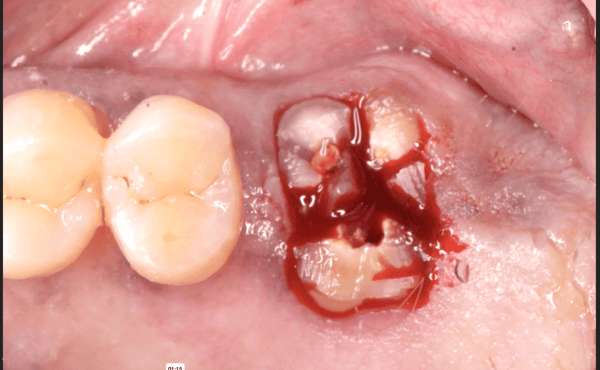
I would like to ask those out there who do routine implants around the maxilla region, what is the best approach to internal sinus lift? I have been to several courses but there are some variations and each with their own justification.

One suggests drilling with pilot drill to 1mm short of the sinus floor
then start using 2mm osteotome, place bone graft and continue lifting
with larger osteotomes.

Another approach is the hydraulic balloon lift system. I am not sure if
this works for internal sinus lift or not. Never tried it myself.

Also, another is to use osteotomes from start to finish. Presumably this is done for D3, D4 type bone.

What kind of approach are you guys using out there and that you find
easiest to do with good results and less chance of perforating the
sinus membrane?

8 Responses to Best Approach for Internal Sinus Lifts?

  1. Dr. Madison says:

    The best approach I have foud is the following:
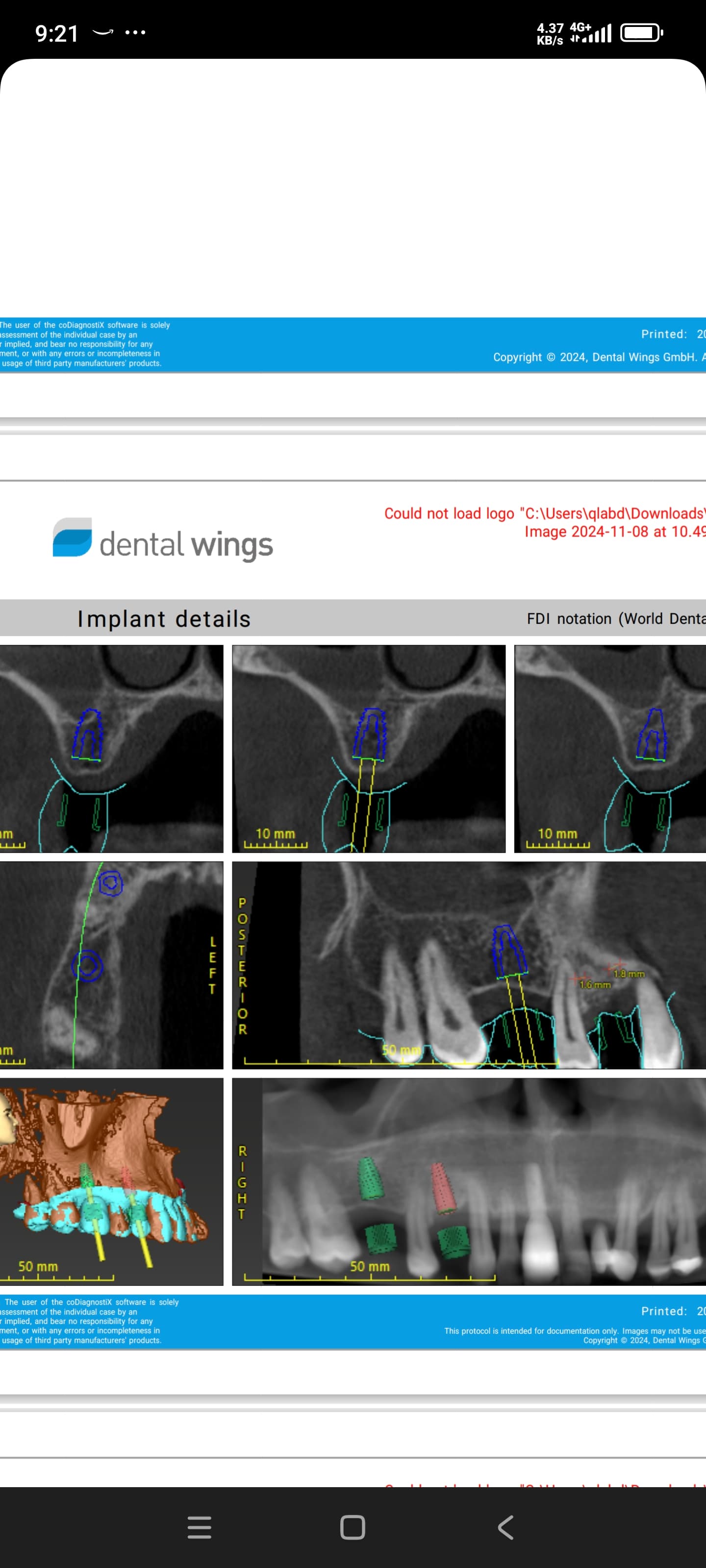
    1. Get an accurate X-ray and or CT of the region to assess available bone
    2. Start your osteotomy using your pilot drill, stopping 2 mm short of the sinus
    3. Then use your larger drills to enlarge your osteotmy to the desired diameter.
    4. Using your final drill approach the sinus as close as possible stopping just short of the membrane. If you have good magnification and lighting you will be able to visualize the bluish color of the sinus membrane as you approach it
    5. Then using your osteotomes very gently tap and elevate the membrane. Pack the bone graft incrementally, and then self thread the implant into place.

    This technique dramatically reduces the chance of rupturing the membrane, or giving the patient a concussion if you were to use the osteotomes alone.

  2. Bill says:

    At a course I attended recently I was told to NEVER allow the osteotome to enter the sinus. After drilling 2mm short of the membrane pack the osteotomy with graft material, insert the osteotome, and gently tap until the sinus floor in in-fractured. The osteotome will force the material, which acts as a cushion over the instrument, into the sinus and under the membrane.

  3. The internal sinus lift takes a little practice to get the proper feel. I use the 2mm twist drill until I feel some significant resistance, which is the cortical bone of the sinus floor. Measure the depth on your twist drill and compare it to your pre-measured PA radiograph. It should be within 1 mm of that measurement. DO NOT use larger drills and limit your osteotome diameter to 3 mm so you 1) don’t over enlarge your osteotomy and lose your primary stability and 2) you don’t transport the center of the osteotomy since it will be very hard to recenter.

    Then, switch to a large #6 or larger latch round diomond drill on your surgical handpiece with or without extender, depending on the depth of the osteotomy and presence of adjacent teeth. The use of a diamond drill has been critical to my success. I have had near perfect success since using this over a twist drill. When you use a twist drill to thin out the cortical bone on the sinus side, the sharp point often causes the drill to just keep on going. I’ve perforated 25% of internal lifts with the twist drill. Using the diamond drill allows for less “leaning” on the drill to thin out the cortical bone. Ideally, you should be able to thin out enough bone to just start lifting the membrane without using a mallet. Sometimes, however, due to the slope of the floor, the mallet may be necessary.

    After you thin the cortical bone with the diamond bur, use an osteotome that has a depth limiter attached to it. It should be 2 or 3 mm in diameter with no taper and a rounded convex end. Place the osteotome to depth and set the depth limiting screw. Then remove the osteotome and ad 2 mm to the length of the osteotome by adjusting the depth limiting screw. Then replace the osteotome and using a firm twisting motion force it to depth. When you first start with this technique, it is advisable to place a cushion of graft material (I use PerioGlass or BioGran). The osteotome MUST go all the way until it stops against the depth limiter. Test the integrity of the membrane by having the patient plug their nose (or do it for them if they are sedated) and have them blow. No blood or air should flow through the osteotomy. Now, using a currette, amalgam carrier, or your preferred delivery device, place your blood or saline moistened graft into the small osteotomy until it is full to the top. Then place the osteotome back and push it to depth. For an initial osteotomy of 6-8 mm, each fill and push cycle will get you approximately 1 mm of sinus lift. Deeper osteotomies will result in greater initial lift and shallower ones will result in smaller lifts per push. In any case you may wish to take a working x-ray to verify the height prior to implant placement. After you do a few dozen of these, you will not need to take the x-ray until after fixture placement and suturing.

    Stephen Wallace has shown evidence of successful augmentation with this technique of well over 12 mm. Personally, I have lifted 8-10 mm with great success. You want to have at least 3 mm in initial bone height, or else you will not get primary stability and will need to lift with site development in mind. 5 mm is ideal for some brands that do not have threads to the top. For shorter bone heights, avoid countersinking your implants so you can maximize primary stability. IN ALL CASES, primary closure is necessary with exceptions allowed in only a few cases that your clinical judgment may decide, such as large initial bone height, non-smoker, non-diabetic, great oral hygeing, etc.

    If you perforate the membrane, don’t panic. Verify perforation with the nose pinch method. If you laid a traditional flap (recommended), just place some inexpensive collatape or foam and suture back to primary stability. For short bone heights, you will be amazed to find greater bone height when you re-enter 2-4 months down the road depending on the situation. By 4 months everything is fine. Remember to give them sinus precautions: sneeze/cough with no hand over mouth, no smoking, and no nose blowing for 2 weeks. Sudafed or Afrin for 3 days tid. If you perf with an initial bone height of 8-10 mm, consider placing a shorter fixture. You can have about 2 mm of the fixture protrude into the sinus (some clinicians have had success with much greater intrusions) without negative consequences. If you place in the perfed osteotomy, no sinus precautions are necessary. All perfs with or without fixture should be on antibiotics, such as amoxicillin or augmentin depending on patient history. Zithromax and clinda for pen allergy.

    Prophylaxis for all of my sinus patients before the procedure with pen or amox or clinda, dexamethasone, ibuprofen and oral rinse of chlorhexidine for 1 minute. Perf or no perf, I’ve never had a patient complain of sinus pain, but because of the flap I give them vicodin.

    Sinuses have become a low stress procedure in my office. However, it will take about 10 cases to feel confident, but expect to have a few perfs. For this reason, I recommend to other doctors to be VERY selective of your first cases and limit their selection to 8-10 mm bone heights. By the way, when you are doing more than one lift in a quadrant, ALWAYS start on the most anterior one first. This will make the one right behind it very easy since the membrane will already be lifted from the bone.

    Finally, undersize your last twist drill by about 1 mm diamter and with an in and out motion (like a drill press) finish the osteotomy. You do not need to go all the way into the lifted area, just the cortical bone. DO NOT TAKE YOUR TIME WITH FINAL OSTEOTOMIES, as your primary stability will go way down, particularly with parallel walled implants. Primary closure, chlorxidine rinse bid until sutures come out and done!

  4. Dr Jack says:

    Hello Joseph!

    Thank you for a most detailed description. I really appreciate you sharing your experience with internal sinus lifts. I have learned much from your informative posting.

    Can i check with you, when you use the large diamond drill to thin down the cortical plate to reach the membrane, do u thin until you feel a slight drop? Or should u stop well before that. This is the part i worry about the most, as i am sure different membranes will have different thickness and resilience.

    Another thing is, do you enlarge the osteotomy site to your implant size or slightly smaller? Plus, is it advisable to lift and graft with increasing osteotome size, or is it better to increase osteotomy size until after the lift has been completed?

    I noticed you use a convex osteotome, is there an advantage over the concave one? I had the idea the the concave instrument will be able to push the graft material better.

    Normally how much bone graft material do u use up for a lift of 5mm? Any experience with Bio oss as graft material or C graft?

    Lets say in a free end saddle area, needing 3 implants. Sinus lift is required with 5mm bone, would a internal lift be better or a conventional sinus lift?

  5. I often feel a slight drop, but if you are afraid, take a check film with a depth gauge in place and proceed to thin the bone out the exact distance shown on the film. When it is really thin, the bone will just infracture under normal hydraulic condensing pressure. Use two hands during the drilling when you know you are close to control the depth of penetration.

    I always undersize my maxillary osteotomies, especially in this region which is very often D3 or D4 bone. You can enlarge with an osteotome especially when the original bone height is shallow. This will enhance your primary stability. I still undersize the osteotome expansion. Most implants are self tapping, and it is a wonderful feeling when you approach 30 NCm or more of primary stability. This is the best insurance, in my hands, that the fixture will integrate. Do not enlarge the osteotomy until after the lift is successful.

    Concave osteotomes have sharp edges. If you rounded these off in the lab with a rubber wheel, it may be more useful for this procedure. I like the convex, round ended osteotome because it minimizes puncture of the membrane even when it is in contact with it. Any instrument that fits the original osteotomy intimately will push the material just fine.

    I haven’t used bio oss for the lift, but I have used C graft. Personally, I like a finer material like the bioactive glasses. They tend to “squish” better and are sticky when bloody. I feel it is easier to manipulate. For a 5 mm lift, I’d say that you can expect to use about .25 to .5 cc depending on how efficiently you can transfer the graft to the osteotomy.

    If you feel comfortable with the conventional lift, it will be must faster than the osteotome lift. However, I will say that once you lift the most mesial osteotomy, the other two are quicker.

    On a different note, I’ll be going to the UCLA Advanced Implant Therapy seminar at the end of October. Anyone out there attended it yet?

  6. alvaro ordonez says:

    There are many different techniques available to elevate the sinuses internally.

    The classic one is summers very well described with some modifications by different drs in this forum; in our case we always try to place wide diameter implants, usually 5 mm diameter so we use the 3.5 osteotome as the last osteotome and we then place the implant after laterally moving the grafted bone since most perforations happened during immediate implant placement due to the vertical pressure of the implant on the graft material, so make sure you move the graft material aside carefully to create room for the incoming implant (we have publish and presented numerous studies in this matter, check abstracts at the AAO last three years.

    also important to always use a radiopaque graft material since the graft can be immediately visualize after the surgery, if the granules look scattered in the xray means a possible perforation, then you can retrieve the implant before soft tissue closure and correct the perforation and at this point is better to stage it (in fact the latest studies in the microscope performed in italy by paolo trici suggest that staging is always the best option for bone regeneration). A good option for a graft material in the sinuses is cerasorb mixed with autogenous or by itself (we have try both and done histological cores with great results), BTCP, since is a radiopaque fully resorvable material, other materials dont fully resorb.

    another technique is the trephine technique, it is excellent (check Kim and Ordonez abstract at the AAO poster abstract published 2005, the technique is fully described there).
    Using the ballon is really no different than using the hydraulic pressure from the graft, in a thin membrane the rupture will happen if the membrane is not carefully lifted with a curette, the ballon works but not in every case.

    The free hands technique is great when available 1 to 3 mm of bone in a fully pneumatised sinus, we have developed a curette specifically for this purpose, The Maser (microadjustable sinus elevator) presented this year in san antonio at The AAO. Any technique works if you develop the tactile ability, there are two ways to practice at home: the first one is to use raw eggs and create the opening with a # 2 diamond bur, make a small opening to practice supracrestal approach and proceed to elevate with any surgical curette, always direct the edge of the instrument against the shell not against the membrane, the other way to practice summers is to get a piece of wood and place two small pieces of wood on top of the way and secure a baby back rib, you should remove the muscle of the rib but leave the periosteum.

    the periosteum will mimic a S. membrane and you will block your visual access to the sides of the practicing model so you blind yourself just like in the mouth, you have a bicortical model very similar to the sinus area and the idea is that you make the preparation of the osteotomy site and you can practice the osteotome technique; at the end you look at the other side, that way you develop the tactile ability with the mallet in a model and not with your patient, any sinus technique can be simulated with different models.

    I havent had to do a lateral window in any situation in the last two years, we rae doing supracrestal approaches, different techniques, very often we have to stage them and in fact is better and more predictable to stage than to place them right away, we have place them in one mm of bone, it works, in two etc, but of course you need to do some modifictaion to the techniqye and usually use wider implants.

    I do not believe in short implants (5 or 7 mm) it is lack of resources, it is not fair with the patient, drs do it to stay away of the S. lift and reality is that it is not what I would consider good dentistry even if it works for a few years, anchorage is an important thing and we should have as much as we can achieve and elevating the sinus is a procedure done for that purpose.
    we could do another blog to discuss how to fix perforations, we have done a good number of pilot studies and research for this purpose.

    alvaro ordonez
    coral gables Fla

  7. Martin Jacobson says:

    Can anyone share information with regard to internal sinus lifts done with piezosurgery??

  8. JMY says:

    Look up internal sinus manipulation or ISM