Robert, a dentist, informs us:
I am a general dentist who has carefully and responsibly and
successfully placed many dental implants over the past twenty years of
practice. This week, though, my life turned to hell.

Here´s the story: Patient is a 44 year old sweet woman. I surgically extracted broken lower 2nd molar on June 22, and decided on the spot to save her a second surgery. I placed two dental implants in extraction site, and a third in area of missing first molar. For years I have done every dental implant with a CT. This time, though, because the decision was on the spot and I wanted to save her a surgery, I relied on periapicals, i.e. pennicillin one week and dexamethasone 6mg/two days.

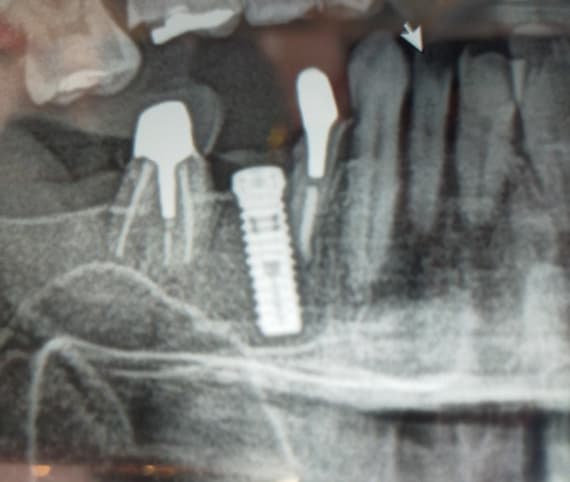
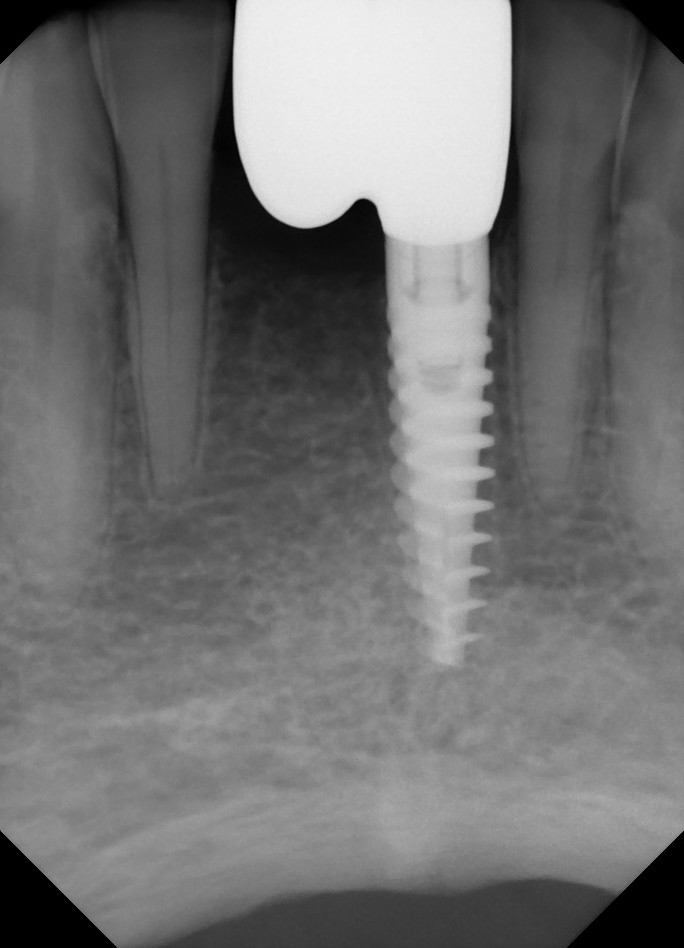
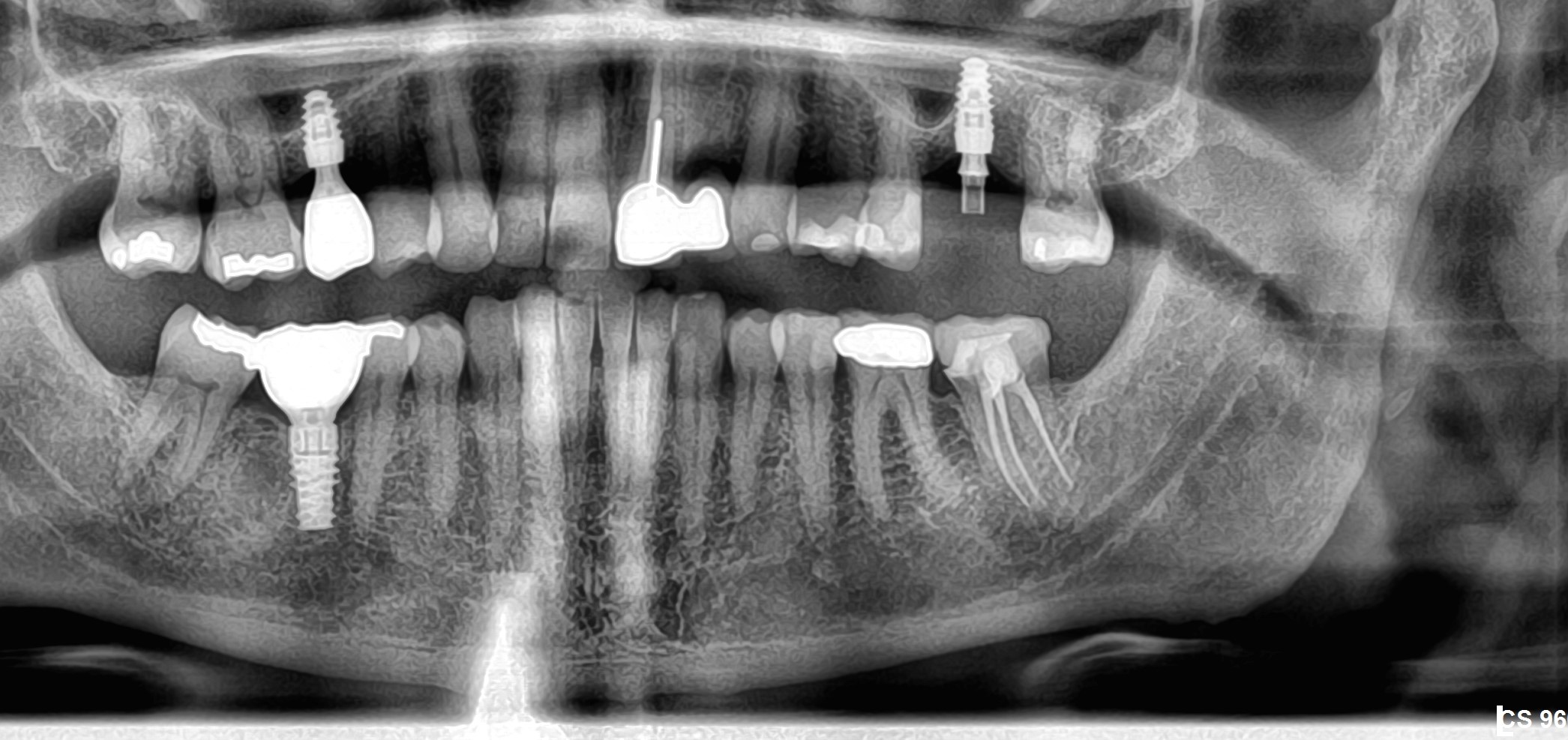
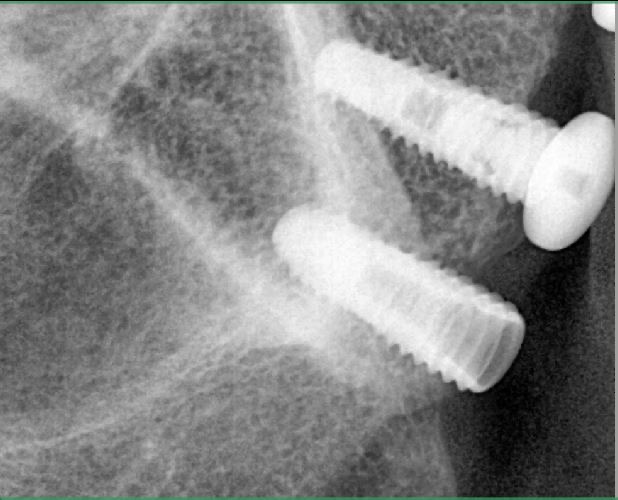
The night of the surgery when I called patient she reported pain, but it sounded typical, particularly because there was a surgical extraction also involved. Only 5-6 days after did she suddenly say, “..and it is still quite numb.” The next day I sent her for a CT. When the CT was delivered to my office. I closed the door, sat down low because of fear of fainting, and my worst fears were realized: What I read as the ceiling of the mandibular canal was the floor. I had placed three dental implants squarely into the mandibular canal.

I found an oral surgeon who saw the films and advised to get them out as soon as possible. I immediately called the patient and she said that besides the total anesthesia of the right lip and chin area, she is having quite a lot of pain in the right incisor and lateral. I told her that “there is probably too much pressure” on the nerve, and she came in and I removed the three dental implants.
That was Friday June 30 (8 days after surgery). It is now a week later, however, her symptoms have not changed. I reassure her that it will return, but that patience is needed. The only thing that has changed is my wildly fluctuating blood pressure, pains, dizziness, nauseousnes!

What do I do now? Should I involve my insurance company at this point, or wait to see if there are changes? Would it be malpractice if I don’t refer her to an oral surgeon now, or, because waiting is the only option now, that would just be pushing her into fear and into antagonism which she doesn’t have yet? Do I need to say the words to her “I, the dentist who you so like and trust, the one who came so well recommended from so many of your friends in this small community, placed dental implants into your nerve and has most probably damaged you for life?”

Please help in any way. Are there any experts I should speak to? Is the pain in the incisors a sign of hope? Is there any way for me to help her? Is there any way out of this horrible mess for me personally without totally losing the trust and love of so many of my long term friends and patients that she is connected with?
Have a question on implant
practice
management. Click Here to send your question to our expert.

Featured Sponsor

Free Daily Email Alert Click Here>>

Get OsseoNews.com Comments delivered daily! Click Here to subscribe.

59 Responses to “ Dental Implant Malpractice Worries? ”

  • satish joshi July 4th, 2006

    Dear Dr. Robert
    I am sorry to hear that 4th July weekend you are passing under such a stress.
    It is possible that your drills have damaged inferior aleolar bundle.I am just suprised that you did not notice excessive bleeding.
    I teach at institute and some times I find residents make mistake in reading fuzzy PAN-X SAME WAY during treatment planning.
    In mandibular 2nd molar, canal is very close and it is not advisable to do immidiate implant plcement as you need to drill apical to socket for stability of implant UNLESS YOU HAVE ACCURATE KNOWLEDGE OF PROXIMITY OF CANAL.
    This incident again stresses the importance of CT scan.
    Any way damage has been done and IN MY OPINION, best thing to do is to consult neurologist(you are already in touch with OS)
    and let him or her decide what is right thing to do instead of you deciding to wait and watch.As far as patient is concerned it is hard to explain such a terrible error.What are you gaining in not notifying your insurance company?It will be better to notify them, so you could have access to proper legal advice IN HANDLING the case.
    Wish you good luck.

  • satish joshi July 4th, 2006

    As far as pain in incisors area is concerened it may due to anastomosis from other side of mandible.
    In your case extraction was involved so it was different story,but in case of implants placement in mandible I never use BLOCK anaesthesia.
    I have learned this from Dr. Norman Cranin of MAXI course long time ago and I still follow it.

  • Robert J. Miller July 4th, 2006

    Dear Robert;
    For the last ten years I have been an expert reviewer for dental malpractice cases in the state of Florida. There are several things you must do immediately. First is to contact your malpractice carrier to report the incident as a POTENTIAL for litigation. They will set up a file for you and assign an investigator. Next, you must collate all of your records. DO NOT add or delete anything within your chart other than describing your post-op care. Hopefully you have included informed consent as a part of your procedures. You may elect to refer to an appropriate specialist but, frankly, it will have little bearing on the initial steps that will be taken. That said, removal of the implants is the most prudent step you can take with the possible use of steroids. There is little else you can do other than letting nature take its course. After caring for your patient the best you can, your focus should be on protecting your well-being. You are not the first nor the last clinician that will be faced with this type of untoward consequence of treatment. With regard to the dysesthesia, it is certainly better than total anaesthesia in that there may be some undamaged fascicles within the nerve bundle. Hopefully there is a capacity to regenerate in this case.

  • Rob Pate, DMD July 4th, 2006

    Did the patient have informed consent, and was parathesia, etc. mentioned? Was there a signed document?
    These are some of the questions your liability co. will ask.

    There are oral surgeons and others doing micro-surgery on mandibular nerve damage, I suggest you contact one and get an opinion quickly, as there are timely matters to be concerned about when repair is necessary. Make sure this Dr. will be your advocate.

    Once you have done what you can, remember that these things happen, and go about living your life and doing your dentistry. “TURN IT OVER”

  • TW July 4th, 2006

    For the benefit of your patient and you, refer the patient to one of the OMF surgeons who are known in the field of nerve injury. A neurologist wouldn’ t be the first person I would refer to. It may be true that little could be done now, but since you are not a specialist in evaluating or treating nerve injuries, referring would be in the best interest of everyone involved.

    An accurate diagnosis is needed for the degree of injury so that a reasonable prognosis could be given to the patient. Simplely reassuring the patient and wait is the wrong thing to do. CT or not is not the most important issue to deal with at this time.

  • Anonymous July 4th, 2006

    You must get a well respected surgeon who deals in nerve injury and microsurgery, and you must do it stat. Just think how badly you would look in court if you ‘decided to let nature take it’s course’.

  • Anonymous July 4th, 2006

    Anytime you “think” that there is a risk of malpractice, first action you must do is to report it and open up a case with your liability carrier. As much as terrible it might feel to you, this is your life and profession. You must lear from your mistakes, take more precautions from now on and lear to protect your patient and yourself better from now on. That does not mean that your intentions were bad, or you did not practice safe dentistry for your patients before. Any procedures we do, we can always do it better in this constantly changing environment.
    Biggest issue here is your guilty feeling, your sense of wrong doing, your sense of failing and loss of respect for yourself. Don’t beat up yourself my friend. I am sure, you have a family to support, employee’s that depend on you for employment. Accidents happen and mistakes happen. You need to go on and place this behind you.
    Professionally..you did the right action by removing implants but this should follow through with a referral to OS and truth about the procedure to the patient. Consult your carrier for advise and more than likely, sooner than later this will create unpleasant situations in your life but that will pass and life will go on.
    More than anything, your family needs you. Good luck.

  • David July 4th, 2006

    I wish you a happy 4th, I know you cannot get this off your mind. I am a younger practitioner and have had 3 “legal events” in my career. 2 were bogus, and one was a real clinical judgement error.

    The main thing to do is be compassionate and honest with your patient. Discuss this directly with her and do apologize for the adverse outcome. Be honest about the probable outcome (not too good). If you are honest, and refer her to excellent specialists, you have done ALL YOU CAN.

    Once your patient calls an attorney, it is completely out of your hands. This is a common malpractice claim and this is exactly what you have malpractice insurance for!. Let your premiums do their work. I know (and you do too), that you do not do this on purpose, or because you were in a hurry or greedy. You were doing what we all do, trying to make a judgement to do the BEST thing for your patient. In hindsight, you would love to have made another choice.

    Just be compassionate, honest, and remember the thousands of patients who worship the dentistry that you do. This patient will probably forgive you. *(the spouse will probably want to sue to get the $$, but you can’t control that…) Best of luck.

    I do all I can to avoid lawsuits, and if you have practiced so long without one, you are doing the same (talking to patients nicely etc.). However, once it is over, try to tell yourself that you cannot control what happens next (only attorneys arguing back and forth). It will take a long time to be “done”, and you need to get some sleep. With heartfelt sympathy, enjoy the 4th- David
    (PS feel free to email and you can call me to discuss further, I hope I can help).

  • Crystal Baxter DMD, MDS July 4th, 2006

    I agree that you should inform your carrier ASAP and refer to a microneurosurgeon. If you email me I can give you some names. I think a neurologist may be called in later, but if a repair can be done, that would be best. I also agree to keep good and accurate records. if you treat the patient kindly and with care, chances are you will not be sued. I review many cases too and it is sually the people who do not refer and blow patients off that are the ones who get sued.

  • Alejandro Berg July 4th, 2006

    I am so sorry for the situation.
    Legally seek advice from an experienced mal praxis specialist, delete nothing, omit nothing and disclose only what he tell you.
    Clinically you are in real trouble, a neurologist of your trust might help you by prescribing her some high concentrates of b complex and some nerve regenerative stimulants in hope that it doesnt come to a total degeneration of the nerve so you wont need a supra specialist that will have to make a nerve graft (it is done in other parts of the body and it has began in the mouth as experiment in some countries)but if the patient has developed a painful disestesia (and it sounds like it)she might be forever in pain and so will you.
    It is my most sincere hope that she recovers.
    The best of luck

  • Anonymous July 4th, 2006

    The Implants MUST BE REMOVED. However, it may not be in your best interest to remove them yourself. (Playing devil’s advocate… what if you have excessive/uncontrollable bleeding issues from the inferior alveolar artery? Can you manage it?) Get in touch with an Oral & Maxillofacial Surgeon ASAP. The surgeon should be one that you have a good working relationship with. If not, find one that will be your advocate during this matter. There is no question that a mistake was made but the fallout can be minimized. The #1 reason people get sued is other doctors saying “he did what to you?!….” A neurologist is not who you need to deal with now. You need to stick with someone who is an expert of the trigeminal nerve and that quite frankly is an OMFS.

  • Anonymous July 4th, 2006

    The Implants MUST BE REMOVED. However, it may not be in your best interest to remove them yourself. (Playing devil’s advocate… what if you have excessive/uncontrollable bleeding issues from the inferior alveolar artery? Can you manage it?) Get in touch with an Oral & Maxillofacial Surgeon ASAP. The surgeon should be one that you have a good working relationship with. If not, find one that will be your advocate during this matter. There is no question that a mistake was made but the fallout can be minimized. The #1 reason people get sued is other doctors saying “he did what to you?!….” A neurologist is not who you need to deal with now. You need to stick with someone who is an expert of the trigeminal nerve and that quite frankly is an OMFS.

  • David Lambert July 4th, 2006

    Sorry to hear about the problem. Couple of thoughts:
    1 What’s done is done
    2 Act in the best interest of your patient and refer to OMS for implant removal. You may only compound your damages if you continue to treat the patient.
    3 REMOVE the word WILL from your vocabulary and replace with SHOULD - as in “sensation SHOULD (not WILL) return”
    4 Never place an implant without appropriate clinical and radiographic documentation. A PA is never “appropriate radiographic documentation”
    5 Never do ANY surgery without appropriate signed informed consent.

    Sorry to hear about your troubles.

    Best

    David

  • Anonymous July 4th, 2006

    I understand many clinicians either do not have CT / Tomo centers available to them, or the pan / PA is thought of as ‘enough’ but I applaud you for using tomo’s as much as you describe - one case without wasn’t the issue. It certainly takes a lot of concentration doing the surgeries and I think your case was just unlucky. It can happen just as easily doing exo’s of deeply impacted 8’s. I am new to surgeries, but my advice is get into another case and get your confidence back up, it is a huge learning curve we all know.

  • robert July 4th, 2006

    Thank you so much Osseonews for posting my letter, and thank you to all the doctors who have responded with professional advise and with so much compassion. Today I will speak with my insurance company as advised. Ufortunately, due to the friendly and community nature of the relationship with most patients in general practice in my area, the vast majority of dentists ignore the advise of the insurance companies, and do not have patient sign any informed consent papers. Treatment just naturally flows from operative, C and B, into surgery if needed. Well, that works for most dentists, and worked for me just fine for 22 years, until now. I did not advise my patient of the dangers, and she signed nothing.

    Is there any proven value in a B vitamin complex? For how long should she take it? She was on steroids(6mg dexamethasone) for 3 days after the original implant placement, and for two days after their removal. Should she continue a lower dose for a longer period to possibly help the damaged nerve or to relieve pain in the incisors? Is antibiotic coverage needed while taking the steroids? I have included my email here drrobert1@walla.com for further information/help from you that osseonews may decide not to include. thank you again.

  • robert July 5th, 2006

    Dr. Robert Miller advised above that referral to a specialist at this time - a move I would prefer to avoid-is (medically and legally?)insignificant. Others have written that it should be done asap.

    I understand that even if nerve microsurgery will be needed, a wait of about 3 months is indicated in order to see if there is natural healing, because the nerve surgery itself leaves a certain degree of damage. Thus how could a specialist help at this point now that the implants are out? Am I amiss medically or legally by putting that off at least for a few more weeks, or until I feel a need coming from the patient that she wants someone else to see her?

  • ruipintocardoso July 5th, 2006

    The parethesia of the lip and chin will almost gone in 2 years we have the Facial and contralateral alveolar nerve. There a study in portugal of nerve regeneration using microsurgery and neuroblastoms, with good rate of success. If you have only a nerve membrane rupture or a swealling of the area if any doctor try to do something you will probably have a permanent damage. I advise you to wait 3 to 6 month to see, the schwan membranes of the nerv need this time to regenerate. I have 2 cases that heal completly in 2 and 4 month.

  • Steve July 5th, 2006

    The advice that the Facial Nerve or nerve fibers from the contralateral alveolar nerve will some how cause a return of function to the damaged Inferior Alveolar Nerve is very bad advice. Anatomically and neurophysiologically, this can not happen. The Facial Nerve will not provide any senory function in the area, it controls muscle movement. The contralateral Inferior Alveolar Nerve may have a slight about of crossover function, but not enough to provide normal feeling to the affected side.

    It is in the patient’s interest to see an Oral & Maxillofacial Surgeon experienced in nerve repair surgery. If surgery is indicated, the earlier it is done, the better chance the patient has for a good result.

  • Anonymous July 5th, 2006

    One question that will probably surface is what would a reasonable dentist have considered absoltuely essential for diagnosis and tratment planning? A panoramic radiograph is superior to a periapical radiograph. Is the panoramic radiograph sufficent in cases like this involving mandibular posterior teeth?

  • David Lambert July 5th, 2006

    Am using a Treo 600 here so pls excuse broken wording…

    1 Dexamethasone actually great idea initially to help deal w “compartment syndrome” like effect from nerve injury. Never heard anything about B Complex vits…
    2 Concur w decision to refer to OMS. As an OMS myself it makes good sense to refer management to person who has experience in proper assessment. Furthermore if litigation occurs, you can bet a non-referral will be called into question. Kudos.
    3 PA film is NEVER adequate. If you can’t obtain proper imaging, DON’T DO SURGERY!!!!!
    4 Pan will give you adequate info MOST of time. Advanced imaging only appropriate when panoramic info is inadequate or for osseous volume determinations, multiple implant placement, concerns foe pathology, angulation isssues etc. I probably refer less than 5 cases per year for CT imaging and IMHO is overused / a crutch.
    5 Nerve recovery is variable and to certain degree age dependant. Problem here is you really don’t know what type of injury you have - it could be a “simple” or “complex” compression nerve injury or a partial transection injury. Compression injuries don’t always do well. Neither do partial transections - here you could get neuroma formation. If nerve was slightly squeezed (compression) that will probably recover. If segmnt of cortex was infractured this will require decompression and MAY never recover. Burning pain pt experiencing MAY represent early recovery but may also represent dysesthesia - this why referral to determine is so necessary. If impression is for recovery then proper dispensing of “tincture of time” is appropriate (approx 3 mo). If not and clinical/rad info suggests otherwise I would probably explore earlier rather than later. All the more reason for referral is important and appropriate.

    best

    DML

  • David Lambert July 5th, 2006

    Contrary to other opinions there is NO guarantee there will EVER be complete nerve recovery. If anything it will probably be delayed (6 mo or more) and may be incomplete. How things progress is largely determined by the extent of injury - which none of us have the ability to determine.

    One of the big mistakes made (IMHO) when a misadventure is referred is for referring doc to continue to try to steer the case after referral. My best advise to you and others is to turn over the drivers seat and stand on the sidelines - support your patient after referral but remember your continued involvement will only make resolving matters more difficult for your specialist to handle.

    Best

    DML

  • satish joshi July 5th, 2006

    I can not believe that in this litigious society still there are communities like yours where dentists do not bother to take patient’s consent.May be I have practiced my entire carrier in New York city.
    Consent or no consent your case is very clear.
    Best thing for you to keep very friendly cordial relations with your patient and treat her like you treat your family member.I am sure you would not wait if same thing happens to your loved one,I bet you will run to best specialist available.
    So do same thing for your patient and she may reciprocate same way.
    In any case what ever has happened, has happened.It is past.worry about present.
    If you try to be honest and explained to other patints in your community they will understand.Accidents do occur.
    You must not loose your confidence.
    I do know one case just like yours and dentist did loose case but so what.Why do we pay for liability insurance anyway.Just take it easy and concentrate on the treatment of other patients or you may make error of different kind.
    Good luck again.

  • Anonymous July 5th, 2006

    from an OMS - you’ve gotten very good advice and have taken most of it - now dO the rest AND REFER THE PATIENT TO A LOCAL OMS -you are now (by your own admission)unequipped to manage this complication - the local OMS will then (if indicated) refer it to the nearest OMS who deals w/ nerve injuries - this referral is the best you can do at this point to protect yourself from
    “failure to practice to the standard of care”

  • Anonymous July 5th, 2006

    You have my sympathy for the predicament you find yourself in. While some have said that a CT would have been helpful, I think that the problem resulted from two issues: You obviously used mandibular anesthesia to surgically remove the teeth. It’s always beter to use infiltration anethesia when placing posterior implants. In that way when you encroach on the mandibular canal, the patient will feel it. I think it is always a good idea to take measurement X-rays when placing implants so that you can check on the direction and the proximity of the measurement post to the mandibular canal. Unfortunately, sometimes when you try to do a patient a favor (trying to avoid a second surgery) you hurt yourself more.
    Stano

  • Viva Portugal July 5th, 2006

    Hi there,

    I will not speak about the legal point of view, I will speak about the medical conduct after such an injury…

    Loss of sensation could be permenant or temorary,, this depends on what kind of nerve injury we are speaking about, for instance, if you have a compressed nerve this means nerve recovery is fully expected within 14 days, if you have a partial nerve cut, then you have to expect 50-100% recovery within 3-6 months and for sure a complete nerve cut reduces expectations to 0% recovery.

    If this happens with me, I will test sensation of the chin every 3 days with pin prick and touching the zone as well to evaluate any potential improvment making documented charts and taking photos everytime to compare and I will perscribe B Complex Vit (though this is debatable!) and dexomethasone locally.

    A CT scan might be usefull to check the integrity of the nerve canal bony wall and evaluate what kind of injury you have, i.e crushed or compressed .. look on the relatively densed bone that surrounds the nerve usually !

    I hope I was of a good help for you..

  • Harry July 5th, 2006

    Hate that this has occurred for both you and patient. Bad outcomes always remind me of quote ” Minor surgery is what they do on someone else.” My one of my front desk personel went in for catarct surgery; lens and catarct did not seperate lens became was detached. She has now lost sight in eye at least for now. Please rember even though it is not good it could be worse. I would patient on alpha lopic acid at least 1200mg per day It helps with nerve regeneration in diabetics. Used in Europe for this reason.

  • Anonymous July 6th, 2006

    For those who have written in recommending not using an Inferior Alveolar Block for this procedure how do you achieve adequate anesthesia toextract the teeth and place the implants?

  • Anonymous July 6th, 2006

    from an OMS (again)- a valid discussion of the “what ifs” to avoid or minimize the risk of this complication and your liability for it, while worthwhile, is, to my mind, past the point of your original post. Please forgive me for not ’sugar-coating’ the following:

    From a purely medical standpoint, its possible (tho there is no “magic bullet”) a positive resolution of this outcome may be enhanced by appropriate medical therapy, (steroids, neurotinin, etc.) delivered by a doctor familiar w/ these drugs and the latest Tx.
    From a medico-legal standpoint, complete resolution of this injury at this point, is the only thing that will absolutely save you from a lawsuit - I think you would want to do everything you could to enhance this possibility. Again, from a medico-legal standpoint, the next appropriate thing to do is send the pt. along to the
    doctor with more experience and training in these matters - I think failure to do that in a timely fashion would make you look terrible in a deposition or trial.
    From a moral, professional and practice management standpoint, while at the moment you may be more psychologically comfortable ‘managing’ this complication and the pt.’s reactions to it, in the end, if things go south, your failure to refer will be seen as an effort to protect yourself, not the pt. If things resolve, then again, appropriate referral will be seen only as a positive.

    If this were my case (I’m a teaching OMS w/ 30 yrs experience) I probably would have referred the pt. by now.

  • satish joshi July 6th, 2006

    If you have read my comment with proper attention, It states that robert’s case is different as it invoved extraction.Recommendation for infilteration is only for implant placement surgery not for EXTRACTION.

  • Anonymous July 7th, 2006

    Hi ! I experienced the same last year. The patient came with an Xray done in another clinic. I took the same precautions. Unfortunately the controlXray showed that the implants were in teh canal. I adviced the pacient to remove the implants but he didn’t agree. He had only partial numbness. After 10 days he presented severe pain in the affected area. He vent to an other clinic where they removed the implants. Pain dissapeard but numbness remained. For the last 10 month I haven’t heard anything from the patient. But since than I lost seflconfidence. I still do implants but I take am more precaut.
    Doctors should have the possibility to get psicholgic support in such cases. In most cases there are left alone and get no support. But don’t forget mistakes brings always good solutions.

  • Rami July 7th, 2006

    After reading all the advices from supporters, i do not have anything else to say to you other than to wish you all the luck, and to remind you that we all should consider our patients like members of the family. What would I do if my wife or sister had the same problem as your patient. I think that you should let her know about her exact situation and let her feel how concerened you will be to let her out of this situation with minimal trauma.
    THIS IS AN ACCIDENT. You and she shouldn’t be here. But It HAPPENED. Let it take the way and procedures it should take and do continue with your life as confident as you where before.
    Concerning pre-op analysis and diagnosis, i do think that PA are adequate and reliable but not for a half segment. concerning what to do now i am almost sure that the patient will not fully recover, that she will accept the fact that it was a mistake that she will have to live with, but she will also do whatever it will take to gain some more money. So it is not in your hands anymore.
    I had a patient once who suffered from a mandibular nerve injury after tooth extraction, i feel responsible because i was the one who refered him to the surgeon , and i was the one who was giving him the time to see him on weekly bases after the extraction.
    Today and after 10 years he still feels numb but he still is my patient and i am the one today who is taking care of his oral health. We still are friends because i was always on his side and gave him all the time he needed. So there is a big chance to still gain the confidence of this patient if you know how to deal in a psychological and friendly approach.

    ALL THE LUCK.

  • Anonymous July 7th, 2006

    If this goes to peer-review or trial, one crucial question will be whtether or not the panoramic radiographic was sufficient for treatment planning. This may be akin to the endodontists who claim that root canal treatment should only be done under the microscope. Are many dentists performing this kind of procedure with panoramic radiographs or is the standard of care now CT scans?

  • Jeffery B. Wheaton DDS,MD July 9th, 2006

    I’m an OMS in private practice and I just have a couple of points:
    1. CT’s are NOT the standard of care for preop implant treatment planning. If they were then even less patients could benefit from implant therapy instead of the millions more who should be considering implants. At least a panorex for posterior mandibular implants is indicated.
    2. I agree with others who have stated that referral to an OMS NOW is important. Most of us, myself included, do not do microneurosurgical repair of the IAN, but we KNOW WHO DOES! We also are qualified to follow initially then refer for surgical repair if indicated. A neurologist is useless, actually potentially may make matters more complicated.
    3.Finally, I also agree with others who have stated that following the patient, being honest, showing concern, and getting someone else on board to help in a timely manner will all help from a medico-legal standpoint.
    Unfortunately, I have learned that anyone can sue you for anything, but if you’ve done these things and it does go to court you will rightly appear to be a concerned doctor that did all you could. What burns doctors is when we do things that appear to be self-serving, ie covering up, greedy intentions, etc..

    Best of Luck.

  • dr.hajiheshmati July 9th, 2006

    This is a terrible accident that simply it should be avoided by this formula:

    L = H/M -C -S that L is true

    length of implant,H is radiographic height from crest to superior border of inferior dental canal,M is the magnification of the radiographic image,c is the useless crest that should be removed that is about 2 mm ,and S is the safety area that is 2 milimeter.so if the radiografic height is 14mm and the magnification is 25% one should calculate by using this formula:

    L= 14/5/4 -2 -2= 14*4/5 -4 =

    11.2-4=7.2 is the safe lenght of implant for this area.

  • Jeffrey Kopman July 11th, 2006

    Hello All,
    I feel absoultely terrible for both you and your patient. As has been stated already, accidents do happen and doctors while expected to be perfect are not!!
    On a clinical note, I believe the statement that a PA is not adequate is incorrect. The reality is that a PA is more accurate and less distorted than a pan. In situations where a PA does not clearly show the information necessary and where there is questions regarding width, a CT scan is absolutely indicated. A panorex will add nothing of value.
    I wish you only the best. Please remember, be kind to your patients’ and they will likely do the same for you. No malpractice course can teach that. Either you are or your not. Even if you are kind, you will occasionally run into a situation where your skills and better judgement failed you and this may be complicated by a less than kind patient. This is why they invented malpractice insurance. Just keep paying your dues, accept responsibility, try your hardest, and learn from the situation so others can benefit from your skills.

    Jeff

  • Jeffery B. Wheaton DDS,MD July 11th, 2006

    PA’s do not typically show the extent of the IAN canals as well as a Pano. On my digital Pano using a 5mm marker to calibrate I can measure from the crest of the bone to the top of the canal within hundreths of a mm. Of course, I still usually err on the consevative side and allow a little extra room. I’ve had numb lips from wisdom teeth but NEVER from implant placement.
    I think its fine if we each have our own methods as long as they work reliably in our hands, but PLEASE do not say that a panorex will add nothing of value.
    I bet if you poll most surgeons the vast majority use Pano’s, and clinical judgement. CT’s have their role in unusual circumstances but I think the people pushing them are the equipment makers and/or the docs who have invested in these incredibly expensive machines.

  • Anonymous July 12th, 2006

    from an OMS again - in previous posts in this thread I have stayed away from the “what ifs” and the “how to’s”, as it seemed the posters questions and problems were past that point - howver, as the issue of what is the appropriate pre-op x-ray study keeps coming up, I thought i’d thro in my $.02, as one who has acted as a expert in these medico-legal matters.
    My stated position is simple -there is no ‘one’ x-ray study that is the ’standard of care’- my position is simply that the standard of care for a pre-op implant x-ray study must provide all the necessary inforamtion that the clinician willneed to place the implant!
    In some cases, a periapical x-ray will suffice - for instance, a 1st molar where the IAF canal can be visualized -other cases will demand other studies.

    I would be interested to know from Robert, if possible, what the current status of this pt is as wellas what ultmately happens here…

  • Jeffrey Kopman July 12th, 2006

    I agree with you 100% that many different roads to the same place and clinical judgement is invaluable. However, how does the digital pano tell you when the first 4 mm of bone are only 2mm wide and then expands to a nice ridge. Am I wrong in saying that the pan can be deceiving????

  • Anonymous July 12th, 2006

    “Am I wrong in saying that the pan can be deceiving?”

    from an OMS - Sure, any x-ray can be deceiving - one would hope that the xray would be correlated with the clinical appearance - for example, it was noted sometime ago (somewhere on this board): “how do you know how long(deep) the lingual cortex is on the posterior mandible if you don’t do a CT scan?”
    Well, I just put my finger on it and slide it down!
    One can similarly note other relevant external anatomy (for example, I find the mental foramen best by palpation). I also have a calipers with curved beaks that allows me to punch thru the the soft tissue and measure bone width, esp. worthwhile on the questionable crest.
    I do a CT on about 10% of my patients - as a rule, if I need a study (any study), I do it - no ‘guessing’ if you don’t have to - but I don’t always feel I need a CT. Nothing wrong, i guess,w/ taking one on every pt. (except maybe re: $$, radiation and pt. resistance)
    I agree w/ Dr. Wheaton _ I think most surgeons probably use a Panorex most of the time - sometimes a PA is needed as well as a Pano..

  • Anonymous July 12th, 2006

    I don’t think anyone uses a pano to judge the width of a ridge. I think our surgeon friend was confining the discussion to the vertical dimension, since that is what we are really worried about. He gave very sound, logical, common-sense advice, without any bias one way or another. Ya better know how much room you’ve got one way or another! Pan, pa, CT are all just as accurate in the vertical dimension once your distortion has been determined, if you can clearly visualize the canal. I am confused with what happened pre-op? Did you have a film showing the canal or did you just start drilling. Was there mismeasurement or no measurement? I am in no way judging, I would just like to know the circumstances-we all make mistakes and I commend you for the open discussion so we can all learn something.

  • Albert Hall July 13th, 2006

    Next time do not save in health and prognose.
    And we all have done errors like you, do not worry.

  • Anonymous July 16th, 2006

    A periapical should extend at least two mm past the apex of the tooth. Lets say the roots came out intact after the sx exo..if they are 7mm long..one would not place a 12mm implant. If the roof of the canal is not visible in the PA, don’t place the implants. After Exo place pilot in the socket and take an film..you may decide to graft?. Do people in the community do sx in the hospital without a consent?… time to regroup and move forward..take care of your patients the best way you can..the way you would want to be treated…good luck

  • Dr Pedro Peña July 18th, 2006

    First of all good luck Robert, you will need it.
    I think that we all learn from our mistakes and this case give us the oportunity to discuss about posterior postextraction immediate implants.
    But I will start thinking about simple things as do we need a TC for every case or wich anesthesia technique should I use.
    My personal opinion is NEVER do immediate postextraction implants in the posterior mandible, there is no need for them. I ALLWAYS do block anesthesia plus infiltrative becouse I take my decissions based on an reliable X ray (ie TC) nor panorex nor periapical. If a nerve injury occur and it is confirmed via TC first extract the implant, second put your patient under corticoestheroids and Ibuprofen therapy for 3 days plus Vit B for 6 months. If only compression had occur sensitivity will return within a 6 months period. After that lttle changes will occur.
    Posterior mandible is the most difficult area to treat with implants in the mouth.
    There is no microsurgical treatment of an intracanal injury and no way that a Neurologist will improve alveolar nerve sensitivity.
    If you send the patient to an OMS first talk with him and explain the circumstances, again there is nothing he can do for the alveolar nerve.
    Talk with your insurance experts. Inform them that this complication happened, take care of your patient as she was your sister, pray if you are catholic and be aware of future implant complications with the proper preop X Ray Study (ie TC).
    Good luck again.

  • David Levitt July 25th, 2006

    I am an expert reviewer for malpractice cases involving implants. I have been involved with cases in California, Nevada, and Arizona and have given depositions and/or testified in numerous parasthesia cases. The advice you have been given regarding referral is very good. “Failure to refer in a timely fashion” is indefensible. In your case “timely fashion” means NOW. Although you are not required to report this to your carrier at this point, there is no harm in doing so. A CT scan is not the standard of care. Finally, I have done at least 5000 implants and I always give a block. Using the logic that only an infiltration should be given, one must also conclude that no mandibular implants should be done under general anesthesia. What do the OMS’s think of that?

  • Clark Brown August 16th, 2006

    You have gotten some excellent advice. I, too, have been an expert for the State of Florida and have been an expert in several implant malpractice cases. Much of what I will add has already been said. By this time, you should have gotten 100% of your records together and made several copies. Inform your malpractice carrier of a potential suit and then wait until something materializes. I would make a referral to an oral surgeon. Beyond that, be honest and truthful. You don’t have to volunteer more information than is needed and should generally keep your mouth shut. However, you need to provide care for your patient. Be sympathetic to their condition and try your best to help them - until they do not want your help any further.

    If you do any significant amount of surgery, you will have a patient get paresthesia. Sometimes it is unexpected and unavoidable and other times it is avoidable. In either case, a certain percentage of patients will file suit against the dentist - whether it was avoidable or not and without regard for whether the standard of care was met or not. People have come to expect 100% success and satisfaction all the time. If this doesn’t happen then it’s someone’s fault other then their own or circumstances related to their case. Attorneys will take the case knowing that the majority will settle. The attorney gets 40% (plus costs) if it settles and 50% (plus costs) it if goes to trial and they win. If they file enough law suits, they get rich. Most of the time a case settles because the dollar amount to settle is lower than the cost of litigation (including your time away from practice and mental stress). There are risks of going to trial. The people who know the least about the case are the jury. So it becomes a matter of who is the most believable and who the jury want to believe. It’s not always the plaintiff, either. If it comes to a law suit, let your attorney handle it and go about your business of helping people. You have insurance and attorneys. Your reputation will not be harmed as you think it might. As long as you did your best under the circumstances and learned from the experience, you are still a good dentist. All you can do - is do your best under the circumstances.

  • Anonymous September 24th, 2006

    I am needing council and happened upon this. To read a doctor feeling for his error, along w/ of course, normal/expected fear of legal consequence , has me writing. i do not want to be a simuliar situation neither medically nor legally. i reside in los angeles, 43, 6ft thin fem and desperately need a trusted referal or questions to ask so i don’t ruin my life as well.
    I have soft enamel and atypically large nerves/pulp which resulted in 4 healthy teeth requiring root canals after being shaved too close to the nerve while being prepped for veneers 18yrs ago. In April I fell/hit front tooth which had root canal, broke off at bone. Had bone grafting in prep for an implant.
    5 months later..informed after cat scan, since nerve bundle for the upper palate is atypically large/jaw naturally narrow where a post would normally be placed for the missing tooth, am not a candidate for an implant, and only option is a bridge. (Note: I asked perio at 1st appoint if he coulld tell by a standard simple xray if i had enough bone and was a candidate for an implant.- he said w/o a doubt yes.) after bone grafting told me to return in 4 mos- at that time he looked at xray and said come back in a mos- where he looked at same previos xray and sent me for a cat scan- so another month wasted.
    the dds is excited about the lava bridge aesthetic pre/post pix and failed to address any of the contraindications, am guessing cause they feel i don’t have any options..but also refers to my other tooth having a crown when it has a veneer- obviously I am concrned.
    My gums have already receded from the extraction. I fear many things pertaining to a bridge-
    1. I’ll need root canals on the other teeth involved that they prep resulting in all dead teeth in front, because they will have to remove the back of the teeth which are in tact and healthy. Note: my roots are secure w/o diease and it was difficult for the perio to extract the secure root of the broken tooth.
    2. High possibility of bone loss, possibility of these prepped teeth breaking, increased and probability the prepped teeth if root canals, will fall out as I age . they will also all turn greyexcept the pontif/ (?)floater/fake tooth.
    3.that with the soft enamel and compromise of tooth structure the bridge will not be able to hold strong/secure, let alone be able to bite into any food. (health/weight loss is a concern being naturally ectomorph now 6ft 118lbs- lost 10 lbs can’t gain back.)
    4. I have MVP (heart condition) and fear decay/bacteria/infection w/ a bridge.
    5. more gum receding from the trauma of a bridge prep/placement.,aiding to the above.
    6.. the expense/down time of a bridge every 5 yrs or so..or daily concern of the fragile state of potential for it breaking my teeth/falling off.

    I am lost, alone and unfamiliar w/dental field and really need to trust someone.. please, if you can offer any suggestions/advise/referals/warnings..
    Thank you for reading

  • Anonymous September 25th, 2006

    I wish Doctors would spend more of their energy working to resolve mistakes/errors than wasting their energy on worrying about someone sueing…. That is the problem with the world today too many people so eager to sue.

  • marie norell December 6th, 2006

    Requesting advice: I’m a 48y/o female who had implants performed on teeth #’s 13, 14, and 15 in January ‘05 after a very painful, lengthy sinus lift. Ever since then, i experience left-sided numbness and discomfort radiating to the lower eye socket and scalp. A neuro ophthalmologist suggested infra-orbital nerve damage.

    The surgery took place in an academic center, and i had not signed consent for any surgical procedure/ intervention for probably 5 years! I only agreed upon the sinus lift when the clinic director came to check on his oral surgery fellow who was already in the process of extracting teeth for partial. Director talked me into having implants when i had 2-3 mg clonazepam in me! Note: I had lengthy and detailed discussion with oral surgeon the day before and agreed upon extractions in prep for partial. I had expressed hesitation for sinus lift and implants on numerous occasions, as 3 of the 4 teeth (he forgot to extract 12 with first series) were endo - #15 twice.

    Ok - so i could never sue as i’m an academic research fellow and fully understand the ramifications of a law suit in a young practitioner’s life. However, I live in constant pain, including an unrelated pain after the sinus interface was perforated upon placing implant in 12.

    If this happened in your practice, how would you treat and/or advise your patient?

    On a related note: Please provide detailed informed consent to your patients at all times. Protect yourself.

  • Dr. Mehdi Jafari December 23rd, 2006

    Hi,surely the nerve has been damaged and needs a nerve graft or a conduit reanastamosis via lateral cortex osteotomy ASAP.

  • shahira le blanc February 5th, 2007

    numbness in the right lip and the right chin and pain in the right incisor/lateral caused by pressure on the nerve.

    Hi, I m French Cancadian, 48 years old and came to india on Dec 27, 2006 to have some dental work done,…implants..

    On the the Wednesday 24 of January 2007 I had an panoramic RX, evaluation and treatment plan done.
    Right side
    KOS immediate loading implant 43,44
    post 34
    ceramic crown it 45

    left side
    Blade implant
    ceramic bridge 34-37

    sedation

    January Thursday 25-01-07 p.m. I had complete sedation + local anesthesia,+ treatment done see above From 2:30 to

    Not too much pain after either the following day until…

    Friday 26-01-07

    Impression done the pressure put was giving excrutiating pain, I told her but seems to think that she needs to push harder, I had many impression done before and it never has been painful. It has been really hard to take it off and too much pain.

    The disconfort started after the impression slowlly going toward more pressure and pain

    Samedi 27-01-07

    right lip and right chin numbness + pain I thought that i was starting to feel the freezing after the sedation and that the pain was coming from the chirurgy. I started to take pain killer and the antibiotic, and antiameaba

    dimanche 28-01-07

    pressure and pain and numbess all day i continued the medecine

    Lundi 29-01-07

    pressure, pain, numbness ……..

    Tuesday 30-01-07

    Told on the phone to the dentist that it was feeling frozen and that it was painful .I will see him tomorrow

    Wednesday 31-01-07 saw the dentist in the morning
    and he locally froze me and took off some of the pressure by moving the implant. I felt a pressure relief. I started to receive injection 2x day for anti inflamation until Friday 2-01-07

    Thursday 1-02-07 p.m. I told him that each time I eat a banana it seems to become more numb, he decided to change the loaded implant 12mm for a 10 mm regular implant.

    Friday 02-02-07 he took more impression
    and Saturday and Sunday I had more pain I had to take more painkiller. On Sunday i started to take complex b…………

    Can you guide me what should i do……I was supposed to leave India on February 12, 07 I extended my ticket to march 1-07

    Should i see a OMS
    should I take dexamethatone…alpha lopic acid

    shahira

  • Dr. Mehdi Jafari February 5th, 2007

    Dear Shahira,surely you should call on the OMFS.He/she will immediatetly decompress your nerve before it is too late and nerve has gone through a degeneration process causing by pressure/ischemia/anoxia.Don’t hesitate to visit a surgeon sil vou plait.

  • Dr Vijayalakshmi April 15th, 2007

    Dear Shahira,
    Just saw your post today.
    This is definitely not going the right way. Yes, an OMFS is a good idea. One or more of the implants is probably needing to be removed immediately. Do let us know how you are now.
    viji

  • Joe Como OMS April 16th, 2007

    This is an unfortunate event. The important questions you need to answer is
    1- Did you have proper consent ( written)
    2- Did you document in your chart that you discussed with the patient the Description of the procedure, the Needs, Benefits, Risks , Alternatives, and Consquences of not doing the procedure, Questions were asked and answered and the patient states she understands and agrees to treatment.
    3-You can be honest with your patient without sounding like you did something incorrect.
    4- The correct referral is to a microvascular neurosurgeon ( usually an OMS who specialized in this)
    5-Map out the parathesia
    This has happened to me in 1999,even using a panorex. The implants were in for 46 hours prior to removal. The implants may have compressed the nerve causing the parathesia, remember the nerve is in an enclosed canal so there is a good chance of resolution,
    ( if you need a sheetfor the mapping, do not hesistate to call 516 461-6818
    Sincerely J. Como

  • Dr. Gerald Rudick, Montreal April 17th, 2007

    Hindsight is a wonderful thing.

    If we could only see the end before we start at the beginning, it would be wonderful.

    Accidents do happen to the best of us. To err is to be human. A caring thoughtful doctor,Robert, the person who posted this problem and who is so consumed by this event must be encouraged and not placed in a situation where he berates himself for an unfortunate accident.

    In Montreal, we have a street named after Dr. Wilder Penfield, who was a brilliant neurosurgeon who had a career span from the early forties through the seventies. While his intensions were always the best, many of his patients ended up a lot worse off after he operated on them. He is still honored, and rightfully so, future doctors have learned from his pioneering spirit.

    Decent people are usually understanding, whether or not they signed consent forms. The fact that the good doctor did everything in his power to help the patient, does and will count in his favor, in an honorable court, should it ever proceed to this.

    To inform the insurance company, is the correct thing to do. To refer to a specialist shows signs of caring and not an attempt to cover up.

    Rememember, the biggest specialists have their share of failure and disappointments.

    Let us hope that the patient in this case is understanding; decided to undergo a risky procedure whether or not he signed a consent form, and unfortunately bad things can happen to good people.

    Let us all learn from the experience

    Gerald Rudick dds Montreal

  • Dr. Bill Woods August 11th, 2007

    Get to as neurovascular repair surgeon. Dr Roger Meyer in Atlanta. He has done many many repairsand grafts. Take the implants out. Monitor the patient weekly with 2 point discrimination testing and map out the paraesthesia. Do NOT sit on this case as originally presented. Get a CT and if yoou have SImplant or something similar or someone you know has it, get a reformated scan and see what is on it. Get to the nerve repair specialist NOW. WHoever the poster that said wait 3-6 months, that is pure crap and in MY personal and sole estimation a perscription for hell for everyone. This is a nerve injury and no Vitamin B therapy or some other medicine will work.Implants out. Call the carrier. Call Dr. Meyer. Do it MONDAY. I dont have the phone number with me now but I can get it for you. Hell, if your arent sure you need to do this now, when will you be? Id have my patient in MY car on I20 headed eastbound. Bill

  • melinda October 10th, 2007

    hi I am reading all the posts because i am have numbness in my left lower lip and chin after having 2 implants on any area(lower back left) that had been without 2 teeth for 20 years had a bridge, tooth bridge connected to broke down had a partial until i could afford implants. Implants were placed doc ordered c scan said it was okay put in posts 7mm then i had lip/chin lower left numbness after one week went back in wheh he pulled the implant out i had 3 shocks through my face(he said you are not going to like me for a few seconds) when he lifted the implant out he went to place a 5mm and i felt sensation so he pulled the 5 out closed it and i am going back the 15th to attempt to put the 5mm back in. meanwhile i still have the numbness have felt tingling sensation but nothing really all numb. time period is Setp. 26th original surgery, Oct 3 remove implant. Oct 15th reinstall implant. i still am totally numb in referred areas with no pain. Back implant still in place he lifted that one up to see if i felt anything when he removed the other and i did not so he left it. Very good doctor i trust him my question is do
    i go to a oms right now on my own or what. I did sign the form did not sign the second form they did the removal anyway. i do not want to wait any longer. the 15th seems a long time away. in his notes to my insurance company he says : we had a cat scan and it appeared the medullary bone was not dense however in doing the procedure the cortical bone was thick. the initial prep #19 went through the cortex on the lingual aspect. i then redireted it towards the facial. i also had a osseous graft.implants were placed about 1-2 mm above the crest in order to be sure that they wer easily accesible in light of bone graft.
    help doc on vacation all week until my next appt the 15th oct.

  • James Gledhill October 11th, 2007

    Hi,

    sorry to be negative here but I am a “victim” of one of these accidents. You talk about it like you dropped a light bulb on the concrete patio.

    First and foremost here is this poor sod who came in to get some implants done (and I bet it cost a pretty penny too hey ? ) and look where they ended up because of it.

    Sorry again to be negative but I hope they reap as much compensation from you as is physically possible. I just hope that you learn from your mistake, be a man and admit it quickly and sort it out.

    Th
    James

  • Dee October 21st, 2007

    On Aug 13 I had 4 lower implants placed and I horrible facial swelling with paralysis and now have TMJ so bad I cannot even eat. After some of the swelling went down I had facial lip drop. It has been 2 months now and I still have lip drop with some facial numbness. My doctors advice is to eat soft foods and take advil. I just don’t know what to do!! I look like I have had a stroke. I just need some guidance>

  • Dr Raad Shahaltough June 8th, 2008

    I feel bad for you Doctor and now after 2 years of the incidence can you please update us of your situation and what happened to the patient ,did she regain sensation or was it permenat ,was there any legal actions taken ?
    I had a situation similar to yours after extraction of a wisdom and the 3 weeks of patients numbness were 3 of my worst weeks ,but thanks to God the patients situation started to resolve gradualy and it appeared that all she had was nerve neurapraxia and not complete nerve cut


Leave a Comment

Note: Please refrain from ad hominem attacks, and promotional comments. Outside links are not permitted in comments. Though we require an email to route questionable comments to our editors, we will NEVER publish your email or use it for any other purpose. Thank you for your understanding.

Note: At times your comment may not appear on the website immediately, because it has been sent to our editors for approval. Once approved, we will publish the comment. There is NO need to resubmit your comment, if it does not appear on the website immediately.

Fri July 04 2008

FREE Weekly Email

Keep current on the latest dental implant discussions! It's Free!

>>Click Here to Subscribe to OsseoNews.com Now!