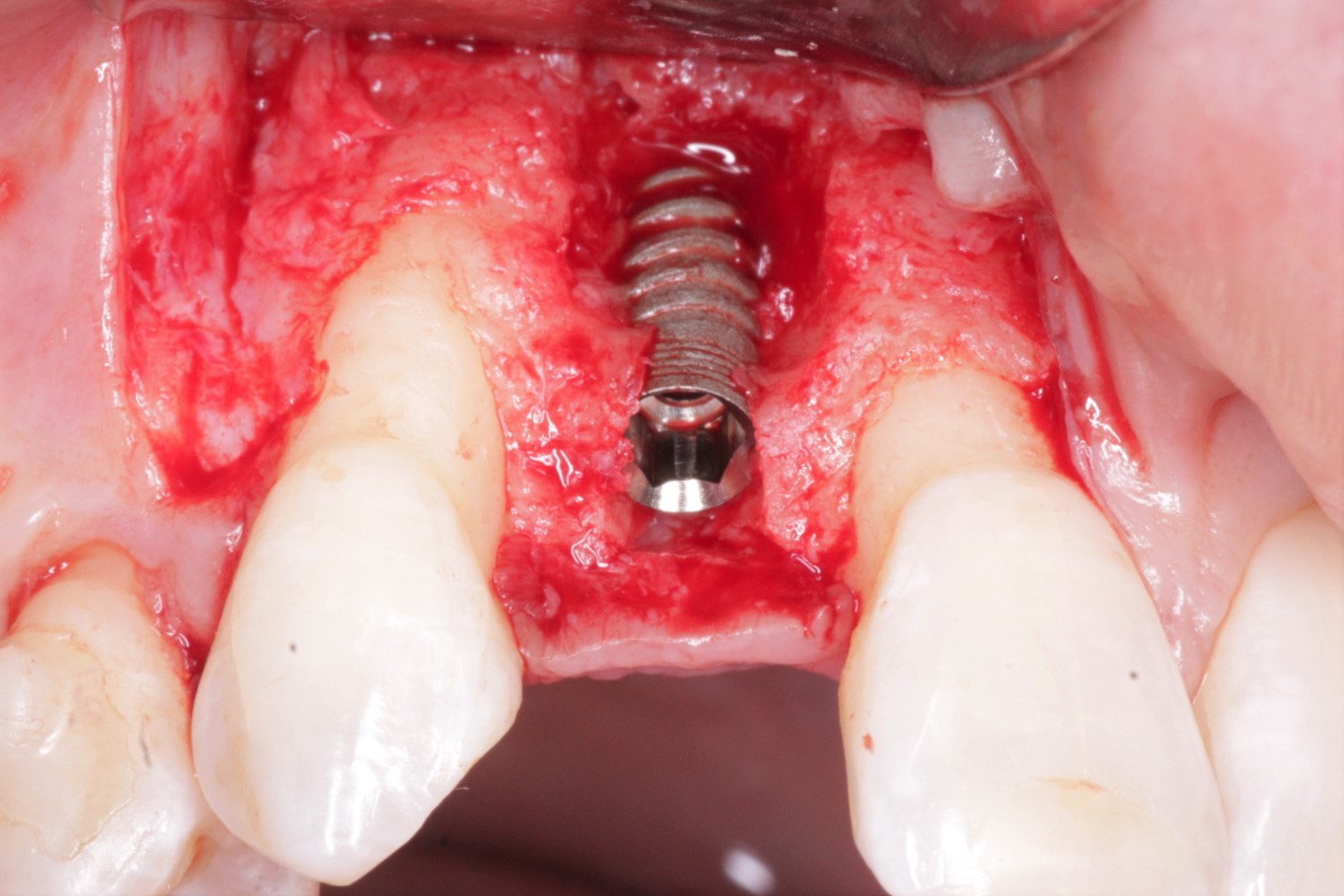
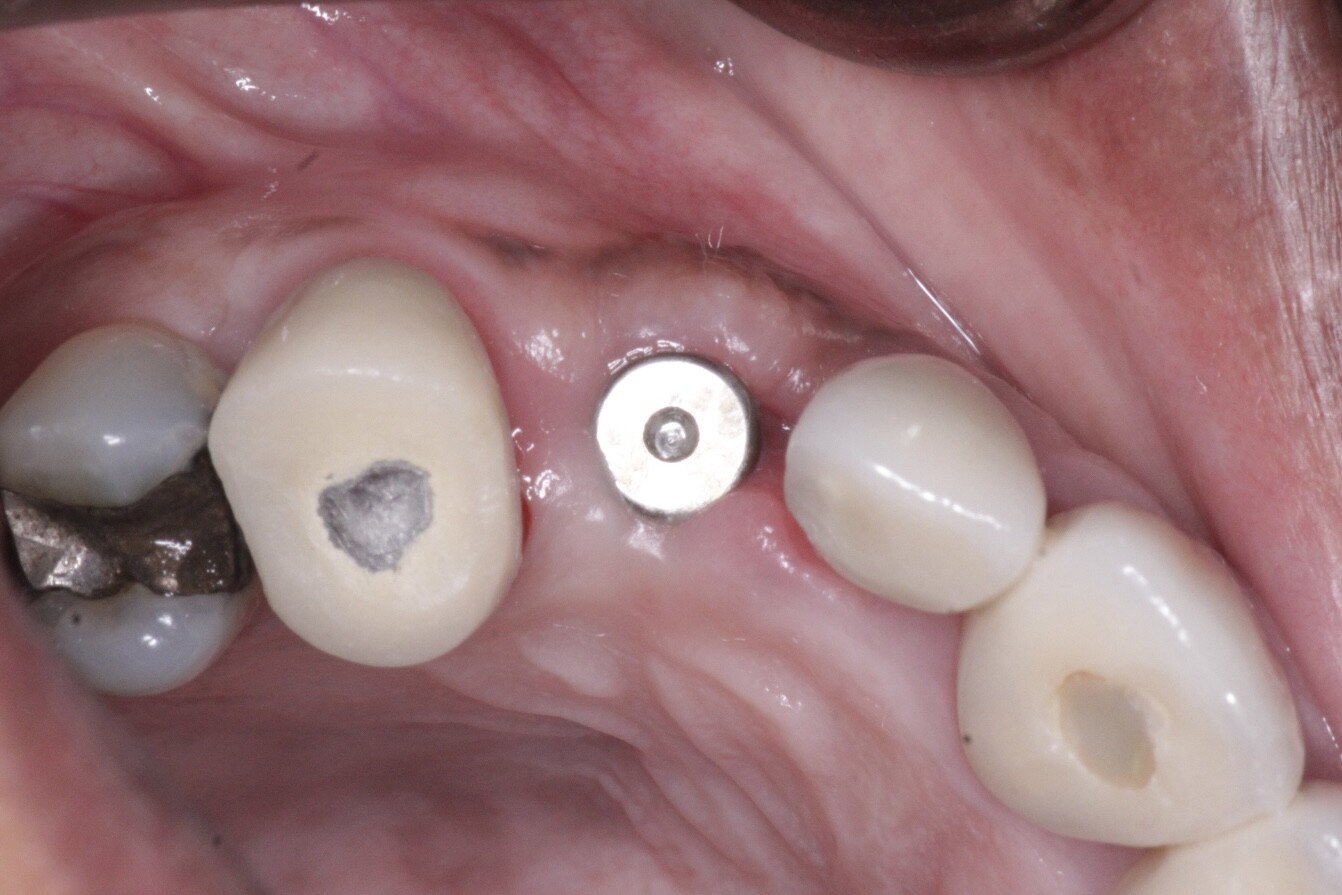
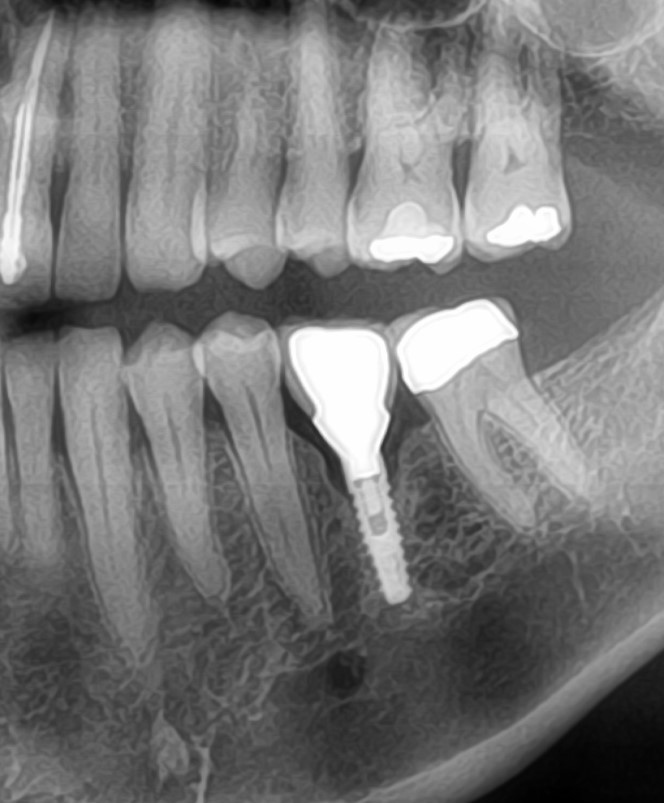
Depth of Implant Platform?
Anon asks:
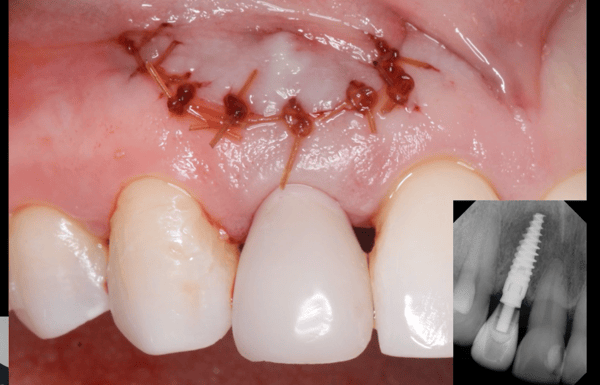
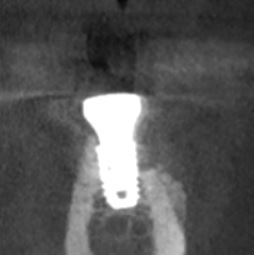
I am quoting Carl Misch: “An abutment originally placed 2mm above the bone and another countersunk 2mm below the bone have a different initial bone loss history after the abutment is attached to the implant. Whenever possible, the implant should be inserted at or above the bone crest to avoid an increase in the sulcus depth around the implant related to the crestal bone loss following abutment placement.†DENTAL IMPLANT PROSTHESIS 2005, ed 2, Chapter 2, p. 21.
Is this a generally accepted principal that most surgeons follow? What has been your experience?
12 Comments on Depth of Implant Platform?
New comments are currently closed for this post.
JL
8/27/2007
It depends on the system. I'll bet that most clinicians experience different outcomes with Astra, Ankylos, and Bicon.
Keep in mind that Misch has another product to sell beyond his courses: BioHorizon Implants.
Don Callan
8/28/2007
This all goes back to bacterial control at the microgap at the implant/abutment junction. This area has been shown to be a haven for periodontal pathogens.
Quirynen M, Listgarten MA. Distribution of bacterial morphotypes around natural teeth and titanium implants ad modum Brånemark. Clin Oral Implants Res. 1990;1:8–12.
Kronström M, Svenson B, Hellman M, Persson GR. Early implant failures in patients treated with Brånemark system titanium dental implants: a retrospective study. Int J Oral Maxillofac Implants. 2001;16:201–207
Mombelli A. Etiology, diagnosis, and treatment considerations in peri-implantitis. Curr Opin Periodontol. 1997;4:127–136.
Callan DP, Cobb CM, Williams KB. DNA probe identification of bacteria colonizing internal surfaces of the implant-abutment interface: a preliminary study. J Periodontal. 2005;76:115–120.
PS;JL is correct.
steve c
8/28/2007
This relates to the microgap(implant/abutment) and how stable and tightly sealed it is and to the concept of biologic width or zone of tissue attachment. There has to be a 2.0mm or so zone on the implant where the soft tissue attaches or tightly adapts to shield the underlying bone from the oral environment. This tissue attachment will not form over a bacterial laden microgap as found in most implant systems, so it has to form further apically. In situatiions where the implant is fully seated to or below the crest of bone, the zone of tissue attachment is forced to form apical to the microgap at the expense of the top 2mm or more of bone. This is seen as crestal bone remodeling that occurs after attaching the abutment. If the microgap is positioned supra crestal(implant not fully seated to bone level), there is less bone remodeling needed to give space for soft tissue attachment. This occurs in Straumann since its top is usually placed 1.8 to 2.8mm supracrestal with the microgap that distance from bone. With other systems this can be achieved by leaving the top of the implant 2mm above the crest of bone. The microgap in the Astra Tech system seems to be tight enough or stable enough to minimize bacterial leakage giving a similar effect, perhaps by allowing the tissue attachment to develope over the implant/ abutment junction thereby minimizing bone remodeling after placing the abutment.
Doc
8/28/2007
Anon,
I don't think Dr Misch believes in the microgap theory. He is referring to biohorizon implants specifically when he talks about platform position in relation to bone. The belief is that polished collars should be supracrestal because of the change in crestal strain upon loading. Rough surfaces are more resistant to stress and strain. You will notice this crestal bone loss usually is lost after loading and not during healing.
RSS
8/29/2007
That is a certin issue. Not understanding the biologic rationalle behind a system and then choosing a system according to what you believe is the best for your circumstance is the real problem here. ITI Straumann, Nobel Branemark/ Sterioss, etc. have differant views on this . Other companies develop their own design based on well researched implant systems. Follow the data and then read the literature and placement principles according to that system and then watch your results over the long term. Choosing a system that has inferior designs will eventually bite you long term. There are so many factors.
Placement understanding is 80 % of the issue. Product is about 20% of this but can either provide failures or successes
Best of luk on your journey to find someone you can follow without the need to sell someting.
steve c
8/29/2007
In two stage implant treatments when the implant and its cover screw are submerged, radiograghs usually show bone up to and sometimes beyond the top of the implant. As soon as the implant is uncovered and a healing abutment is attached and is exposed to the oral environment, crestal bone remodeling begins. If the implant is left unloaded for a few weeks or months the bone profile appears the same as a loaded implant. In other words, the bone remodeling appears to occur without load and seems to be related to the microgap and its bacterial contamination which forces apical migration of the soft tissue attachment.
So from this perspective I agree with Dr. Misch that it is desirable to leave a 1 or 2 mm collar or portion of the implant supra crestal as long as interocclusal space or esthetics allow.
RSS
8/30/2007
Correct Steve
The change of platforms from a 1 mm to 2 mm Biological width is now being adressed in another way by the majorsITI Straunmann Bone level, Nobel Groovy by moving the microgap Horizointially ( Platform Shifting). This is not a new concept but a refined concept and now documented and proven. So useing a traditional collor 2.8mm for overdentures, 1.8mm for say bicuspids and Bone level implants allows the clinician to choose for the clinical situation , Hide or not hide microgap margins for hygenic or esthetic reason to support bone stability. This is why understanding the system is so important to maximise the outcome and chosing a system that has un marketed science. It a very fuzy world out there for marketing .
Keith
9/8/2007
Doc is correct when he wrote "He is referring to Biohorizon implants specifically when he talks about platform position in relation to bone. The belief is that polished collars should be supracrestal because of the change in crestal strain upon loading."
It doesn't matter what implant you use, if you place a polished collar into bone you will loose bone to the first thread.
As far as the micro gap goes BioHorizons has such tight tolerances that their implant to abutment connection is 0 microns.
There are also other factors to consider with bone loss. Shearing from a v-thread implant rather than the compressive load from a square thread is something else to consider. Bone is lost after loading implant is a result of force, not a microgap.
By the way, Misch does not own stock in BioHorizons or own them. He speaks for them because he believes in the science and the design that he helped create.
Micro gap theory is flawed being that crestal bone would be lost when an implant is buried due to the implant to cover cap "microgap". I have not seen bone loss when uncovering implants. I am sure this could be an issue with an implant system with low tolerances though.
Dr C
9/9/2007
Just got it today, you really need to look at don callen's article in detistry today. I feel he is on the right track
Larry
9/10/2007
Keith, Biohorizons have a very good connection, but no 2 piece implant can have 0 microns in the I-A connection. Microgap theory applies after uncovering. The theory has to do with oral bacteria gaining access to the I-A connection after uncovering. You are correct about the polished collar not being as good a surface for bone to attach to than a roughened surface and a good square thread design is even better. One good example of an implant with no microgap near bone is the ITI system. The microgap is covered by the cement of the crown at or below the gingival crest and not near the bone, yet you see many post op x-rays which show bone loss to the first thread. That cannot be from microgap. It must be a function of loading. And ITI implants have almost no threads. Yet, you also see some ITI implants with no bone loss....go figure. My guess is that it is a combination of all the factors with loading a key component. (Possibly opposing a full denture, etc).
Keith
9/11/2007
It is ironic that you brought up ITI because they really show the micro gap theory is still just a theory. If microgap is a factor then it is a minor factor. I have seen more bone loss on ITI implants than any other implant system. I personally feel that the problem with ITI is a combination of thread design, quantity of threads (limited surface area) and the fact that the implant cannot be buried [especially when dealing with poor quality bone (D4)].
"My guess is that it is a combination of all the factors with loading a key component. (Possibly opposing a full denture, etc)." -Larry
I agree with this statement completely. There is no one answer for crestal bone loss but I do believe that loading is the key component. I also believe that implant companies with a poorly designed implant use trendy marketing to compensate for their shortcomings. Implant companies have to sell implants so they come up with their own spin. Since BioHorizons thread design is patented they have to go in a different direction.
Is the answer to crestal bone loss really platforming switching or placing the implant slightly above the crest of the bone to move the microgap area from the bone? I believe it is a combination of thread design, proper surgical protocol, and how the implant is restored in relation to occlusion? As far as I know BioHorizons has the only prospective study going on (I believe) 8 years with minimal crestal bone loss.
A Prospective Multi-Center Clinical Investigation of a Bone Quality-Based Dental Implant System.
Kline R, Hoar JE, Beck GH, Hazen R, Resnik RR and Crawford EA
This article reports the five-year results of an independently monitored, prospective, multi-center, clinical trial of a bone quality-based implant design. At six study centers, 495 implants were placed in 151 cases with an average follow-up period of 1.6 years (range 1.0 to 3.6 years), following prosthesis delivery.
The majority of the implants placed were D2 or D3 implants to support fixed partial dentures or implant-supported overdentures. Using strict success criteria, there were three implant failures, resulting in a cumulative 99.5% success rate according to Kaplan-Meier survival analysis.
Radiographic analysis revealed a mean bone loss of 0.06 mm at one year and bone gain of 0.04 mm at two years following prosthesis loading. There were no statistical differences in the results by center, implant type, bone density, area of the mouth, or prosthesis type. The results of this five-year study revealed a high success rate and limited bone loss in all areas of the mouth, independent of bone quality.
I will let the studies do the talking.
Straumannator
9/11/2007
I agree with the above:
Straumann implants are inherently badly designed, yet they make up for this shortcoming with their marketing blurb...
When you buy a Straumann , more than 50% of the price you pay goes on their marketing.