posted in Surgical Placement of Dental Implants, Surgical Guides for Implant Placement, advice
« Pain Without Overdenture in Mouth: Thoughts? | Allergic to Titanium: What are My Options for Implants? »
Print This PostDr. I. asks:
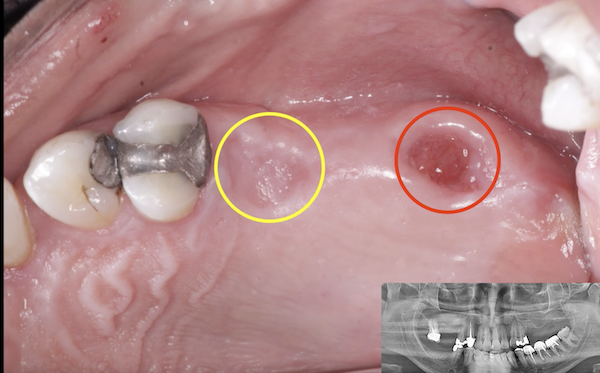
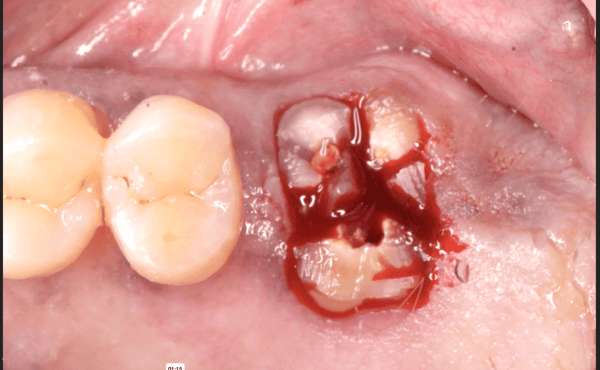
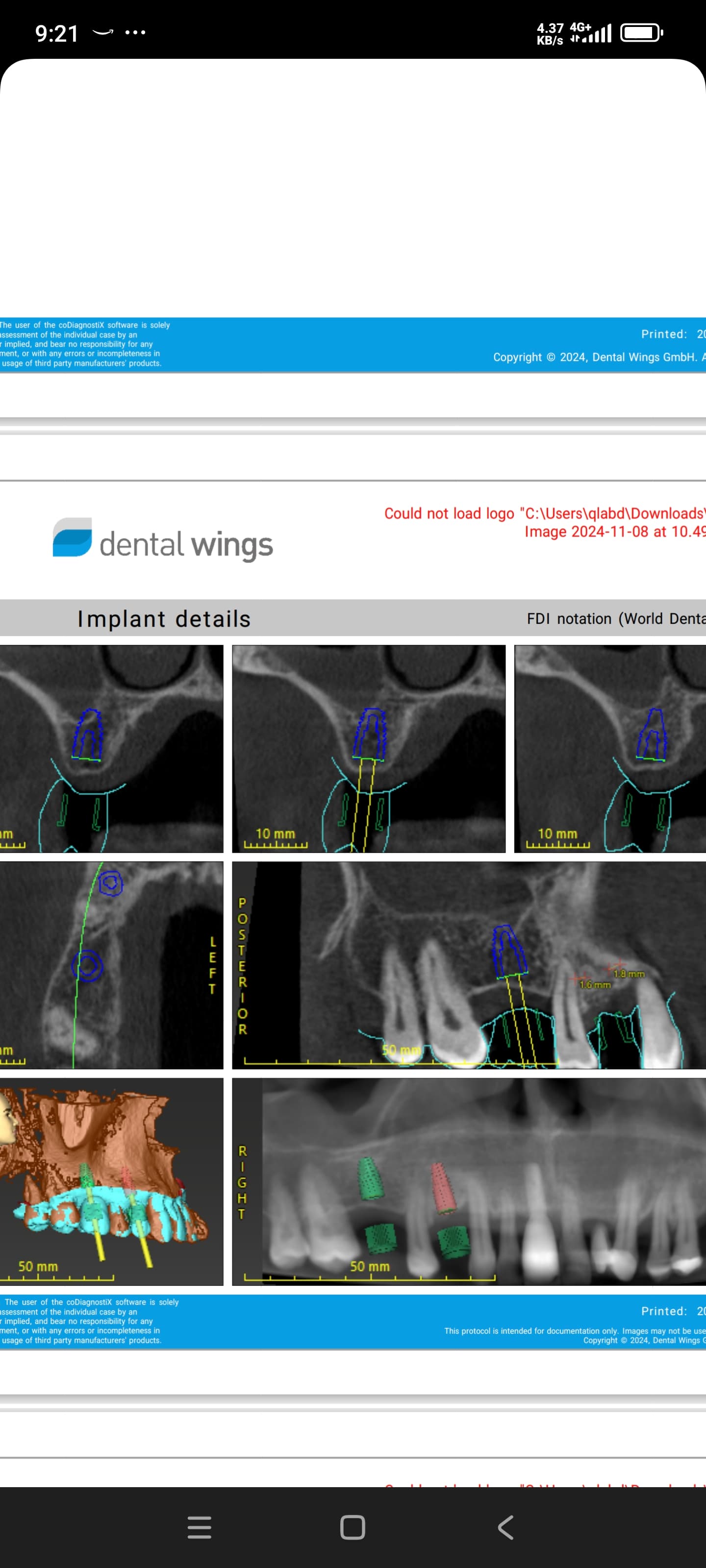
I recently attempted to place implants using a prefabricated surgical guide made by Becden Lab. I ordered the corresponding 2.0 x 24.0mm pilot drill from BioHorizon as dictated by the lab and Implant Logic Program. While attempting to drill the osteotomies, the drill became lodged in the stent – completely stuck – and would not turn. I called Becden and was informed that another doctor had the same problem. Has anyone else had this problem? The guide stent was seated completely, the interarch distance was adequate for me to insert the drill without angling it. The surgical site was the upper right premolar region. Any thoughts would be greatly appreciated. The osteotomy site was ruined as I attempted to remove the drill from the stent. Perhaps the sleeve in the stent was too short. I really do not know. Any thoughts?
6 Responses to “ Drill Becoming Lodged in Surgical Guide Stent: Anyone Experience This? ”
It’s unfortunate that you had that problem. It’s possible that you went in on a bad angle while having you foot on the peddle, causing the twist drill to “wedge” itself. Unfortunately, when “stacking” the handpiece with components necessary to compensate for the vertical length of the master guide tubes, you are forced to go in at an angle, or disconnect everything from the handpiece, place the twist drill into the master tube guides, then re-engage with the handpiece.
Going forward, I recommend using a system that offers variable prolongation within the surgical stent design that allows greater access to the master tubes going towards the posterior region. Also, using a system that gives you complete depth control during the entire protocal of creating the osteotomy, not just during the twist drill phase, will result in a higher predictable outcome of the case itself. Contact your local 3i rep for more info on Navigator.
Nobel guide is nice, but I use the Navigator system along with Simplant specifically for the prolongation feature that is offered. However, both system tend to be on the high end cost side, but you will see where the money goes once you use either of them. I personally prefer 3i Navigator open architecture feature. This means you can use any planning software available within the market place that has 3i in its implant library. Why spend the money on Nobel software which only offers their implant when Simplant has Nobel in its library, along with other popular implant systems for almost the same cost? Makes no sense to me but to consider Simplant over Nobel.
Plus, the tolerance level within the 3i master tube stents through Simplant is tight, there is really one way that the twist drills will guide itself. This tolerance should help avoid your situation from happening again. Good luck next time.
In addition to comments above regarding tube-drill engineering, bone chips may have become lodged. Be sure to irrigate chips away. I prefer a slot guide system, open to the palatal / lingual. This preserves the labial contours so angulation and crown thickness can be optimized at surgery. Chips are also less likely to bind.
I’ve experienced the same with nobel guide. I feel its nothing to do with the system but the angulation of ur handpiece. Tube/sleeve facing posteriorly, limited mouth opening, sudden movement by operator or patient and ofcourse brittle and blunt drill are the predisposing factors to be thougt of.
This is certainly an unfortunate story. One can only guess as to the possible causes. I did my very first guided case last week with the 3I Navigator. It was easy to plan and use. I was nervous about flying “blind” but on the postop CT, placement was dead on. I’m sure Nobel works as well- it just seems like they make everything a little more difficult or complicated than necessary. I think starting anything new, one has the possibilty of complications, a learning curve both for the practicioner as well as those providing the technical support. I think the key is find a system that works for you and stick with it.
The navigator is great, but way overpriced for what it is. However for guidance it is pretty darn good. Simplant and Materialise’s surgiguide tube are OK and their stop system with drills you can purchase works well. Not as good as navigator but much more cost effective, however you’ll be paying for each case.
it is worthy of note that every guide either noble or materialise or any other brands, made somewhat larger than the drill to be used, that means for pilot drill which is around 2 mm it made 2.2 or higher depends on the manufacturer concept. in view of this fact it must cautious about the drill size during drilling. if the drill guide was smaller than the drill or just the same size it easily stick to drill.one of the most important thing to note during using SGs is the the distance between arch and the location of implants to be placed. in case of teeth supported guides the SG must be at least cover two adjacent teeth for best support. in many cases due to the insufficient teeth around the edentulous space the guide force to made without insufficient bulk and the guide may be broken during drilling.
Leave a Comment
Comment Guidelines: This is a forum for dentists for intelligent discussion. No insults. No outside links. No promotional comments. Though we require an email to route questionable comments to our editors, we will NEVER publish your email. Consumers & Patients: Please do NOT post dental questions here. Instead Visit ChooseDentalImplants.com to get Expert Advice for Implants.
Note: At times your comment may not appear on the website immediately, because it has been sent to our editors for approval. Once approved, we will publish the comment. There is NO need to resubmit your comment, if it does not appear on the website immediately.